Are your roadways causing you and your cows unnecessary stress?

Farm yard and roadways design can play a large part in how smoothly operations on-site run, and in turn affect the productivity of your cows.
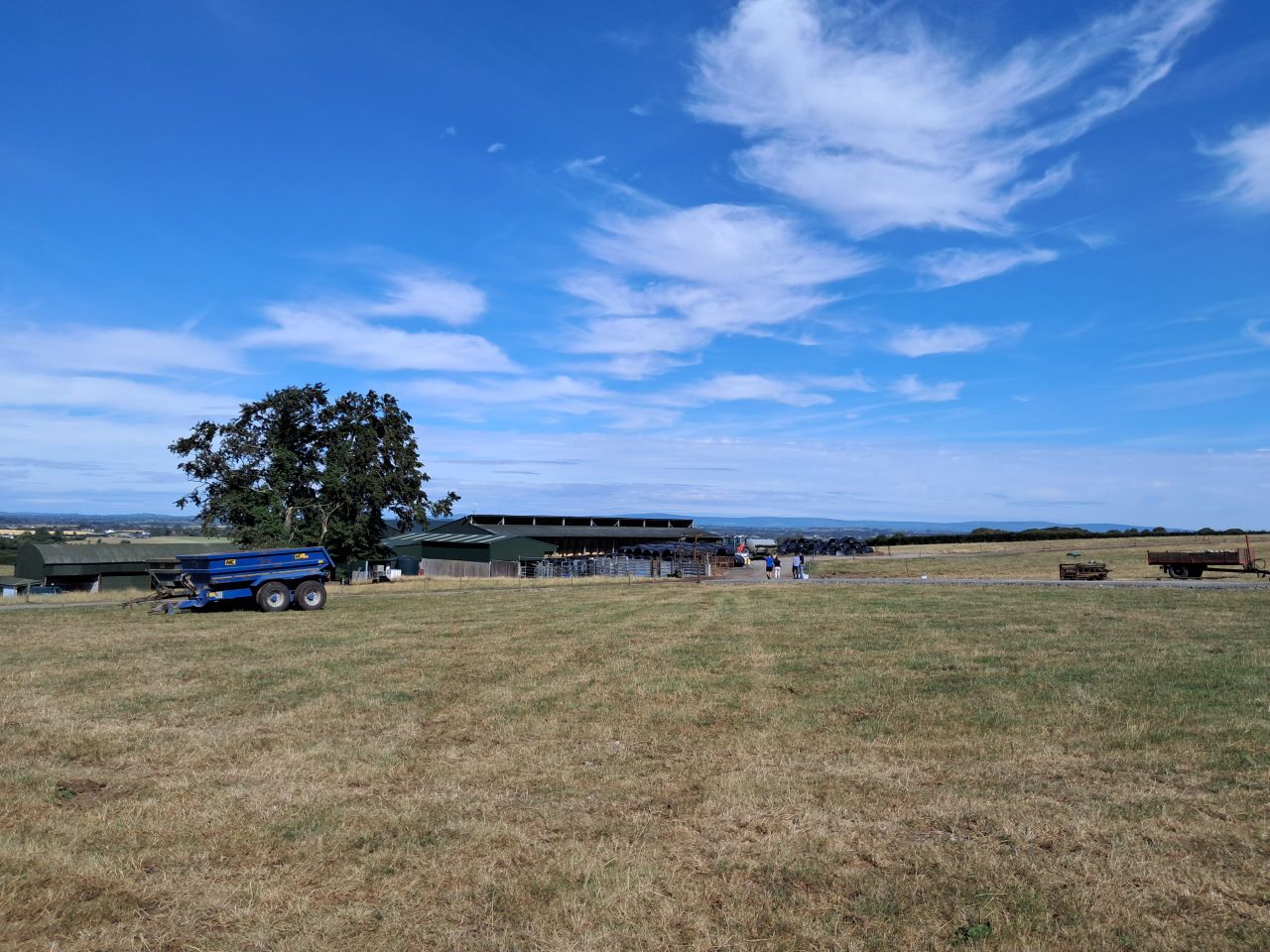
This was the focus of a Teagasc farm infrastructure event hosted on Seamus Holland's dairy farm near Durrow in Co. Laois on Tuesday (August 11).
The event looked at how farmers can minimise disruption and stress to the farm operation by carefully considered the design and fully utilising the potential of their yards.
Holland farms a 240-cow herd on dry land near the Laois-Kilkenny border.
He is in the process of replacing the main cow roadway to the top half the farm, above the parlour.
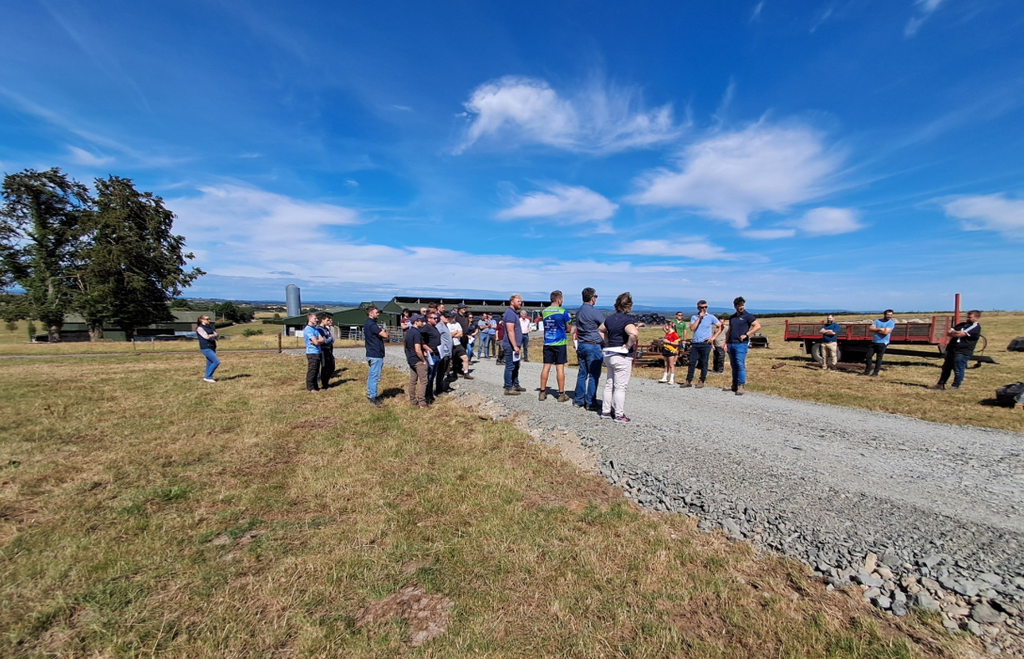
The decision to dig up the old roadway grew from the combination of the path needing resurfacing as well as it not being aligned with the new parlour that had gone up in the late 2010s.
The new path is wider at 5m and set 1ft above ground-level to raise above the level of any sitting pools of water.
Speaking at the event, Teagasc adviser Donnacha Dowling highlighted that the ideal camber for wide paths is a 1 in 25 rise.
| Herd size | Roadway width (m) |
|---|---|
| 50 | 3.5 |
| 100 | 4.0 |
| 200 | 4.5 |
| >250 | 5.0+ |
Steep rises will be uncomfortable for cows and result in them walking in single file, while cambers that are too gentle will not properly remove water from the path.
Boundary wires running parallel to the roadway should be set 1.5ft from the edge to ensure cows can comfortably use all the path.
Cows will also graze under the wire so grass waste is minimal.
Farmers present also heard how cows should only turn three times between leaving the field and entering the parlour chute.
One turn will take place on leaving the field, which means farmers will have to get their cows into the parlour in just two further turns.
Holland's parlour is a front exit 26-unit DeLaval set-up, located in the middle of a long rectangular block.
The new roadway aligns directly with the parlour exit.
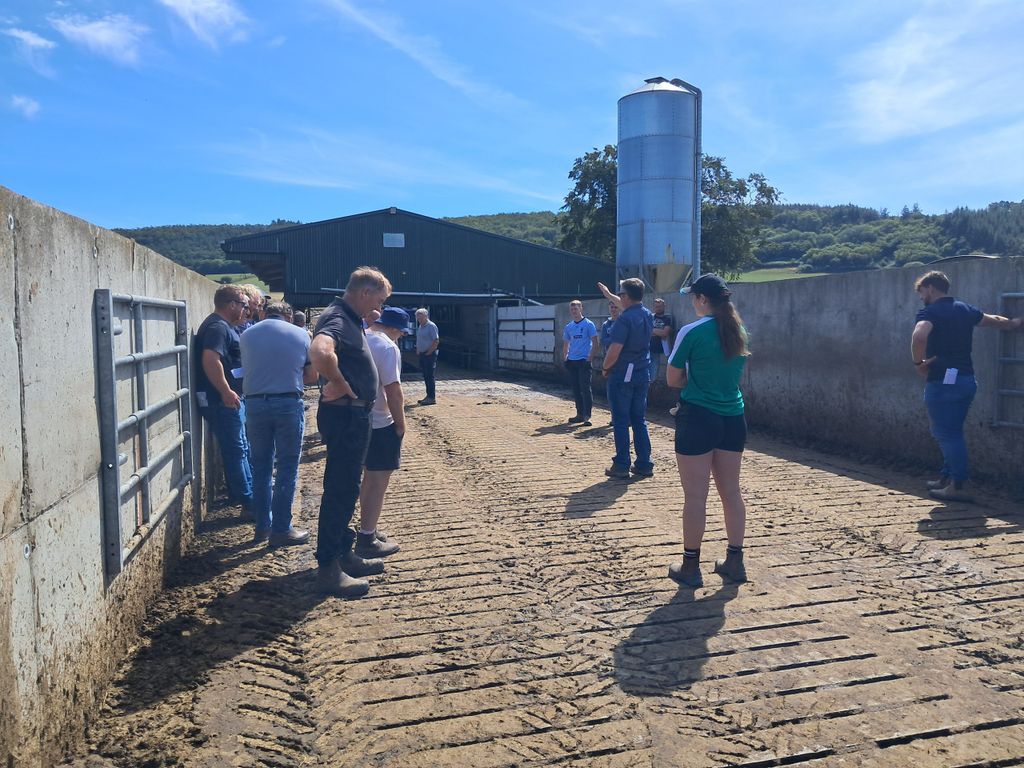
Where the pathway meets concrete, farmers were reminded by Teagasc adviser Patrick Gowing of the importance of a 'lip' to prevent small stones ending up on the concrete.
These small stones can end up in the hooves of cattle, accelerating white line disease development, whereas a 4in lip will trap stones and debris from roadways without creating an impediment for cows.
A plinth on the path-side of the meeting point is also necessary, according to Teagasc.
This will create a hole or hollow that water and stones gather in as cows walk over the lip.
According to Gowing, a 12° pitch is the ideal slope for cows.
Steep slopes can result in cows sliding, especially during bulling, which will also create a health and safety risk for workers.
"Cows will go up anything; it's going down they struggle."
On farms that have natural hills, cows will have to climb and descend steeper slopes.
Where necessary, steps can be used but there should be a flat area after every step, he said.
Footbaths
Farmers were also advised on the importance of footbaths in combatting disease.
Footbaths are essential in combatting mortellaro and other infectious diseases but will not solve white line issues.
Footbaths can be installed as permanent features on farm.
Having one at the drafting gate will ensure cows are familiar with it and do not stall when using it, the advisers said.
In addition, setting up a footbath on one side of a drafter will ensure lame cows can be drafted and foot bathed simultaneously.
Gowling said: "When you use a footbath for the whole herd, the last cows, the ones that need it the most, will get the least help from it."
Footbaths should be at max 3m long, as longer baths result in cows dunging in the bath.
Going wider rather than longer will improve cow flow and maintain effectiveness.
According to Teagasc, 10cm deep is ideal for footbaths for cows and farmers should use 1L of solution/cow.
Grooves
The Teagasc advisers also recommend concrete grooving on yards to help reduce injuries and stress to cows.
Cows' feet slip to the side, so grooves should go in the direction the cow will be walking.
The depth of groves is also essential. Deep grooves between larger squares in the standing yard can be uncomfortable for the cow if she cannot balance properly.
A core focus of the day was on cow flow. Teagasc advisers outlined how narrow pathways in which cows regularly stall are major stressors for farmers.
The collecting yard should be designed to allocate 1.5m² per cow in the herd.
Rubber mats in heavily trafficked areas were also presented as a preventative measure for lameness.
Cow roadways around the parlour should be one bay wide to minimise disruption to cow flow and reduce stress for both the cows and the farmer.