Watch: Farming history roars back to life in Moynalty

From steam engines to horse-drawn ploughs, farming machinery from a bygone era roared back into action at this year’s Moynalty Steam Threshing Festival in Co. Meath.
Now in its 51st year running, the festival attracted visitors from far and wide to the showgrounds at Moynalty's Steam Threshing Museum, where plenty of traditional farming practices and crafts were demonstrated on Sunday (August 9).
The cornfields at the show played host to numerous traditional farming demonstrations, which brought together a collection of vintage machinery, including a Dania D1200 combine harvester.
Manufactured in Denmark in the early 1970s, the owner of the Dania harvester said that the machine held a reputation for producing clean grain back in the day, partly due to a secondary cleaning system incorporated into the machine.
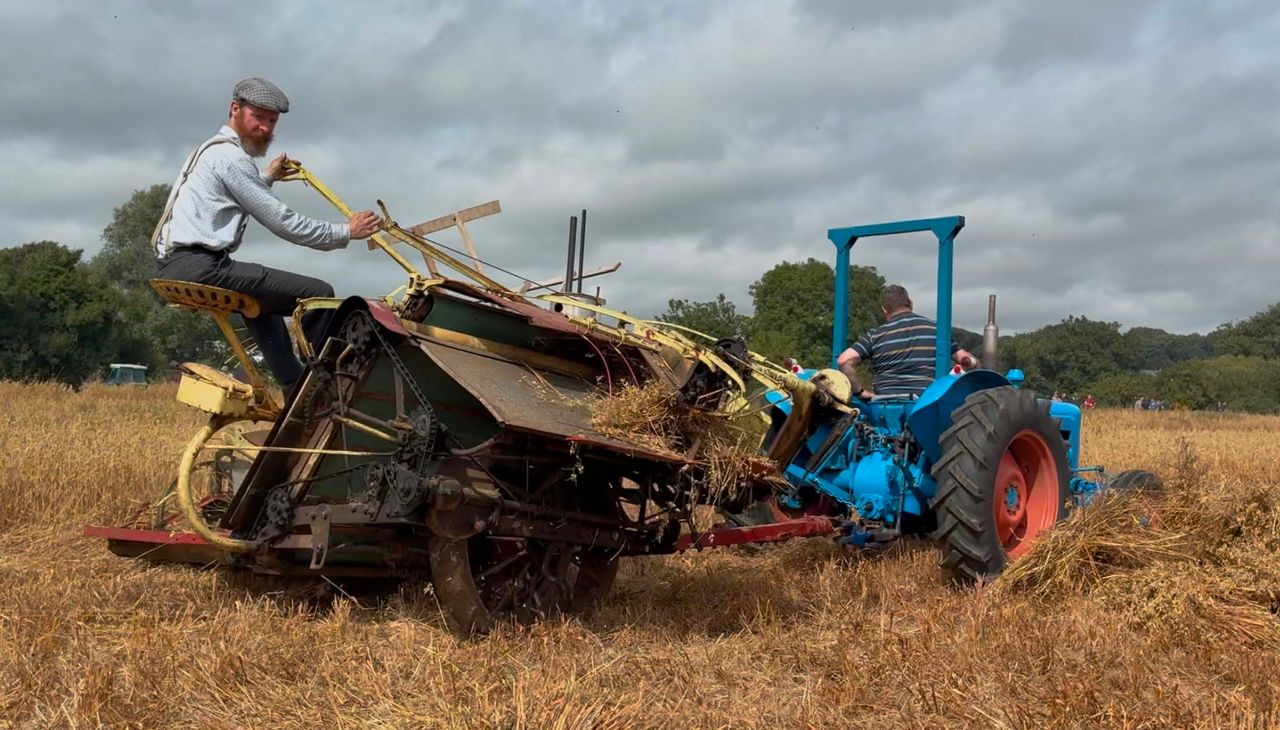
The combine harvester wasn't the only vintage machinery that was put to test in the cornfields as one of the first-ever tractors produced by American manufacturer Allis-Chalmers also helped with ploughing the crops.
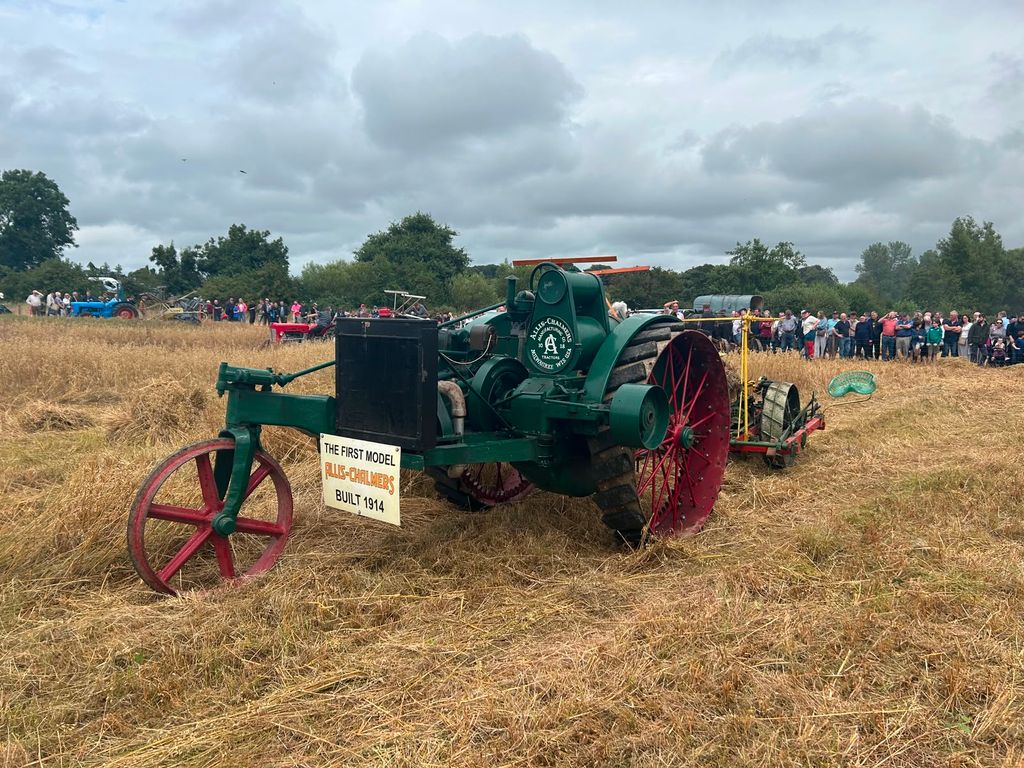
Dating back to 1914, the tractor was accompanied with a reaper binder, which was another revolutionary piece of equipment for its time.
Before the introduction of the reaper binder, harvesting was more of a labour-intensive process, with crops first cut and laid using a mowing machine before the sheaves were gathered and tied by hand.
The reaper binder represented a significant development in agricultural mechanisation as it allowed crops to be cut and the sheaves bound in one single operation.
While manual labour was still required to gather and handle the sheaves, the machine significantly reduced the amount of work involved in harvesting.
Threshing
Away from the cornfields, it was all hands on deck in the threshing paddocks as plenty of steam engines, mills and other machinery were put to work.
Threshing was once a central part of the farming calendar as it was once the most common method of separating grain from harvested crops after it had been cut and gathered.
One of the demonstrations displayed an impressive three-part operation, which involved a classic Nuffield tractor, a Garvie threshing mill and a Jones tiger baler.