What is the average value of an acre of farmland in your region?

Irish agricultural land values remained resilient in the first half of 2026, according to research by real estate agency, Sherry FitzGerald.
The 12-month rolling average weighted value of all farmland rose by 5.3% to €13,528/ac by the end of June.
This follows growth of 8% in 2025 and shows that there seems to be continued strong competition for farmland, particularly for quality holdings in the right location.
Weighted values are calculated using agricultural land sales data from the Central Statistics Office (CSO).
Sales director, Sherry FitzGerald Country Homes, Farms and Estates, Philip Guckian said: “The continued strength in agricultural land values is being driven as much by a shortage of supply as by underlying demand.
"Across the country, relatively few farms are being brought to the market, creating strong competition for quality holdings when they do become available.”
Value of farmland in different areas
The mid-east region remained the most expensive region for farmland, with rolling average values of €16,896/ac, compared to the west which saw the lowest average value at €9,758/ac.
The strongest regional growth was recorded in the border and west regions, where values increased by 8% and 7.8% in the first six months of 2026 respectively.
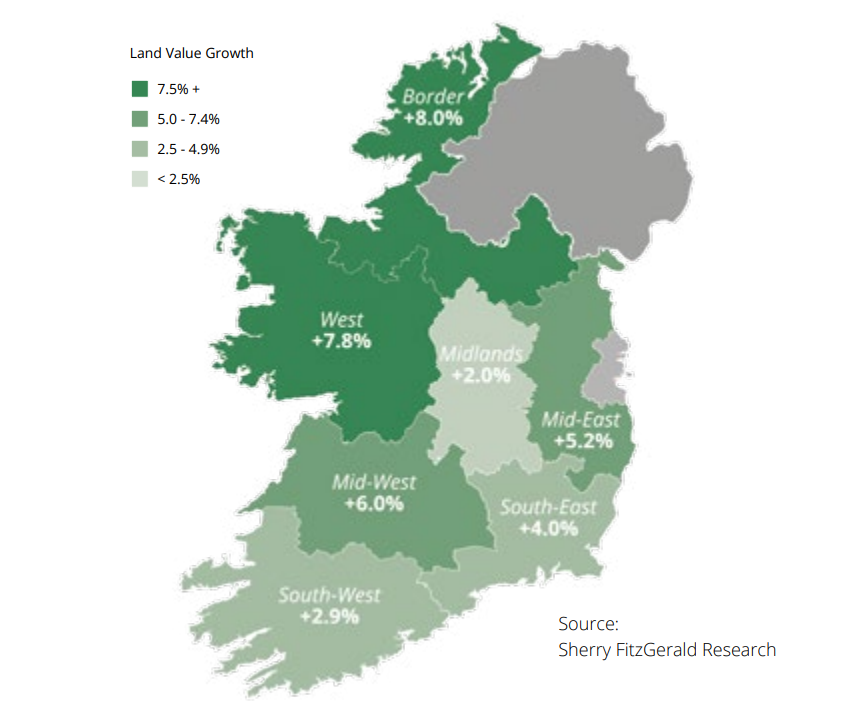
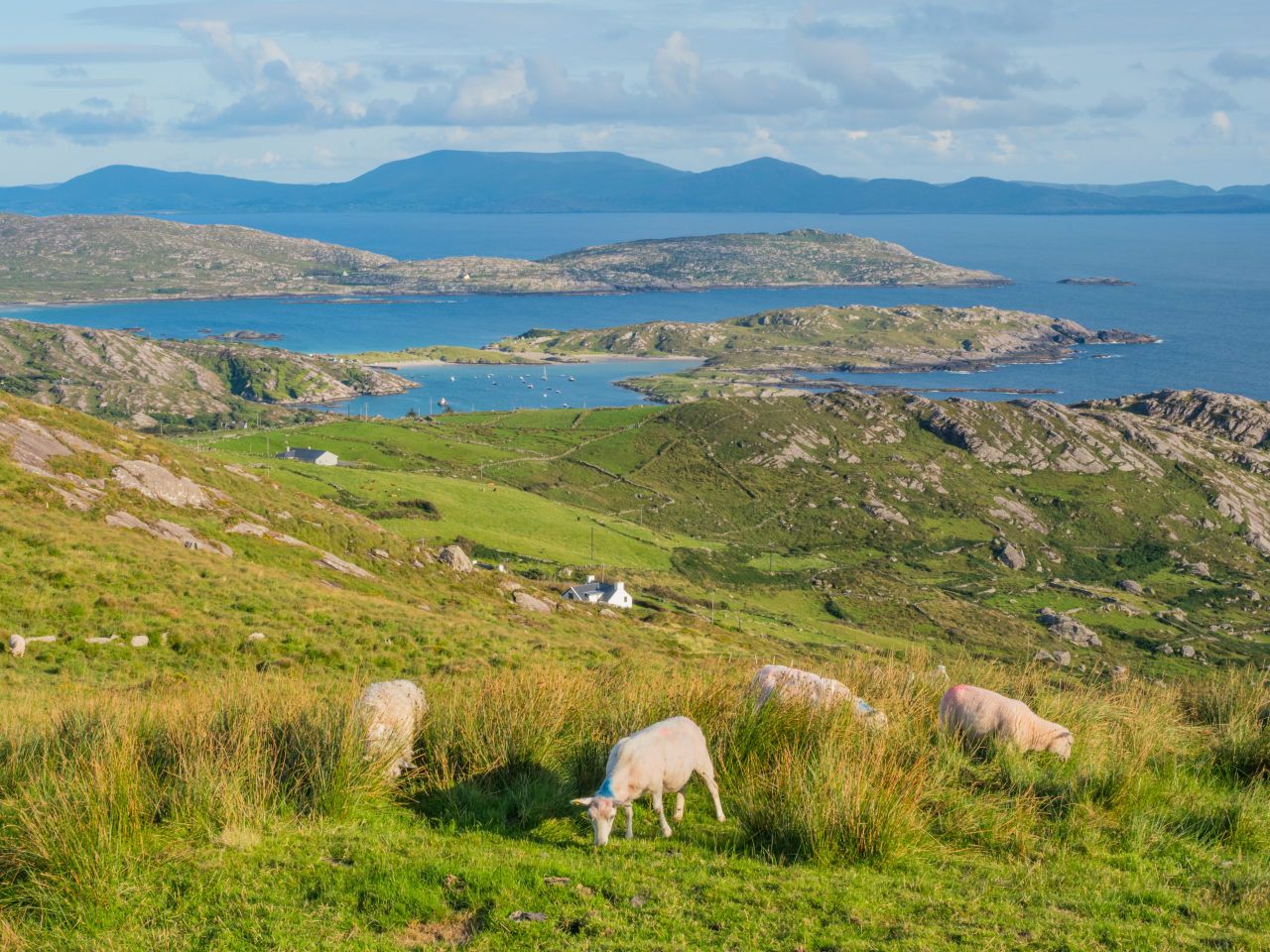
By land type, marginal grassland recorded the strongest growth, increasing by 6.7% in the first half of the year to €9,209/ac, with particularly strong increases in the border, west and mid-east regions.
Prime grassland values also continued to strengthen, surpassing prime arable land values in some regions.
In the first half of 2026, prime grassland values grew by 5.5% bringing the weighted value to €15,370/ac.
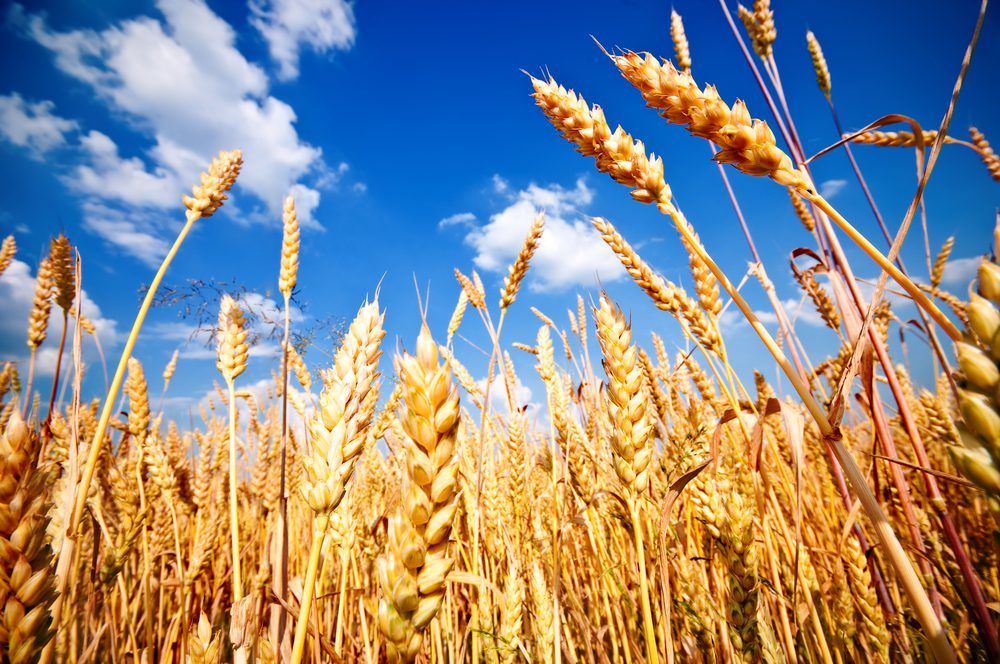
Prime arable land values rose by 4.3% during the first six months of the year, with the weighted value reaching €16,007/ac.
Values ranged from €11,775/ac in the west to €19,000/ac in the mid-east.
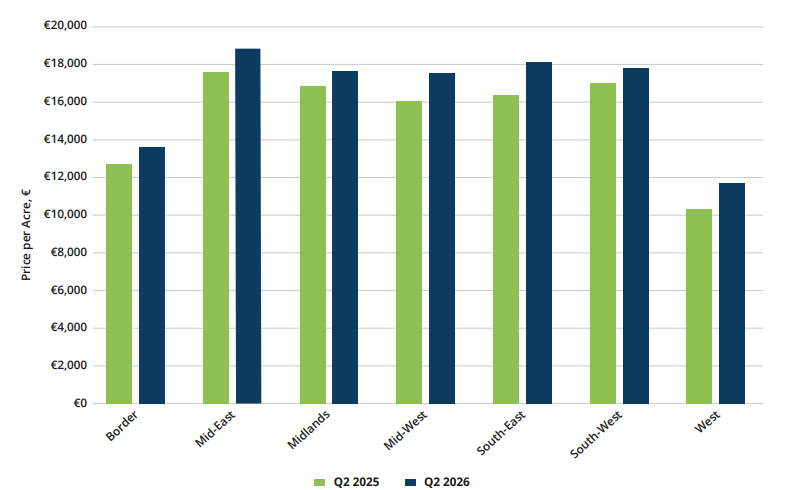
The strongest growth in prime arable values was recorded in the west region, at 8%, while the lowest was in the midlands at 1.7%.
Outlook
While agricultural land values continued to see strong growth in the first half of 2026, the market enters the back end of the year with a more cautious outlook.
Higher input costs, reduced output prices, weather-related production pressures and the potential for higher borrowing costs are expected to influence farmer decision-making over the coming months.
Despite this, constrained farmland supply is expected to sustain competition for well-located holdings that come to the market.
Philip Guckian added: “Looking ahead, farmers will be keeping a close eye on the impact of recent weather conditions, with reduced rainfall and slower grass growth becoming a concern in some regions.
"While this may temper sentiment in the short-term, the scarcity of land coming to the market is likely to remain the dominant factor supporting values."