1-in-3 farmers intend to exit farming within 5 years

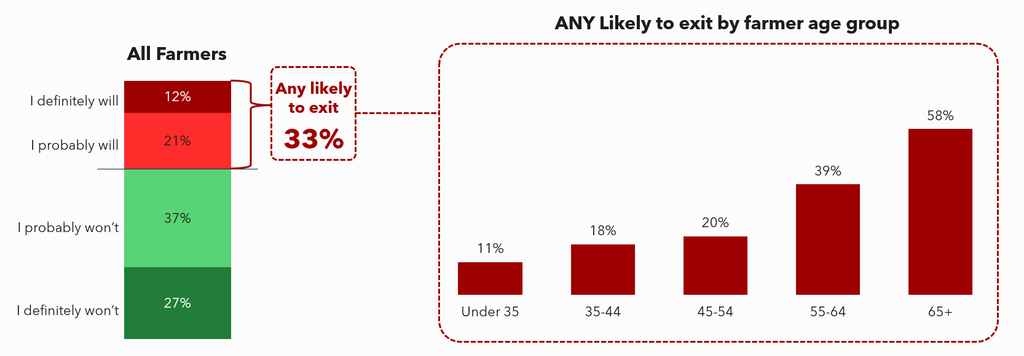
A major new national survey shows that farming is approaching a "cliff edge", with one-in-three farmers indicating their intention to exit the farming sector within five years.
The results come from one of the most comprehensive surveys ever carried out of Irish farmers, with around 2,300 respondents across all sectors, of all ages and right across the state.
And it is not just the older farmer demographic likely to exit: two in 10 (20%) of farmers aged 45-54 say they are likely to exit within 5 years.
Interestingly, only some six in 10 farmers have made a will.
The findings of the survey – conducted by leading Irish research agency Opinions, and commissioned by Agriland and the Irish Creamery Milk Suppliers’ Association (ICMSA) - have highlighted the fast-approaching concern regarding farm succession, with implications that go beyond just the future of the multi-billion-euro farming and broader agri-food sector, and into the social and demographic makeup of the rural areas.
Commenting on the survey results, ICMSA president Denis Drennan said that the results indicate a farming sector fast approaching a "cliff edge" in terms of exits vastly outnumbering new entrants meaning far fewer, but bigger, farms.
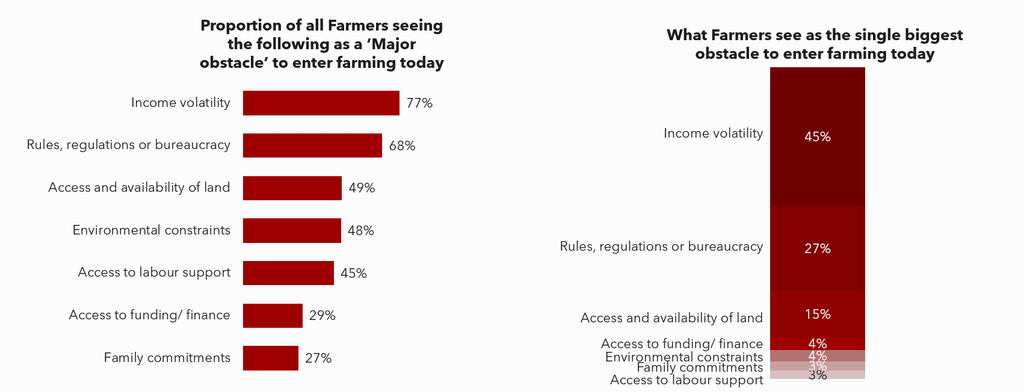
As those indicating an intention to exit reaches new heights, the survey also revealed ‘Income Volatility’ as the single biggest obstacle cited to getting new entrants into farming, with 45% citing the unpredictable nature of farm incomes as the single biggest obstacle to people going into farming.
Drennan said that no one should be surprised by that finding.
"We have, effectively, a full employment economy, and fewer and fewer young people are going to choose farming over a career in pharma or tech or anything else with the absolute certainty that you’ll be working much longer hours with no degree of predictability about what you might earn," he said.
Drennan added: "For instance, dairy farmers are only in the last two months receiving a price that’s higher than the costs of production after 10 months of losing money on their milk production, while every single cost went up - and are still rising."
Also commenting on the survey findings, Agriland editor Stella Meehan commented: "This survey is one of the most enlightening pieces of research to have been conducted into the farming economy in a long time."
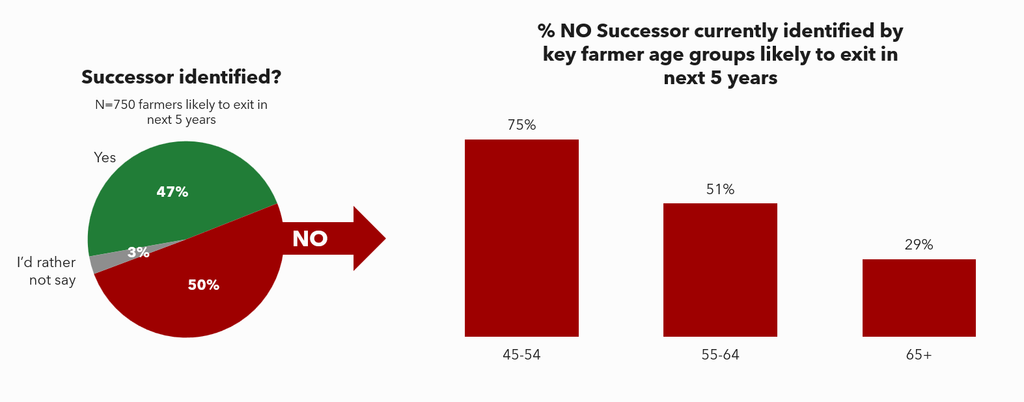
"Of the 33% of farmers who indicated that they plan to exit farming over the next five years, half of them (50%) do not even have a successor identified," Meehan added.
"60% of farmers are fearful of even bringing up the discussion on succession."
The Agriland editor added: "Three out of those 10 farmers have stated they will not even discuss the topic. That's worrying. It raises questions about what it means for the future of farms, of land and food production."
Other key finding from the Agriland/ICMSA survey conducted by Opinions include:
- 80% of farmers surveyed expect a decrease in their income for the coming year, with dairy farmers the most convinced of a decrease;
- 77% of farmers surveyed see income volatility as a 'major obstacle' to entering farming today;
- 68% view rules, regulations or bureaucracy as a ‘major obstacle to entering farming, followed by access and availability of land (49%), environmental constraints (48%), access to labour support (45%), access to finance (29%), and family commitments (27%);
- For almost half of farmers (47%), they have not taken any leisure time off in more than 12 months;
- 94% of farmers agree that the public does not understand modern farming and the challenges that farmers face;
- Six out of every 10 farmers (60%) do not believe that the public understands the reasons behind rising food prices;
- Nine out of ten farmers believe that social media has had an impact on the public perception of farming in Ireland - 64% believe that impact has been negative, 26% believe the impact has been positive.