Watch: Winter milking profit strategy amid 45% cost surge

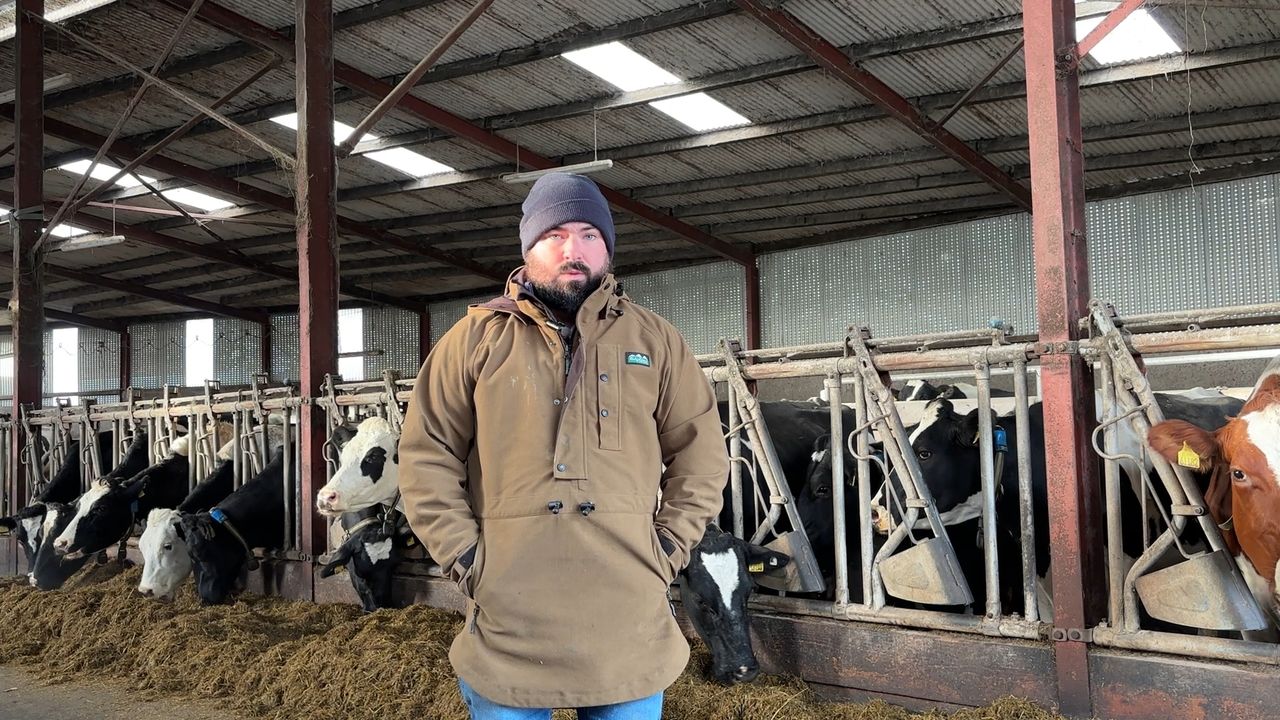
Winter milking has always been expensive, but rising industry-wide costs are squeezing profit margins even further.
This was according to dairy specialist at Teagasc, James Dunne, who highlighted some concerning profit monitor figures from recent years.
He said that in 2021, the cost of winter milking amounted to €1,930/cow.
However, as the Russia-Ukraine war unfolded, costs such as concentrates and fuel rose rapidly, bringing production costs up to €2,400/cow, Dunne explained.
By 2025, that figure had climbed to €2,550/cow, which meant that costs had risen by €622/cow between 2021 and 2025, or a 32% increase.
Considering that winter milking operations using profit monitors are averaging 6,000L/cow, that 32% surge has added 10c/L to production costs since 2025.
Fast-forward to 2026, and with the ongoing US-Israel conflict with Iran, the prices of energy, fertiliser, fuel, and ultimately concentrates all rose again.
Dunne said projections indicated that that the associated costs of rising commodity prices would increase production cost by a further €262/cow.
This 4c/L increase will amount to a total cost of €2,800/cow, or a 45% increase on 2021 figures.
However, Dunne noted that these figureswere all averages, and "averages can be deceiving".
Profit margins
He highlighted the "massive variances" being observed within the liquid milk sector at individual farm level, in terms of cost structures.
However, Dunne stated that: "Where there are variances, there's opportunity."
He said it was also a mistake to assume that rising costs made it impossible to improve profits, because businesses still had ways to increase their profit margins.
Dunne explained that this became clear when net margins were ranked on an individual basis.
For example, a €1,540/cow difference was recorded in the profit margins of high versus low margins farms.
On a 100 cow farm, that works out to a "staggering difference of €154,000", he said.
On highly efficient farms, the costs were just less than €600/cow, while an additional 74kg of milk solids were being produced.
Significant driver
A significant driver behind the reduced cost on these high margin farms, was the fact that 400kg less concentrates were being fed per cow than on the low margin farms.
To sustain high milk solids with reduced concentrate inputs, these farms achieved significantly higher rates of forage utilisation, Dunne said.
In fact, an additional 1.55t of dry matter was utilised on high margin farms when compared with low margin farms.
Dunne added that feed efficiency was crucial to profit margins, stating that "high quality silage needs to be gathered early, and grazing allocations needs to be on target throughout the year".
He pointed out that the feed budget equated to about 45% of all on-farm costs.
Dunne recommended that every farmer regularly monitored profits to identify where improvements could be made.