Video: What are farmers looking for in Budget 2027?


Farmers’ big asks for Budget 2027 include help with fertiliser and fuel costs, more scheme funding and support for passing on the farm.
High land rents and limited access to farms has also been highlighted as a major issue for younger farmers
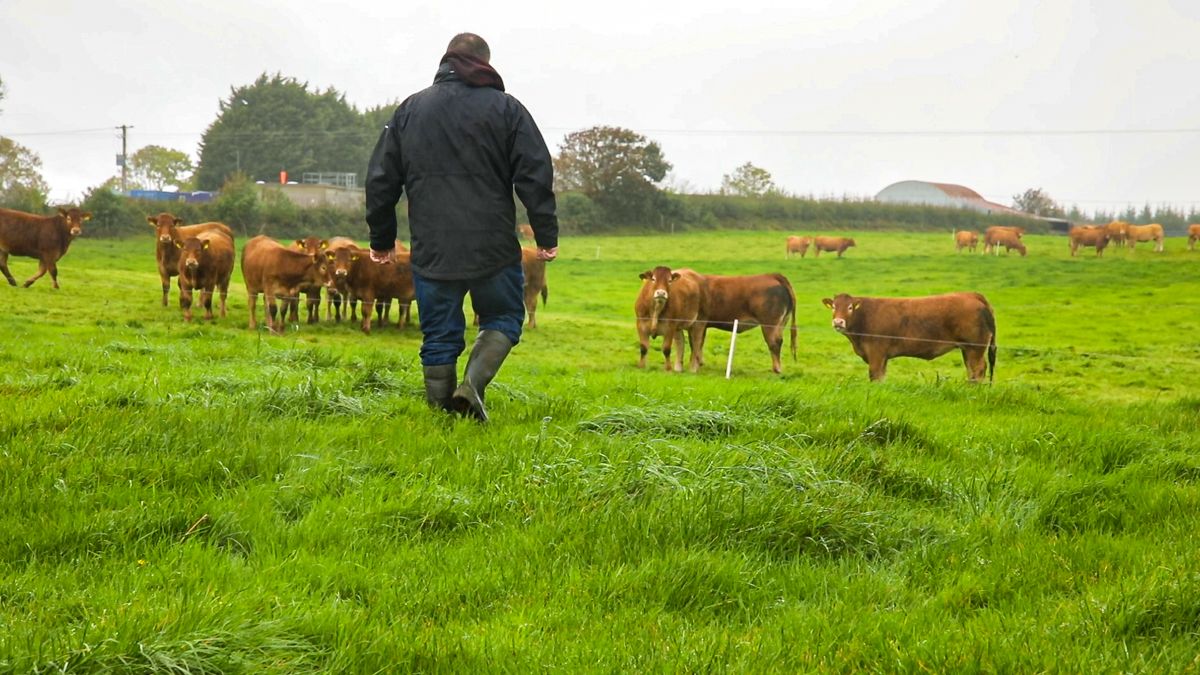
Ahead of Budget 2027 Agriland has been talking to farmers about what would make a real difference to their families and their pockets.
One young farmer told us that although existing grants and schemes, provide important support, they are not enough.
As the countdown gets underway to Budget 2027 tomorrow (Tuesday, October 6) he said the cost of leasing land was one area where government intervention could make a significant difference.
One proposal put forward would be for the government to provide additional support where land is leased to farmers under the age of 35 which would help to reduce the cost of accessing land for those trying to build up a holding.
“There’s an awful lot of big men, you know, big tillage men and dairy men and things like that.
“The young farmer wants to start out with a few sheep or a few dry cattle- it’s very hard for them to get in," a young farmer said.
Many farmers believe the economics of getting into agriculture in 2026 are a major deterrent for young people, particularly when compared with employment outside the sector.
But it is not just younger farmers who believe that farming, for many, simply does not add up anymore.
A recent national survey - conducted by leading Irish research agency Opinions, and commissioned by Agriland and the Irish Creamery Milk Suppliers’ Association (ICMSA) -showed that one-in-three farmers are thinking about exiting the farming sector within five years.
The results from the survey highlight the concerns about the future of the family farm in Ireland.
One farmer said: “You don’t invest unless you’re fairly confident you’re going to get a good return.
“Unless margins improve, it’s very hard to encourage young people to get into farming with the margins that are there at the moment.”
Budget 2027
Another farmer pointed to the Targeted Agricultural Modernisation Scheme (TAMS) and other grant schemes as an important source of support for farms.
It is anticipated that Budget 2027 will include an expansion in TAMS capital allocations for farm infrastructure upgrades like slurry storage and solar PV.
But farmers have also highlighted that grants only cover part of the cost of investment and the balance has to be found elsewhere.
“It’s okay getting 40% of a TAMS grant, the other 60% is the problem," one said.
Despite current financial pressures many farmers have acknowledged that support set out in previous budgets via schemes like TAMS have played a key role in helping them to re-invest in their farms
One dairy farmer said: “We couldn’t do a lot of this now without grants.
“They play a huge part in this farm anyway, and in lots of farms.”
Succession
Farm succession is expected to be one of the issues addressed in tomorrow's budget, with enhanced incentives reportedly being considered to encourage older farmers to transfer their holdings to the next generation while retaining an income of their own.
That could potentially help address one of the barriers identified by farmers - the difficulty faced by younger people trying to access to land.
But the fact still remains, according to one farmer, that a young person taking over a farm would not necessarily “make a fortune”, despite having a valuable asset.
“There’s an asset there, but it’s not, you’re not getting the profit out of it.
“The only time it’s worth money is when they sell it," he said.
Tillage
Farmers have also raised concerns about the future of tillage and have called on the government to put supports in place where they are most needed.
“We’ve heard a lot of lip service, I think, they’ve been talking about trying to keep agriculture, keep tillage in agriculture going in that last few years.
“But, I mean, unless they put serious money into it, I don’t see it happening," one farmer told Agriland.
Fertiliser, fuel and fodder
With Budget 2027 just around the corner, what can farmers expect?
Tánaiste Simon Harris has already committed to action on fertiliser, fodder and fuel for farmers.
A €30 million national top-up to fertiliser support has been under consideration, in addition to almost €15.4 million in emergency EU assistance allocated to Ireland for farmers facing increased input costs.
The final level of support and payment per tonne is expected to be confirmed tomorrow.
Fuel costs are also expected to feature prominently, with the government likely to take another step towards helping farmers who face high diesel costs.
Support for winter fodder is also being considered following concerns over drought and fodder availability.
The Minister for Agriculture, Food and the Marine, Martin Heydon, had previously indicated that requests for drought and fodder assistance would be considered in the context of Budget 2027.
But whatever may be set out tomorrow for farm families the big question now is whether agriculture can provide a viable future for the next generation.
With an increasing number of farm families relying on off-farm jobs to boost their income, the government’s proposed €8.5 billion Budget 2027 package takes on added significance for rural households.
With €1.5 billion in tax measures and potential cost-of-living supports on the table, tomorrow’s Budget will be closely watched for what it means for farm incomes, household costs and the viability of family farms.
Additional reporting by Joshua Kelly