Unusual approach to calf rearing on display in research farm trial

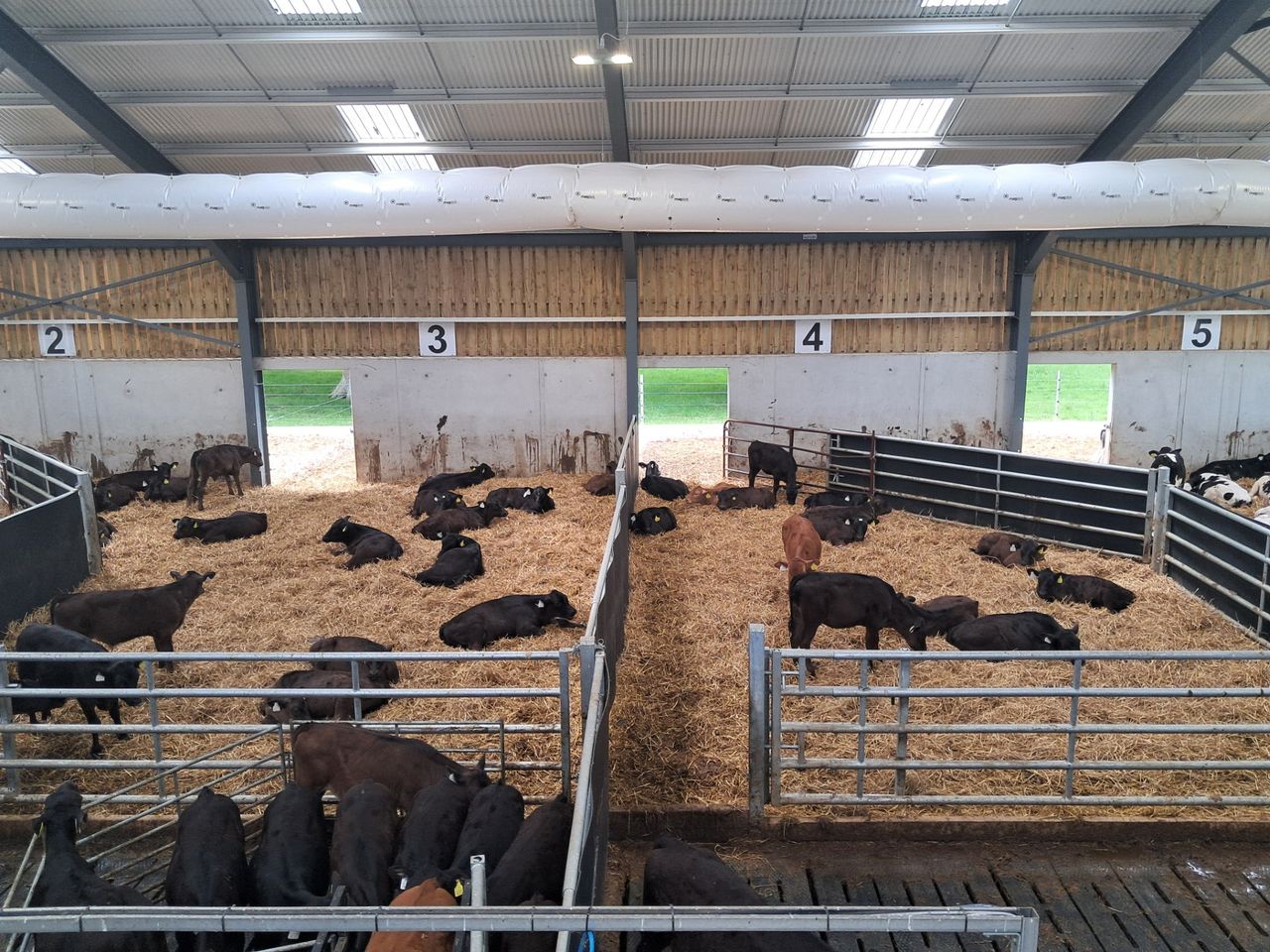
Agriland visited University College Dublin's (UCD) Lyons farm to witness their unusual approach to calf rearing post-weaning that is being trialled on site.
The core focus of the trial is to maximise the returns that farmers see from calves in the early stages of developing and post-weaning.
Prof. Alan Kelly of UCD described how calf intake and daily liveweight gain (DLWG) as well as animal health parameters are closely monitored for consistency.
He also spoke of how the trial must be "commercially relevant".
Trial
The trial looks at calf rearing from both the dairy and dairy-beef systems.
The dairy-beef calves are primarily Limousin and are divided into early and late maturing to ensure the results are accurate and reliable.
The post-weaning development of the calves can only be enhanced when the calf is healthy and thriving during the pre-weaning stage, according to Prof. Kelly.
This is why the calves are housed in "calf cribs" initially and colostrum quality and quantity is prioritised.
Gut development is also monitored with blood sampling carried out to prevent subclinical issues developing undetected.
Genetic selection is a key requirement for maximising early returns.
Beef calf sires are selected with a focus on carcass weight and conformation while heifer sires are chosen based primarily on age of calving and puberty.
The decision to study the post-weaning stage for beef calves is due to research pointing to 40% of carcass variation at slaughter being attributed to the 3-4 month-old stage of a calf's life.
Crucially, there is no compensatory growth period for the first six months of a calf's life, so maximising potential growth is essential when calf rearing.
Mid-stage results
The trial is still underway but the mid-stage results are highly promising.
An example is the early maturing Limousin calves (14-15 weeks old) that are averaging a DLWG of 1.5kg, and have achieved this rate for the past 10 weeks.
These calves will be turned out to grass in the beginning to middle of July, with a target weight at turnout of 175-180kgs. This is 50kgs ahead of the average nationally, while only receiving an additional 17kg increase in concentrate intake.
A range of forage combinations are also being trialed to determine the best feed combinations. The feed intake can be measured to within 10g, producing exceptionally accurate results.
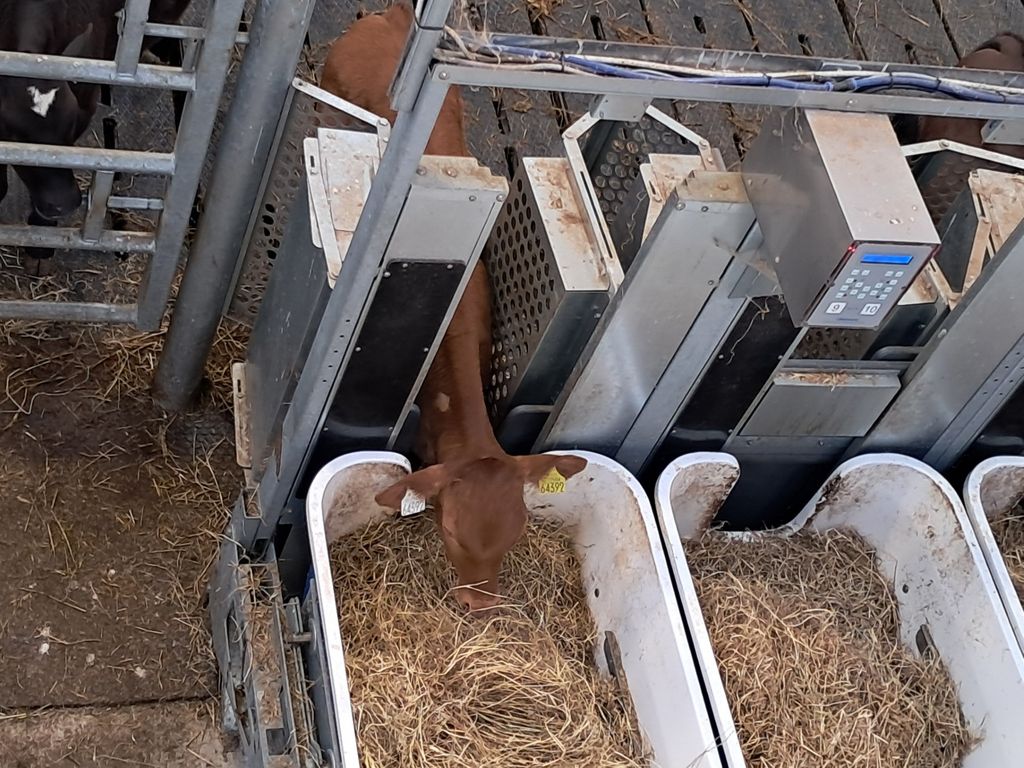
A key observation of those present was the condition of the calves and the uniformity or "homogenous" results with there being no evidently poorer calves.
The target for these calves is to have them finished at 22 months-of-age, with a target carcass weight of 350kg.
The heifer trials from the previous years displayed significant results with all 55 heifer calves born on the farm in 2025 making it to breeding.
Prof. Kelly pointed to the national average of approximately 20% of heifer calves not making it to breeding as a barometer for the trial's success.
The methane produced by these calves is also measured. This evidence is then used in calculating the farm's carbon footprint.
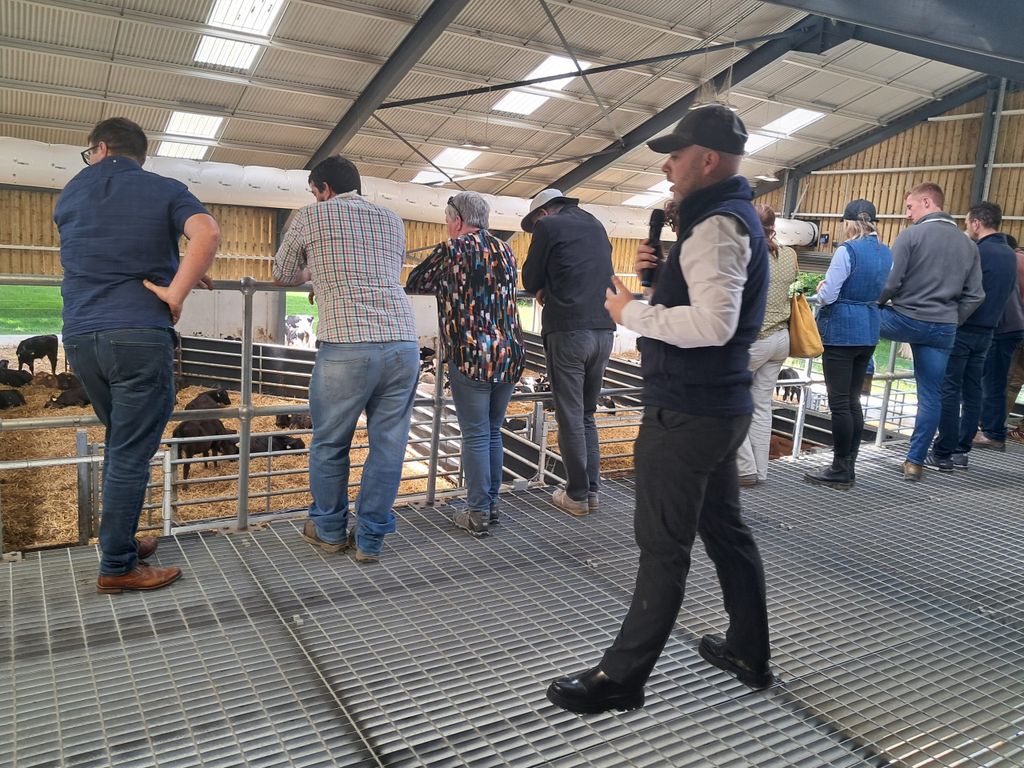
Prof. Kelly emphasised how taking groups onto the farm is a key objective of the research trials.
He said the calf rearing facility has hosted 70 different groups, including "key food buyers of Irish food, consumers, and Teagasc advisers".