Tillage Focus: Managing disease risk on a 1,200ac Cork arable farm
Almost three-quarters of Cork tillage farmer Ted O’Leary’s acreage is down to winter barley and that figure would be higher were it not for crop diversification rules.
Farming 1,200ac - of which around 40% are owned and the remainder contract farmed or rented - Ted also runs an agricultural merchant business from his base at Castleview, Conna, Co. Cork.
He grows around 700ac of winter barley each year, the area constrained by the European Union’s three-crop rule.
This means he must grow at least three different crops, with his main crop not exceeding 75% of his tillage area, and his two main crops combined not covering more than 95% of his total tillage land.
“We’d probably go for closer to 900ac of winter barley were it not for the three-crop rule,” Ted said.
Winter barley fits Ted’s farming system well, performing better than wheat, particularly so since the loss of multi-site fungicide chlorothalonil from the crop protection toolkit in 2020.

It also suits his lighter soil types.
There is an operational reason too for his crop choices; with the autumn a quieter period for the merchanting side of the business, the aim is to get the bulk of the drilling done by the end of October to even out workloads.
“We aim to get most of our field work done in the autumn, so we are nearly all winter cereals, if possible, and that's why we concentrate on winter barley,” Ted explained.
Cork tillage farm
Ted grows most of his winter barley continuously, with a winter wheat/oats rotation in place on the remaining 25% of the acreage.
Spring barley may occasionally feature if a break from winter cropping is required to tackle sterile brome, which is favoured by continuous cereals and is the main weed threat.
“If we have a problem with sterile brome, we might go in with some spring barley but that's the only break we would have from continuous winter barley," Ted said.
"If we had a sterile brome issue, we put into spring barley for a year and then go back to winter barley.
“We can manage the sterile brome with a small change in our rotation, maybe some extra cultivation on headlands, or changing the direction of the ploughing, because the main sterile brome areas are where the ground is ploughed and ploughed again - the ins and outs - which brings up the seed.”
Varieties
Six-row Integral and two-row Tardis are the main winter barley varieties in the ground for harvest 2026.
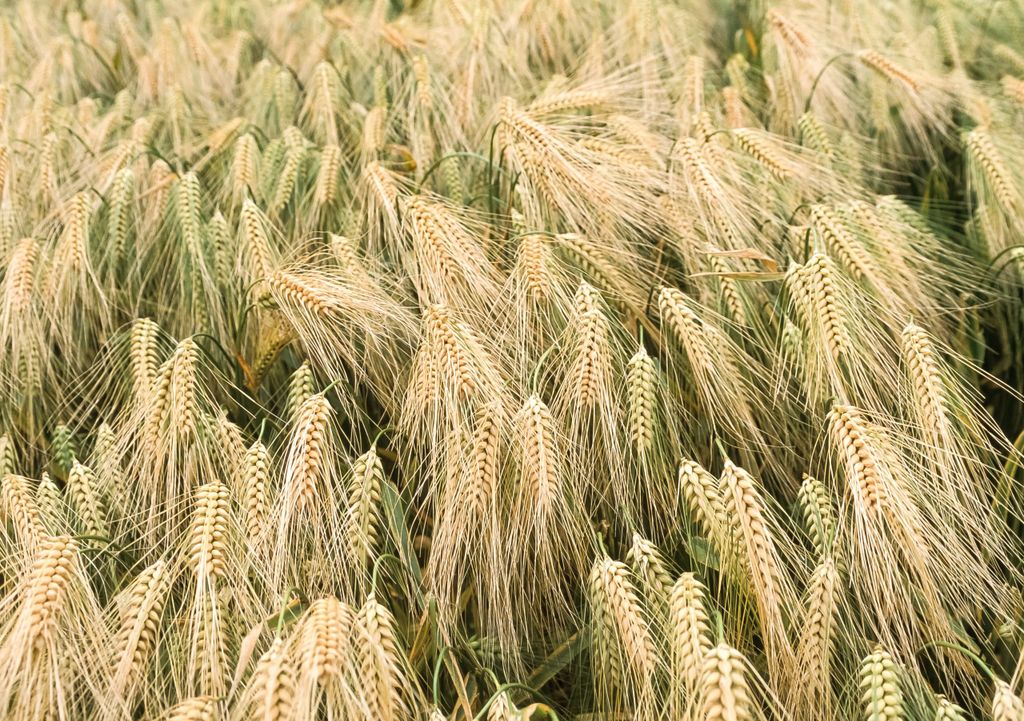
Both are feed varieties, destined for feed compounder Southern Milling.
With the addition of an amount of bought-in crop, Ted will store and deliver some 8,000t of barley each year.
He aims to start drilling winter barley in mid-September, with a finish date of October 10 in mind.
This window has shifted earlier as Barley Yellow Dwarf Virus (BYDV)-tolerant winter barley varieties have come to the market.
“When the seed treatment Redigo Deter was available, we weren’t worried about aphids and BYDV but when that disappeared, we had no option other than to drill a bit later," Ted explained.
"Then when we started to get varieties with tolerance for BYDV, we decided to go back early again for the setting, so we're now starting around September 20 and we try and get it all in by October 10, if we can.”
Diseases
With rhynchosporium and ramularia the main foliar diseases affecting the winter barley, he opts for a three-spray fungicide programme based on prothioconazole, folpet and whichever SDHI (succinate dehydrogenase inhibitors) offers the best value for money at the time.
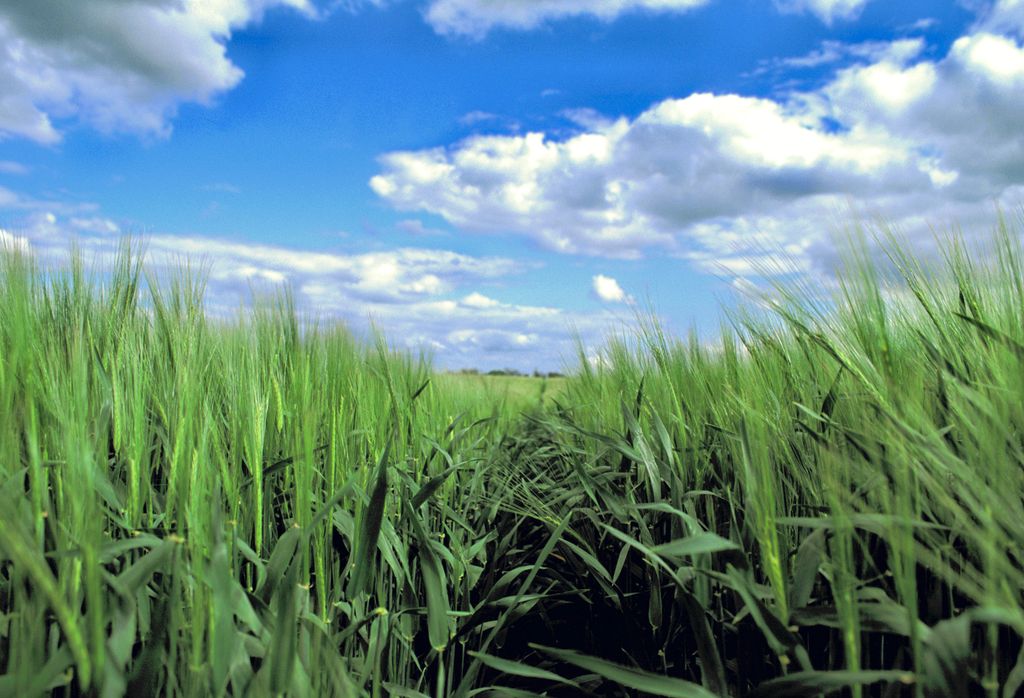
It is not a Rolls-Royce approach but at the same time “you don't take any chances in Cork”, Ted added.
The first spray will typically be applied around April 1, followed by a second between April 20 and 23, and the last around May 10.
Winter barley fungicide spend has been €50-60/ac over the last five years.
As a keen practitioner of integrated crop management (ICM), Ted also makes use of cultural control options where possible, one being to grow the two winter barley varieties together in a blend.
He has been taking this approach for more than 20 years, initially to boost the bushel weights of early six-row varieties, nowadays for disease management and to limit crow damage.
“The crows don’t seem to attack six-row barley as much as they do two-row barley,” he said.
His continuous winter barley approach and shift to earlier drilling also means that take-all can be a problem, one which he manages with the use of silthiofam seed treatment Latitude XL.
He explained that he first saw Latitude used on winter barley 20 years ago in trials.
At that time the yield benefit would cover the cost of the seed treatment, but with a wider rotation in place - which included sugar beet - and hence a lower take-all risk, it was to be another 16 years before Ted took another look at it.
“When the sugar beet went, we went into continuous winter barley, and we were initially trying to delay the setting of the winter barley," he said.
“But then because of the autumn workload we had to go earlier and so four years ago, we decided to get a batch of winter barley seed treated with Latitude.”
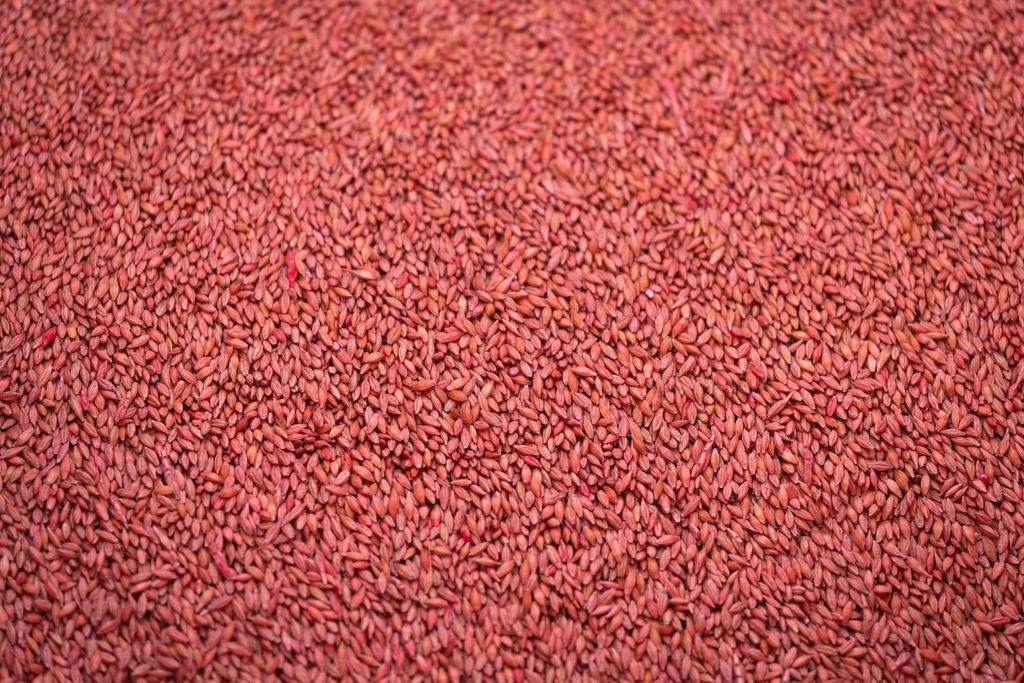
Ted decided to plant 600ac of his 750ac of winter barley with silthiofam-treated seed that season, leaving the last 150ac to be set with untreated seed.
“It all came through; there was good establishment but when we came round to cut it, the minute we moved away from the silthiofam-treated seed the yield dropped.
"We lost 0.25t/ac over the last 150ac compared to the first 600ac and I was able to trace it back to where we ran out of treated seed.
"At that point we decided to use Latitude everywhere,” Ted added.
He calculates that a yield boost of 0.1t/ac, possibly even less depending on the grain price, is sufficient to cover the cost of the seed treatment.
“Our winter barley yields are between 3.75t and 4.0t/ac. On the lighter soil, we could lose 1.0t/ac in a bad take-all year," he explained.
Such a treated crop will also produce better quality and more straw where there is take-all present, according to the tillage farmer, which is an important consideration when all the straw is sold off the farm.
“I think even if the grain yield was the same, the straw benefit alone could pay for the seed treatment,” Ted said.