Latest weekly calf prices remain above average year-to-date prices

Average calf prices for the week ending Sunday, June 14, were above the average price for the year to date in most categories.
According to the Irish Cattle Breeding Federation (ICBF), calf price data for dairy-bred (dairy dam) calves traded in marts, current average prices for several types of calves are at record highs.
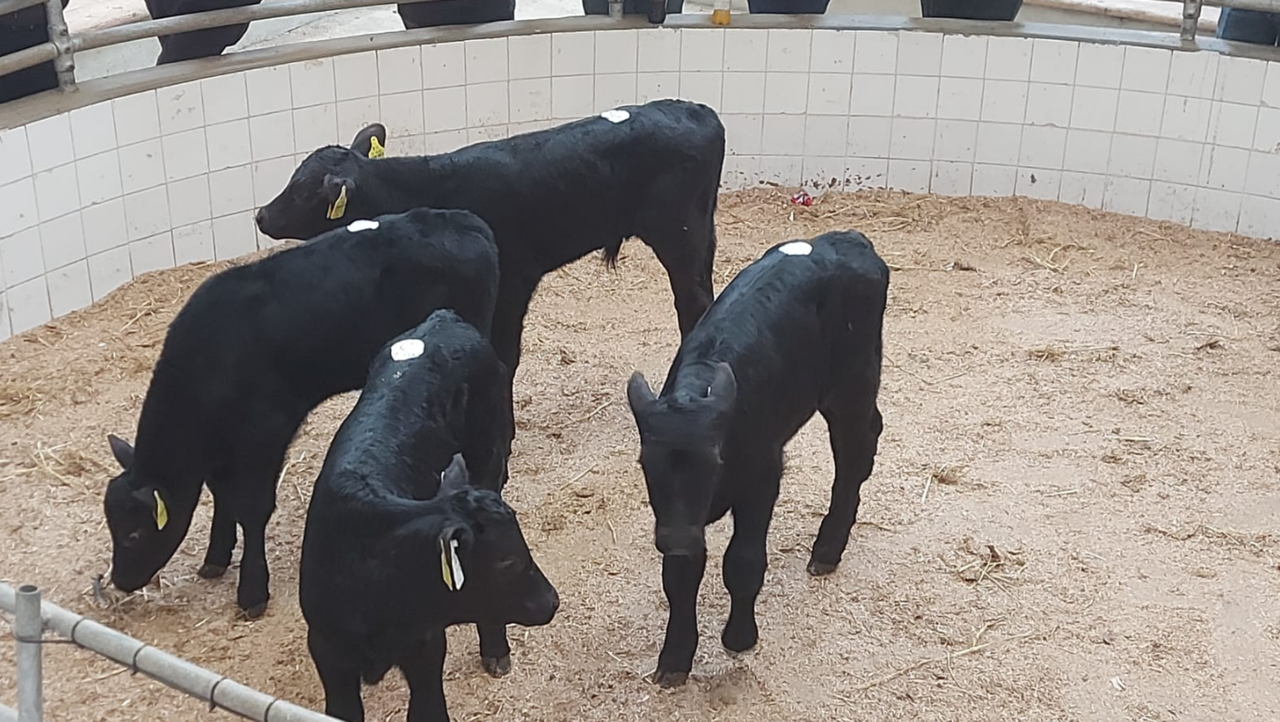
The ICBF data indicates that Angus bull calves under three weeks-of-age sold in marts last week averaged €502/head.
Angus bull calves from 3-6 weeks-of-age averaged €472/head last week with the average price taken from a sample selection of over 650 calves.
The average price for Angus bulls under three weeks-of-age to date this year is €414/head and Angus bulls from 3-6 weeks-of-age are averaging €450/head.
The table below details the average calf price data for dairy-bred (dairy dam) calves traded in marts for the week ending Sunday, June 14:
| Sire Breed | Sex | Age Range | Number of Calves | Average Age (days) | Average Price (€) | Number with Recorded Weight | Average Weight (kg) |
|---|---|---|---|---|---|---|---|
| Angus | M | <21 days | 65 | 17 | 502 | 42 | 66 |
| Angus | M | 21–42 days | 659 | 33 | 472 | 446 | 68 |
| Angus | F | <21 days | 50 | 17 | 326 | 37 | 58 |
| Angus | F | 21–42 days | 545 | 33 | 364 | 373 | 66 |
| Aubrac | M | <21 days | 5 | 16 | 390 | 2 | 50 |
| Aubrac | M | 21–42 days | 28 | 33 | 451 | 17 | 67 |
| Aubrac | F | <21 days | 1 | 15 | 125 | 1 | 42 |
| Aubrac | F | 21–42 days | 15 | 33 | 364 | 5 | 58 |
| Belgian Blue | M | <21 days | 2 | 17 | 585 | 1 | 90 |
| Belgian Blue | M | 21–42 days | 48 | 34 | 644 | 17 | 77 |
| Belgian Blue | F | <21 days | 6 | 18 | 570 | 0 | 0 |
| Belgian Blue | F | 21–42 days | 27 | 34 | 587 | 11 | 81 |
| Charolais | M | <21 days | 2 | 18 | 460 | 2 | 65 |
| Charolais | M | 21–42 days | 24 | 39 | 685 | 18 | 99 |
| Charolais | F | <21 days | 2 | 19 | 458 | 1 | 53 |
| Charolais | F | 21–42 days | 15 | 35 | 509 | 9 | 73 |
| Friesian | M | <21 days | 14 | 18 | 312 | 8 | 59 |
| Friesian | M | 21–42 days | 144 | 32 | 280 | 83 | 63 |
| Friesian | F | <21 days | 0 | 0 | 0 | 0 | 0 |
| Friesian | F | 21–42 days | 24 | 34 | 291 | 23 | 62 |
| Hereford | M | <21 days | 29 | 17 | 521 | 12 | 77 |
| Hereford | M | 21–42 days | 363 | 32 | 503 | 215 | 72 |
| Hereford | F | <21 days | 24 | 18 | 430 | 17 | 76 |
| Hereford | F | 21–42 days | 295 | 32 | 376 | 173 | 68 |
| Limousin | M | <21 days | 9 | 17 | 532 | 0 | 0 |
| Limousin | M | 21–42 days | 67 | 32 | 572 | 19 | 77 |
| Limousin | F | <21 days | 6 | 17 | 353 | 1 | 56 |
| Limousin | F | 21–42 days | 65 | 32 | 431 | 20 | 66 |
| Salers | M | <21 days | 0 | 0 | 0 | 0 | 0 |
| Salers | M | 21–42 days | 5 | 33 | 418 | 4 | 63 |
| Salers | F | <21 days | 1 | 20 | 190 | 1 | 54 |
| Salers | F | 21–42 days | 4 | 36 | 326 | 3 | 70 |
| Simmental | M | <21 days | 3 | 15 | 527 | 0 | 0 |
| Simmental | M | 21–42 days | 29 | 31 | 480 | 18 | 64 |
| Simmental | F | <21 days | 4 | 17 | 425 | 2 | 67 |
| Simmental | F | 21–42 days | 21 | 31 | 412 | 12 | 72 |
| Other Beef Breeds | M | <21 days | 1 | 12 | 100 | 1 | 45 |
| Other Beef Breeds | M | 21–42 days | 13 | 33 | 389 | 8 | 64 |
| Other Beef Breeds | F | <21 days | 0 | 0 | 0 | 0 | 0 |
| Other Beef Breeds | F | 21–42 days | 15 | 37 | 390 | 8 | 66 |
Traditionally, calf prices start the year off strong and ease off as the year progresses but that trend was bucked last year and played out differently this year also.
Calf prices started off strong this year but eased as peak calf sale season arrived before lifting again into the late spring and early summer calf sales.
Anecdotal evidence would suggest the trade for younger calves is currently being driven on predominantly by exporters.
Mart managers around the country generally agree farmer customers are - broadly speaking - more active for reared calves that are weaned off milk.
Spring of 2025 and 2026 has seen a transformation in the Irish calf trade with a significant uplift in demand for all types of calves.
Prior to spring of 2025, the Irish calf trade had seen a number of difficult years with little to no demand for plainer-type calves seen in many instances.
While a good calf trade is a positive for the industry, farmers buying these calves and taking them to beef have seen their output prices fall significantly since last year.
This, coupled with higher calf prices will erode margins in the dairy-beef sector.