Texels at forefront of efforts to reach net zero

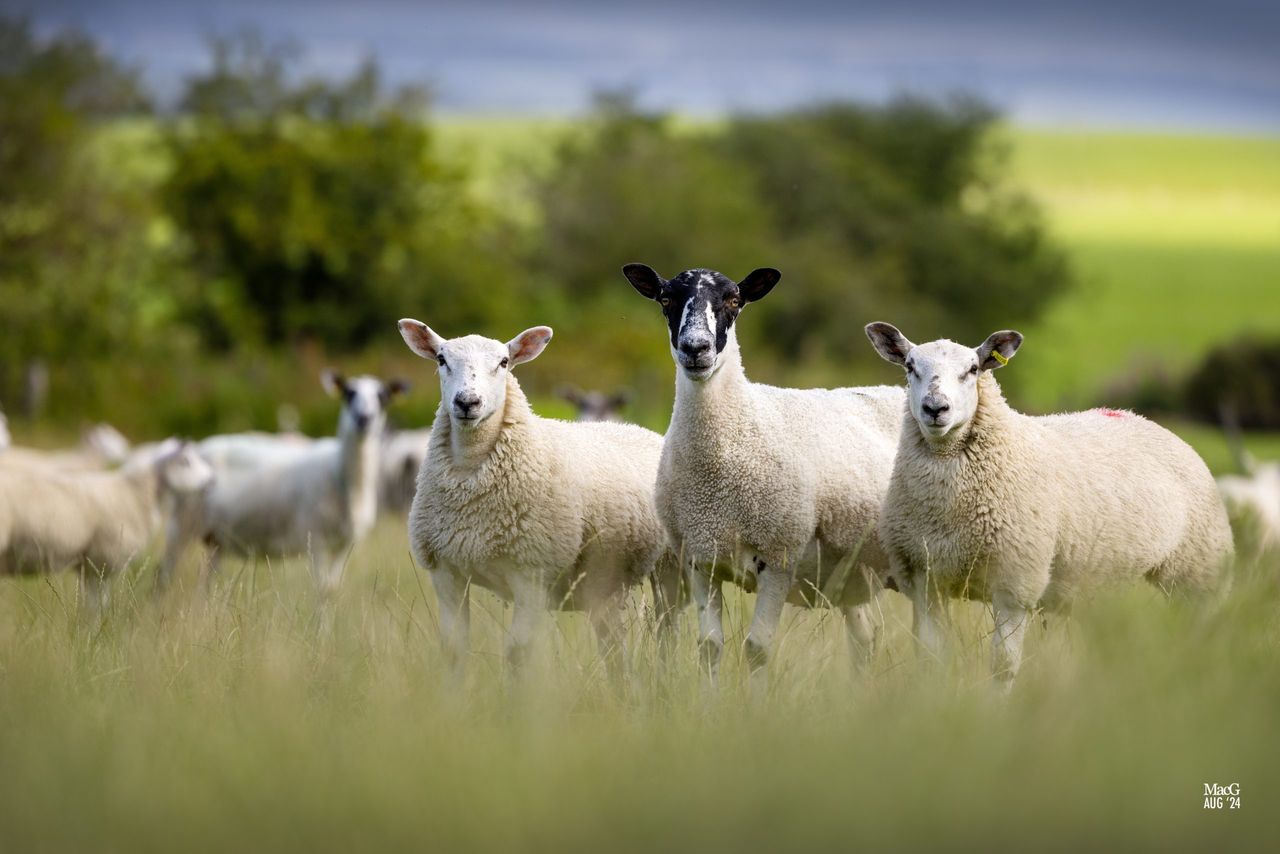
As the sheep industry pushes to cut methane and carbon dioxide emissions, the Texel Sheep Society is targeting breeding for cumulative, long-term reductions.
The sheep sector faces significant challenges in reducing emissions.
As ruminants, sheep produce methane as a byproduct of the breakdown of grass cellulose in the rumen enabling sheep digest grass effectively.
A study by Teagasc on small ruminants analysed over 4,000 sheep and found they produced 20.53g/day of methane.
Methane has a significantly stronger warming effect than carbon dioxide.
Chief executive of the Texel Sheep Society, John Yates said: "It is well understood that climate change is a global problem and requires global solutions."
In a press release from the Texel Sheep Society, Yates added that the Texel breed is well-placed to provide long-term breeding solutions due to its involvement in multi-national research.
He highlighted how global co-operation with other breeders in partnership with the Scotland's Rural College has led to research projects such as the Global Methane Initiative-funded CleanBreeding projects and past projects such as GrasstoGas.
The GrasstoGas project combined researchers from seven countries, including the UK, Ireland, New Zealand, and France, and utilised Texel genetics to lower methane emissions through breeding.
The results of the trial found that the UK sheep sector could reduce methane emissions by 12-15% and potentially up to 27% where uptake of various measures are widespread.
Meanwhile, the Sustain Sheep project, which is led by Teagasc and includes researchers from six countries including the UK and Ireland, found that there was a 30% difference in methane emissions between the progeny of different sires, with genetics accounting for 17% of methane variation.
Yates accepts that there are other "quicker fix mitigations" available to farmers and that the "impact of breeding is moderate".
He said: “Additionally, the Roadmap (Beef and Lamb Environmental Roadmap, facilitated by AHDB) makes clear that, when it comes to breeding, improvements in core commercial traits offer considerably more advantages than breeding specifically for low emissions."
He pointed to the society's focus on improving performance traits and efficiency.
"Any breeding objective must also provide a clear economic benefit to the livestock keeper, balancing profitability with environmental impact where this can be achieved in a practical and affordable way," he said.
The society, he added, was demonstrating leadership through the publishing of breed performance information on iTexel.uk.
The success of breeding strategies is already evident with the breed ahead of many others.
“Faster growth and higher lean meat yields both impact on greenhouse gas emissions by reducing days to slaughter and increasing meat yield per livestock unit,” explained Yates.
He pointed to research showing that lambs sired by a Texel sire with an average performance ranking today compared to similarly ranked sires from 2011 will finish 10 days earlier with significant value provided when selecting higher ranked animals.
“This reinforces that any focus on breeding to reduce greenhouse gas emissions must not come at the expense of the productivity gains achieved over previous decades or those still to come.
"Equally, any new breeding tool must be underpinned by a clear commercial driver, deliver a measurable economic return, and provide practical, cost-effective benefits for livestock keepers.
"While it is possible to measure for the methane emissions from livestock, and environmental breeding indexes can easily be made available, the lack of clear economic drivers for pedigree breeders or commercial producers to engage in this area limits its value and likely adoption at any realistic scale and positive impact on UK industry," Yates added.