Sponsored
Why this Kildare farm is sticking with overground slurry storage

Sponsored by

Overground slurry stores have been at the very heart of sustainable slurry management systems on Irish dairy and livestock for many decades.
In making this happen, they combine a number of unique features. These include an extremely low area footprint and easier mixing in tandem with more effective slurry management opportunities all year round.
As herd size has continued to increase on Irish dairy and livestock farms, the need to secure enhanced slurry storage capacity has become a necessity; both from a legislative and enhanced farm management standard perspective.
Adding to this pressure has been Ireland’s changing climate, with extended periods of wet and dry weather now an integral part of our changing seasons.
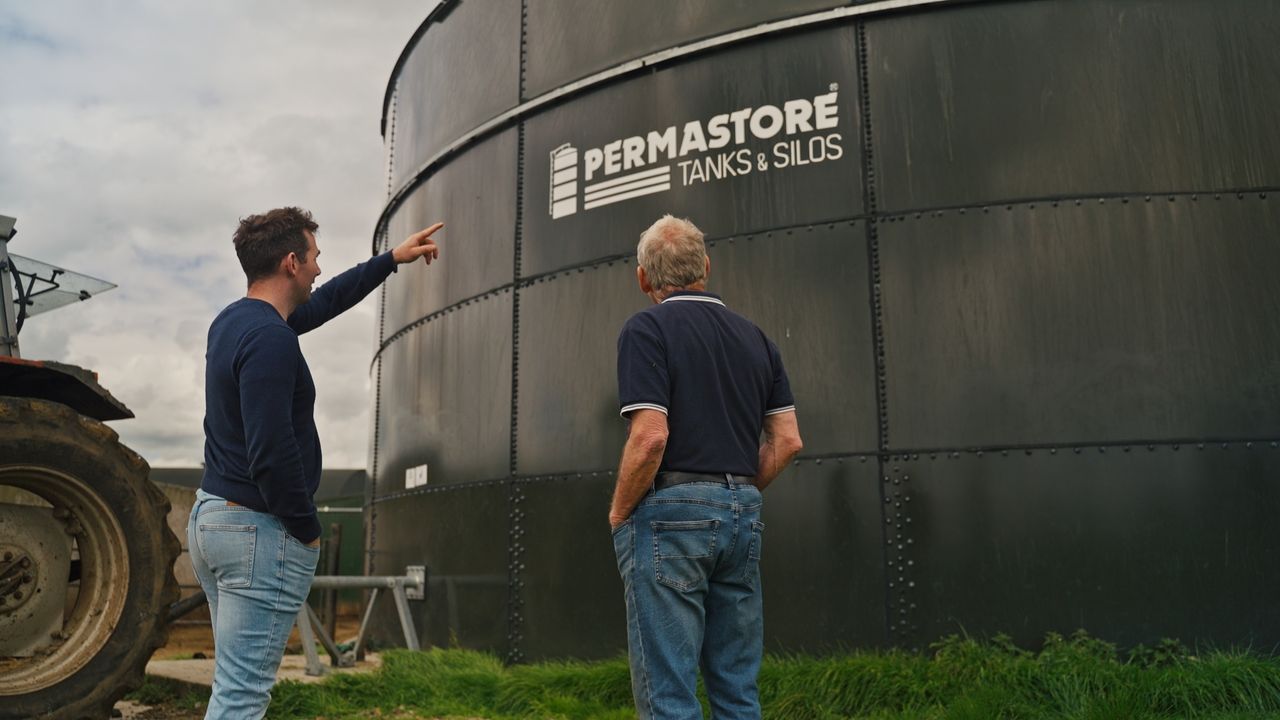
Permastore has long been to the fore as a leader in the development and manufacture of overground slurry stores.
But this is a story of development that begins and ends with the Irish farmers who, increasingly, commit to an investment in overground slurry store systems that have delivered enhanced levels of sustainability within their businesses.
Overground slurry stores
A case in point is Co. Kildare farmer Brochan Cocoman who milks 120 cows with his son Joseph at their Kilwarden Dairy Farm close to the village of Kill.
The first overground 'Howard' slurry store, was erected on farm back in 1979, before the brand became known as 'Permastore'.
That original slurry store is still fully functional today, boasting an additional extension ring that facilitated the additional storage capacity required as the farm developed.
However, the continuing commitment on the part of Brochan and Joseph to make optimal use of the slurry available within the business led to their decision to invest in a second overground slurry store supplied by Tank Storage Systems.
Brochan takes up the story.
“We started the dairying enterprise back in 1978, starting with 60 cows," he said.
“Over a period of time, we built cow numbers up to 120 head, which is where we are today.
"As the original dairy was being finished off, we were encouraged to look at overground slurry store option.
“So we took the opportunity of looking at examples of such tanks that were actually in use at that time. We liked what we saw and, so, the commitment to invest in an overground tank was made.”
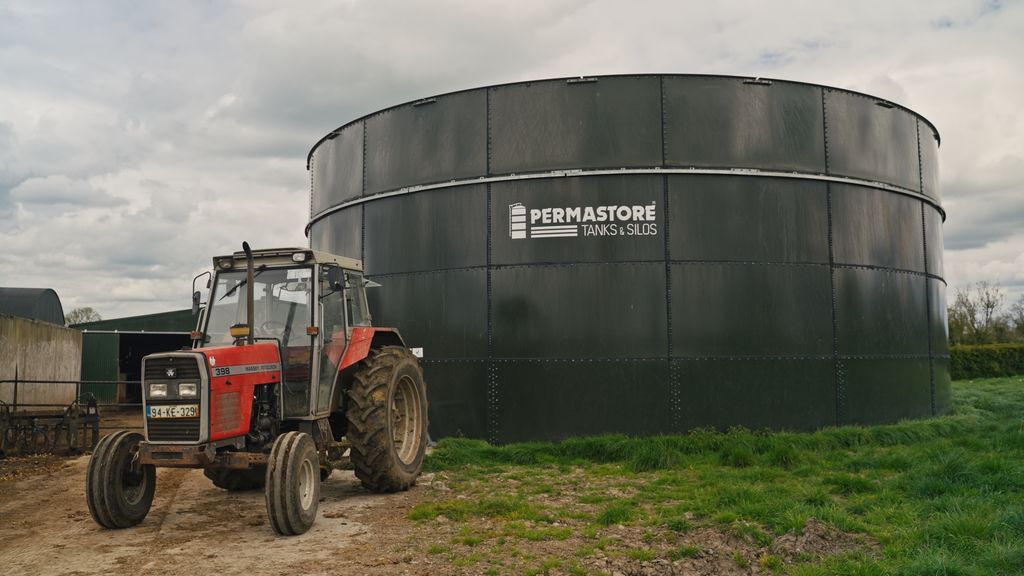
According to Brochan, a number of issues were factored into the final decision that was taken almost 50 years ago.
“Safety is an important issue,” he stressed.
“Everything is above ground. The tank is easily managed and agitated. Nothing can fall into it: there is no risk with it.”
Joseph agrees.
He explained: “The weather is becoming more inconsistent and extreme. We are getting longer periods of dry weather and wet weather.
“It all adds up to a reduction in the number of days in the year on which slurry could be spread. There are also a lot more regulations to be met today than would have previously been the case.
“Costs are constantly rising and, again, these are issues that have to be dealt with.”
The original overground tank on the Cocoman farm was refurbished 10 years ago.
“And its working as well today as it was when first installed,” Brochan confirmed.
Farm expansion
When dairy quotas were abolished, the decision was taken by the members of the Cocoman family to expand cow numbers.
But more milk also meant greater volumes of slurry being generated on the farm.
“At the end of the day a number of issues combined. More cows, growing extremes in weather and the impact of increasing regulation meant that we had to invest in more slurry storage capacity,” Joseph commented.
“Given our experience of the first overground store, the decision to push ahead with a second was a very easy one to make.
“The new facility was purchased from Tank Store Systems.”
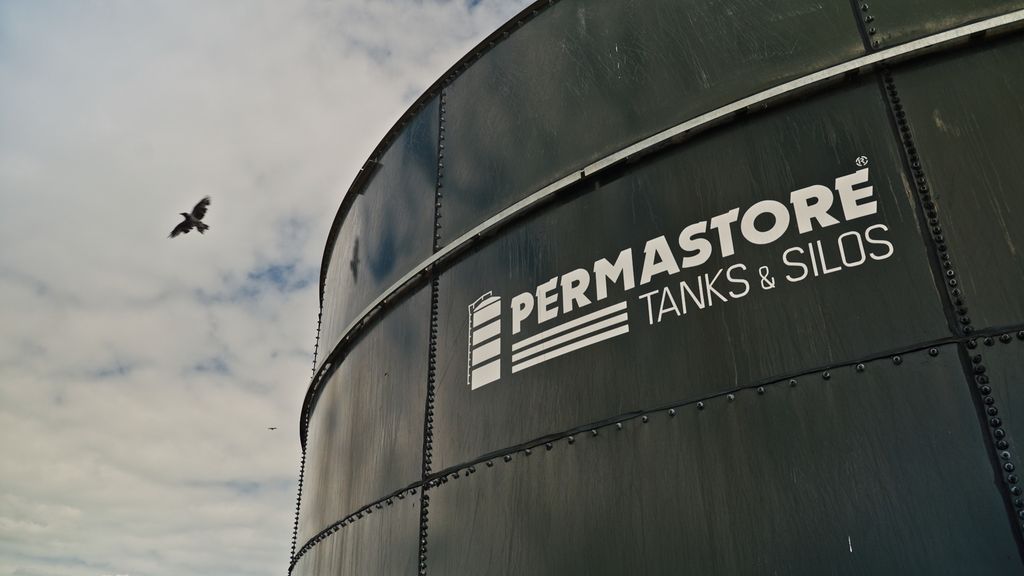
Brochan is quick to reference the fact that overground stores allow for the effective management of slurry and dirty water the year round.
“This is especially so where the application parlour washing and thinner slurries on grazing paddocks during the summer months is concerned,” he said.
“This approach is helping to reduce our dependency on chemical fertiliser and improve cost management."
New tank
According to Brochan: "It took just short of a week to install the new modular bolted Permastore tank. The process had no impact at all on the day-to-day running of the farm.
“The entire process was very efficient.
"I would advise farmers looking to increase the slurry storage capacity within their businesses to consider investing in an overground tank," he concluded.
Donal Flanagan, from Farm Building Service Ltd in Athy, was a recent visitor to Kilwarden Dairy Farm.
He explained: “We provide a nation-wide service over a range of agricultural developments, from planning design through to the submission of planning applications and the management of all grant-related paperwork.
“A large proportion of our work involves project management."
Donal noted that the Nitrates’ Regulations changed at the end of 2025.
"This means that by the end of 2028, increased slurry and soiled water storage facilities will be required on-farm," he said.
“For farmers wanting to increase their slurry storage capacity before the new regulations come into force, it is never too soon to start that development process.”
Sponsored by