Stakeholder proposals for NI NAP released for public consultation

Northern Ireland’s new Nutrients’ Action Programme (NAP) proposals can deliver sustainable growth opportunities at farm level.
This is according to Ulster Farmers’ Union (UFU) president, John McLenaghan, who added:
“It is universally accepted that the immense potential to produce grass in Northern Ireland has to be maximised.
“And it is important for this opportunity to be fully realised into the future."
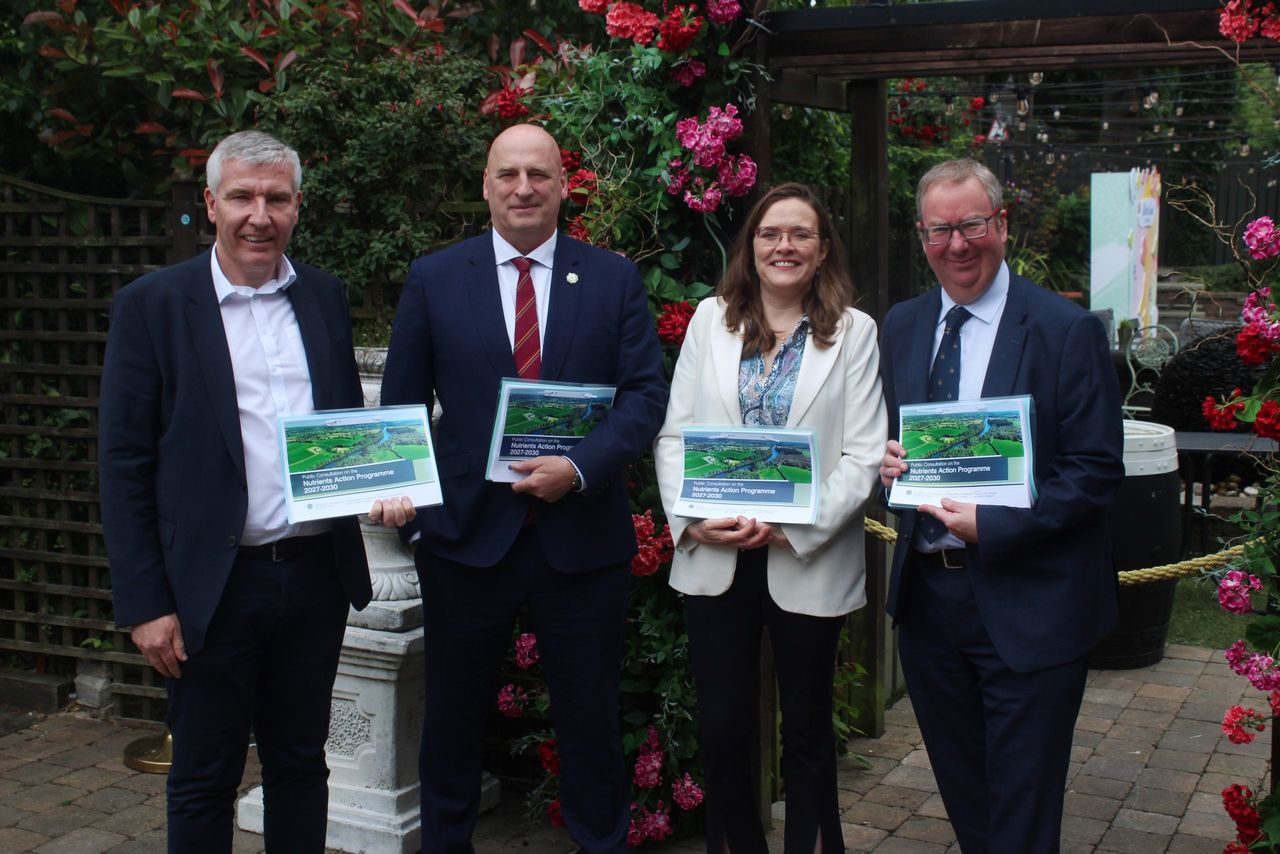
The UFU representative spoke at the launch of a comprehensive framework document, which will be the focal point of a 10-week NAP public consultation.
The proposals for the revised NAP for 2027-2030 were co-designed by the NAP Stakeholder Task and Finish Group, which includes stakeholders drawn from a broad range of expertise, including farming, environmental organisations, agri-food industry and DAERA.
According to McLenaghan, the NAP is "an extremely complex subject".
"The last nine months have seen stakeholder body representatives from across the agri-food and the environmental sectors deliberate at length the issues that must be addressed in arriving at a balanced NAP - one that can deliver a sustainable future for agriculture as a whole.”
DCNI
Dairy Council for Northern Ireland (DCNI) chief executive, Ian Stevenson, also attended the launch event.
He stressed the need for agriculture, in planning a sustainable future, to embrace not just the environmental aspects associated with this principle but also the economic and societal drivers that underpin it.
“The dairy sector is already contributing £2 billion per annum to Northern Ireland’s economy.
“The need to build on this for the future is imperative," Stevenson explained.
Significantly, the DCNI envisages a future for production agriculture that will be underpinned by significant investment at farm levels across a range of new technologies.
The launch event was chaired by NAP Task and Finish Group chair, Karen Brosnan.
Courtesy of her presentation, she confirmed that the new NAP must deliver improved levels of water across Northern Ireland, adding that all the members of the stakeholder group had fundamentally endorsed this principle.
Northern Ireland Food and Drink Association
Responding to the recommendations within the framework document, Northern Ireland Food and Drink Association (NIFDA) chief executive, Michael Bell said that improved and more fully co-ordinated planning procedures must be put in place so as to facilitate improved levels of investment within Northern Ireland’s largest economic sector.
He added: “There are a number of key environmental challenges which farming and food must address. The current phosphate problem in Lough Neagh is one of them.
“The high level of ammonia emissions from our livestock sectors is another.”
According to Bell, investing in new technologies will help deliver the solutions at that are required in this regard.
“This will come through the private sector. And there is a clear role model of success to be learnt from it in this regard," he stressed.
“Previously, the farming and food sectors successfully addressed the challenges posed in the context of the EU Nitrates’ Directive.
“We also need planning regulations that meet the need of sectors committed to sustainable investment," Bell added.
Engagement
Department of Agriculture, Environment and Rural Affairs (DAERA) Minister Andrew Muir (Monday, June 29) launched the public consultation based on the stakeholder group’s proposals.
A 10-week consultation has now begun on the proposals to improve water quality, so that further feedback can be obtained.
"The revised NAP is critical to securing our shared vision for a thriving, resilient and environmentally sustainable future for our agricultural sector.
"I want to put on record my appreciation for the many hours Karen Brosnan and the entire group invested to reach an agreed solution.
"Their efforts have been instrumental in delivering proposals that will deliver improved water quality, whilst working for the farms on the ground," he said.
Minister Muir encouraged "everyone with an interest to read the proposals in full and take part in the public consultation".
"All measures have been carefully considered and are firmly embedded in science and evidence.
“Through this process, our agricultural sector has again shown its willingness to work with environmental organisations and rise to the challenges posed by poor water quality.
"I know that the majority of our farmers are already taking positive steps to manage nutrients more efficiently and to protect the environment," he said.
The deadline for submissions in the public consultation will be 11:59p.m on Monday 7 September 7, 2026.