Opinion: Plant breeding key to future sustainability of agriculture

More than ever, plant breeding holds the key to the future sustainability of production agriculture around the world.
As the days of farmers reaching for herbicides and fungicides to aid their crop management objectives fast fade into obscurity, plant breeders stand ready to fill the gap.
Consider the facts: the number of agrochemicals available to agriculture has halved over the past decade.
And this trend is like to gather even greater pace over the coming years.
Meanwhile the rate at which new chemistries are coming to market has slowed to almost a trickle.
This is because regulators around the world know that weeds and plant disease have the ability to develop resistance to whatever chemicals are "thrown at them".
In contrast, plant breeders now have the tools to identify those genetic packages that can deliver true disease resistance and environmental sustainability, where crop production systems are concerned.
Integrated pest management
It all adds up to a scenario within which integrated pest management (IPM) systems will take precedence.
And this is already happening. Cereal varieties with a built-in tolerance to Barley Yellow Dwarf Virus (BYDV) are now commercially available.
This journey started out with a focus on winter barley and has since moved on to winter wheat.
Moreover, there is every expectation that true resistance to BYDV will be delivered by plant breeders within a very short space of time.
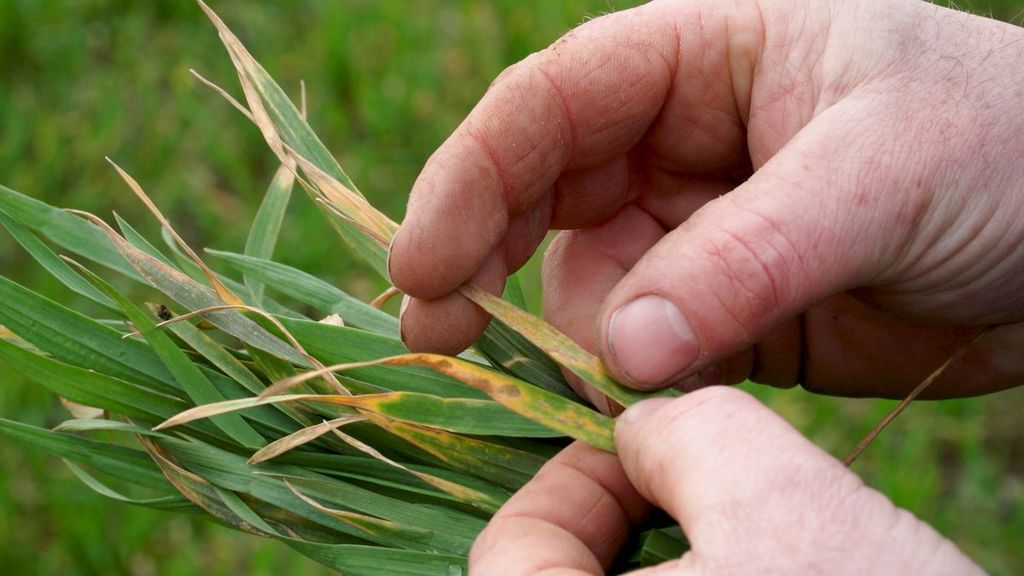
Yellow rust is another disease that is now under the plant breeding spotlight.
Yes, last year’s genetic breakdown within a number of winter wheat varieties gave arable farmers and agronomist throughout the UK and Ireland cause for concern.
However, there is now a strong expectation that hybrid wheat varieties will soon be commercially available with the required genetic markers to reinstate the inherent levels of yellow rust resistance that had previously been the case.
Plant breeders
All of this is a case of man working with nature.
The rate of positive change taking place within the plant breeding sector has been secured by the development of new technologies that make the in-depth analysis of plant genomes an almost routine procedure.
As a result, plant breeders can quickly identify those ‘genetic extracts’ within a plant that can deliver a real and positive difference and apply them accordingly.
And no doubt the use of artificial intelligence down the line will further speed up these processes.
For the record, this is not ‘Frankenstein’ science. It’s simply a case of speeding up those natural processes that are going on around us all of the time.
The good news coming out of all this for agriculture and society as a whole is immense.