Sprayers and spraying the big winners in AE50 awards for innovation

The American Society of Agricultural and Biological Engineers (ASABE) has just announced the 2026 AE50 Award winners.
These annual awards are presented to products that the organisation considers to be ground-breaking and represent significant innovations in agricultural, food, and biological systems engineering.
Selected by an experienced panel, this year's winners demonstrate how artificial intelligence, automation, robotics, and precision technology are fundamentally transforming modern agriculture.
American outlook
There are 50 awards bestowed each year, and with ASABE being an American organisation, a good number of the winning products are specific to that market.
However, progress in agriculture is universal, and what might be introduced across the Atlantic will often find its way over here in one form or another.
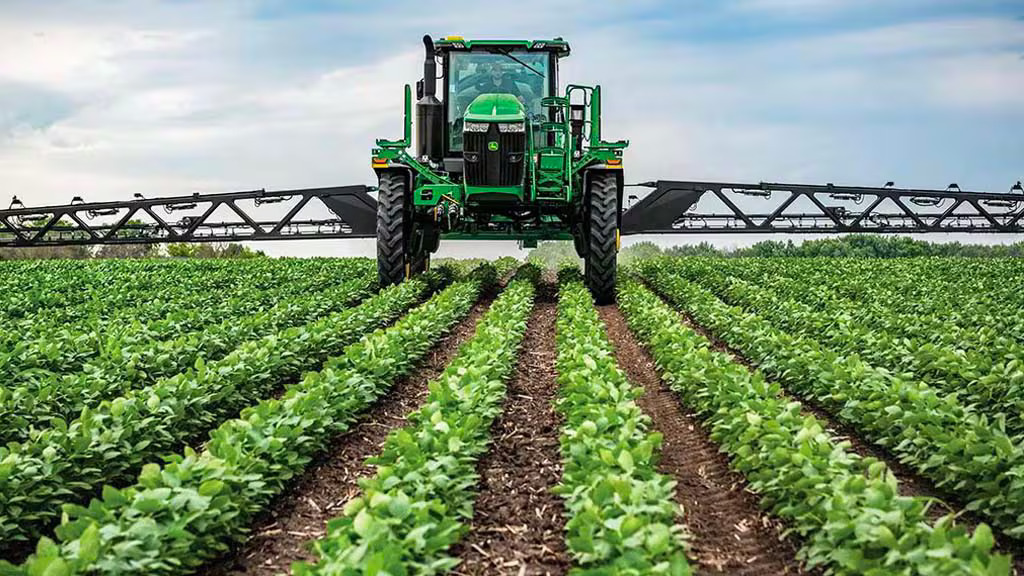
The application of pesticides is an operation that attracts a good deal of digital attention from original equipment manufacturers (OEMs) and third-party manufacturers alike.
Spraying in the spotlight
John Deere, above all others, has been working at reducing input costs through being very selective where spray is actually applied and in what quantity.
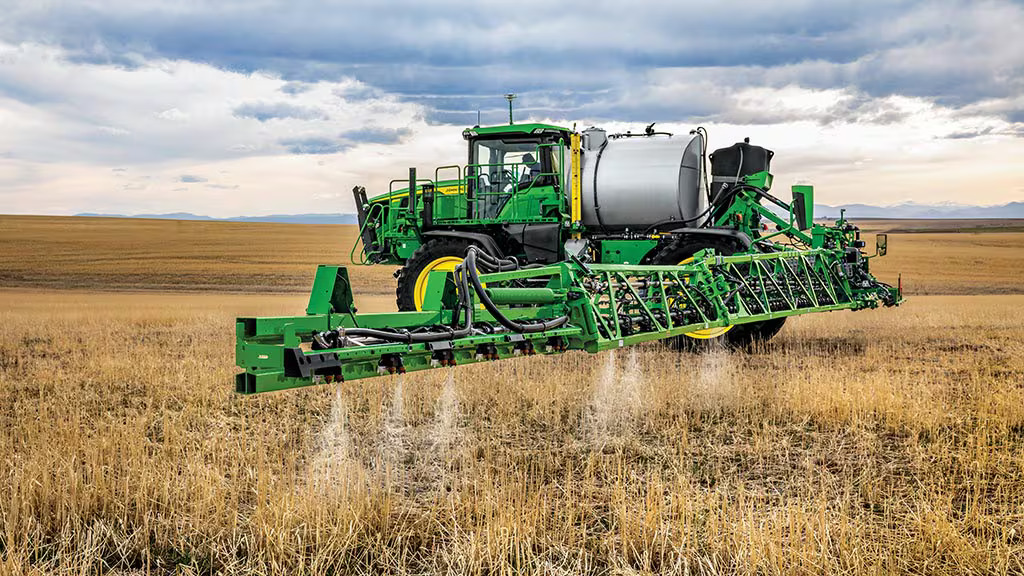
The company has been further developing its See and Spray system.
The basic premise of this system is that chemical is only applied where it is needed. To do this, it needs to identify the target by camera.
Two awards were received by the system; one for the basic package which is being made available in Australia and Europe; and the other for a more advanced version that offers variable rate application.
Harvester application
A variation on the theme has also been applied to John Deere's combines, which predicts and adjusts ground speed according to the weed biomass it encounters in a crop.
Available on its S7 and X9 models, the system is said to mimic the actions of experienced combine harvester operators.
The John Deere ExactInject system was another innovation from the company that received an award, although it is uncertain from the citation whether this is a development of the ExactApply system or something new altogether.
Case introduces IR sensing
Case IH has also been looking at applying chemicals more efficiently.
Its efforts in the form of its SenseApply system were also recognised in the AE50 list of significant developments.
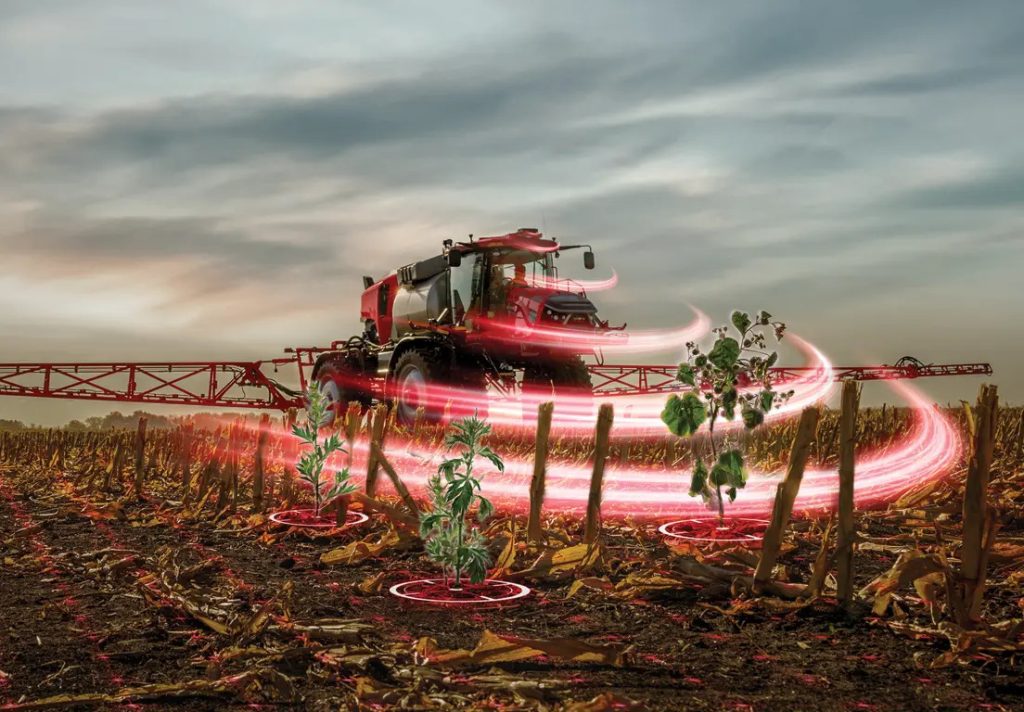
It appears to have taken camera technology even further and added an infrared (IR) capability, which has the potential for spotting plant disease as well as the presence of weed plants.
The system relies upon one cab-mounted camera and can work on both a fixed rate and variable rate basis, although the maximum boom width is not mentioned in the citation.
Rate variation
Precision Planting of Illinois has come up with a third-party system that is similar, but rather than activating individual nozzles when a weed is spotted, it adjusts the rate according to weed density.
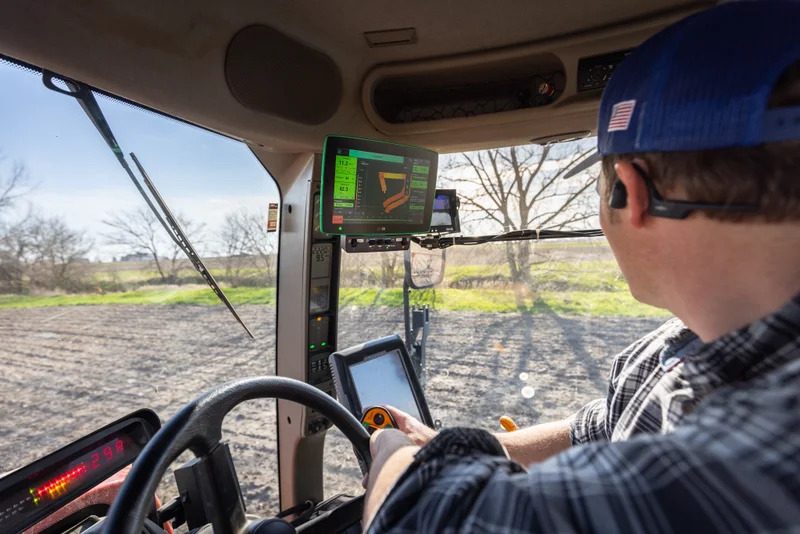
This allows the operator to set the sprayer according to the chemical label instructions but alter the rate according to the size and abundance of undesirable species.
It can also turn the nozzles off when they are not present.
Allied to pesticide application is fertiliser spreading and Unverferth Manufacturing of Ohio has developed a method of adjusting the fertiliser feed to its spreaders through pneumatics.
This optional extra, known as Air Command Section Control, is claimed to ensure more accurate application through its four section control capability, which is directed by the customer's prescription maps.