Sire selection for the autumn-calving herd

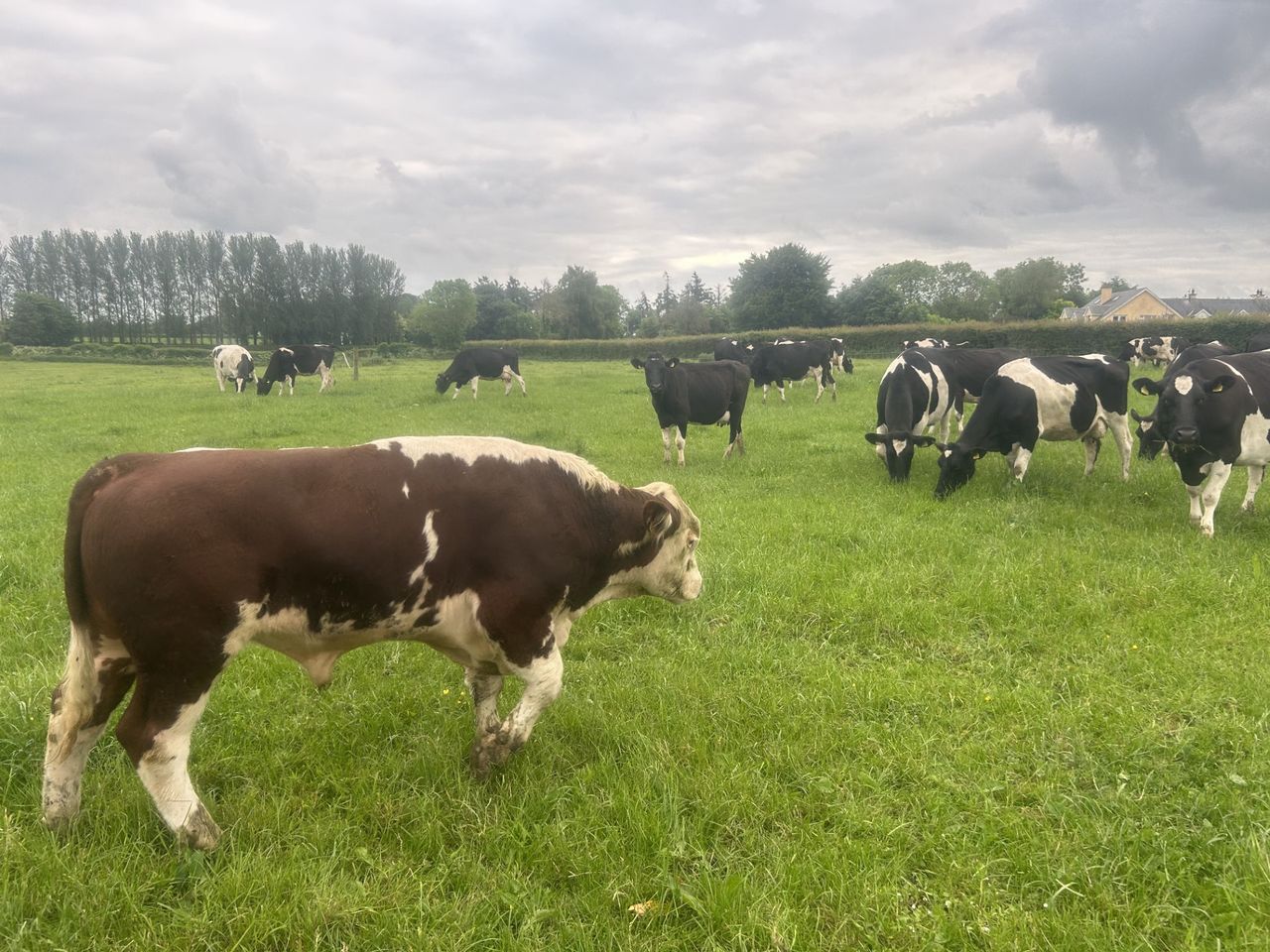
As we get nearer to the autumn calving season, it may be time to start considering looking at what bulls are suitable for your breeding strategy.
It can be hard to even consider the breeding season when calving has not yet even started, but the next few months will be so busy it will be tough to make time to sit down and look over the bulls properly.
As well as that, the sires you put to your cows will dictate your herd's productivity, profitability, and ability to fulfil your winter milk contract, so you do not want to be late to the market when bulls begin to sell out.
When looking at your breeding strategy for this winter, time and effort must be put into the plan to ensure best genetic gain is achieved.
Making a quick job of sire selection can be one of the mostly costly mistakes on your farm, as the results of each breeding season will be felt for years to come.
The aim for any breeding programme, whether it is an autumn-calving herd or a spring-calving herd, is to improve on milk solids while improving on fertility traits, such as calving interval and six-week calving rate.
For an autumn-calving herd, you must be aiming to breed a cow with good efficiency, health and longevity, and the Economic Breeding Index (EBI) balances these objectives.
Selecting bulls
Before selecting for sires, a farmer must identify when they are going to start and finish the breeding season.
For the majority of winter milk herds (<50% liquid contract), starting to calve in October will work to meet your contract targets.
Milking cows during the winter is expensive, as they are milking off silage and meal which is not cheap, so, not oversupplying or undersupplying your contract is crucial.
Calculate how many cows you need in milk now and make decisions to suit that number to the breeding programme.
Using your herd's records, identify the lower performing cows and either mark them for culling or breed them to high Dairy Beef Index (DBI) bulls.
You should avoid breeding your replacements off cows with poor milk solids, poor temperament, poor fertility, high somatic cell count (SCC), or cows that are lame or have any other issues.
Each herd will have its own breeding objectives and targets, but it can be useful to compare with national averages to set a benchmark for your herd.
| 2025 figures | Bottom 20% | Average | Top 20% |
|---|---|---|---|
| EBI | €39 | €105 | €168 |
| Milk litres/cow | 5,314 | 5,412 | 5,800 |
| Butterfat % | 4.14% | 4.31% | 4.52% |
| Protein % | 3.48% | 3.60% | 3.73% |
| Kgs milk solids/cow | 417kg | 441kg | 493kg |
| Six-week calving rate | 61% | 70% | 82% |
| Calving interval (days) | 399 | 385 | 372 |
Farmers can use the figures outlined above to see where their herd compares to the average, and build a bull team to improve areas which are lacking.
At least seven bulls should be used for every 100 cows, ideally selecting bulls from the active bull list.
The updated top 20 bulls on ICBF's Active Bull List as of July 2026 are as follows:
| Rank | Bull Name | Code | EBI € | Supplier |
|---|---|---|---|---|
| 1 | CREFOGUE TOPBIKE SRM | FR2537 | 346 | NCBC |
| 2 | RIVENDELL LOKI SRM | FR2602 | 303 | Eurogene LIC |
| 3 | BUNACLOY DETROIT | FR1849 | 297 | Dovea |
| 4 | MAUDMOUNT FIREPOWER SRM | FR1840 | 292 | Dovea |
| 5 | COOLNACLEHY WOLVERINE SRM | FR1795 | 291 | Dunmasc Genetics |
| 6 | ROEFARM MILAN SRM | FR2577 | 285 | Bova AI |
| 7 | REDCHAIR MCGINN SRM | FR2524 | 284 | Eurogene LIC |
| 8 | GLOUNAWILLAN AKI | FR2525 | 281 | Eurogene LIC |
| 9 | HILLTOWN PRIDE | FR2522 | 281 | Eurogene LIC |
| 10 | AGHERNBRIDGE BOROCCO SRM | FR9813 | 277 | Dovea |
| 11 | BALLYGOWN PETE | FR1900 | 273 | Dovea |
| 12 | BROWNEY ROGER | FR2519 | 272 | Eurogene LIC |
| 13 | KILVURRA GRASSLEAF SRM | FR1958 | 269 | NCBC |
| 14 | CARHUE SALDO | JEX338 | 269 | Bova AI |
| 15 | FOXVIEW GRAIG SRM | FR2578 | 269 | NCBC |
| 16 | SWIFTSHEATH LUCKY | FR2532 | 266 | NCBC |
| 17 | MORRISHEEN QUALITY | FR2528 | 266 | Eurogene LIC |
| 18 | NEXTGEN GIRVIN SRM | FR9010 | 263 | NCBC |
| 19 | COOLANAGH NOBELMAN SRM | FR2592 | 263 | NCBC |
| 20 | MAGHERABOY SAMSON | FR1843 | 261 | Dovea |
Farmers should work out how many replacement heifers are required for their farm and work out how many conventional or sexed straws they will need to breed the number they want.
By doing this, farmers can then work out how many beef straws they will need for the remainder of the herd.
By planning this out now, the farmer will be able to produce the right amount of replacement heifers needed while maximising profits by producing quality beef calves that are easily sold.
Two to three bulls should also be selected with low calving ease proofs for use on the replacement heifers.
The aim should be to breed all replacement heifers in the first 10 days of the breeding season, and quite often the best of doing this is through a simple synchronisation programme.
Getting your breeding season right and selecting the right bulls for your herd is essential for future milk production and for fulfilling winter milk contracts.