Should palm kernel be included in Irish livestock rations?


A debate has kicked off with regard to the merits of including palm kernel expeller in Irish livestock rations.
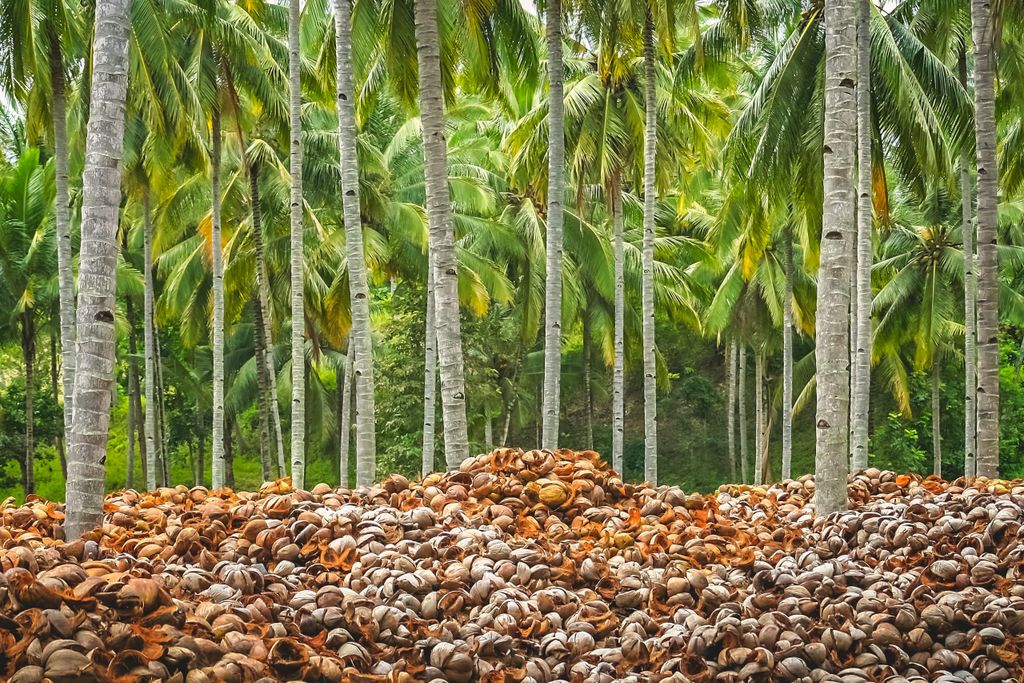
For its part, the Irish Grain Growers' Group (IGGG) believes the product to be too closely linked with palm oil production and the associated deforestation that has taken place across significant tracts of South-East Asia.
IGGG’s Clive Carter said: “The environmental footprint of palm kernel is very negative.
“On that basis alone, it should not be used in Irish livestock rations.
"And Bord Bia must reflect this state of affairs in its Feed Quality Assurance Scheme.”
Adding momentum to the palm kernel debate has been its recent profiling as a forage extender on drought-impacted Irish livestock farms.
Carter said: “There are large quantities of high-quality Irish straw available right now, which can be very effectively fed to all ruminant animals.
“Native grains can also be used very successfully to help livestock farmers make best use of the forage stocks available to them at the present time.”
Bord Bia
Responding to the points made by IGGG, a Bord Bia spokesperson pointed out that the organisation operates a Feed Quality Assurance Scheme (FQAS) to ensure the safety and quality of animal feed as well as the food safety of the end product.
The spokesperson added: “All feeds supplied to Bord Bia certified farms need to be sourced from a FQAS-certified supplier.
“FQAS participants are encouraged to source feedstuffs from sustainable sources, including giving preference to established cereal and grain production regions rather than areas subject to ongoing rainforest clearance for new agricultural production.
“Bord Bia is not an advisory body and therefore does not have the competencies or the remit to prescribe the feed ingredients that farmers should or should not use."
The national food board also cannot "unilaterally prohibit the use of feed ingredients that are legally available on the market".
In other words, it said it cannot promote practices which may be deemed as anti-competitive.
Bord Bia acknowledged that any proposal to introduce criteria specifying the type or origin of feed that scheme members may feed their livestock would need to be considered and agreed by the relevant technical advisory committees.
“These committees comprise representatives from farming organisations and any changes to audit criteria require their consultation and agreement," the spokesperson stated.
“Bord Bia would welcome more proposals coming from farming organisations and other industry stakeholders that would help build robust proof points to strengthen the reputation of Irish food production."
Bord Bia has also said that participation in Bord Bia's Quality Assurance Schemes is voluntary and noted that "not all Irish farmers are scheme members".
IGFA
The Irish Grain and Feed Association (IGFA) has also rowed in on the palm kernel debate.
A spokesperson for the organisation commented: "We aim to make available the ingredients that are commonly requested by farmers, who are dealing with drought conditions and the absence of grass as a result."
The IGFA outlined that most of its clients request high-fibre ingredients to replace the grass that is no longer in the diet.
"Palm kernel expeller is a high-fibre feed material and contributes digestible fibre as well as energy," a spokesperson for the IGFA stated.
“IGFA members are also maximising the use of native grains in compound feeds and this includes compound feeds that are fed in large quantities during drought conditions.
“As well as optimising starch content of diets, we are also mindful of minimum fibre levels required for health and productivity of animals. As always, balance is important here.”