Over 10,000 food violation alerts sent to EU body in 2025


The number of Alert and Cooperation Network (ACN) notifications, which tracks food violations, grew 11% year-on-year.
This is according to the 2025 Annual Report, which provides an overview and analysis of the information exchanged within the ACN.
The ACN is the EU’s collaborative framework that allows authorities to share alerts, investigate non-compliance, and coordinate actions across borders to protect food safety, animal welfare, plant health, and consumers.
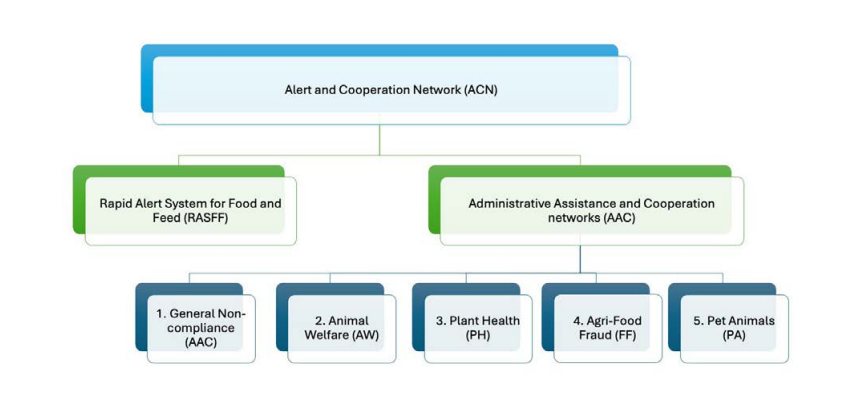
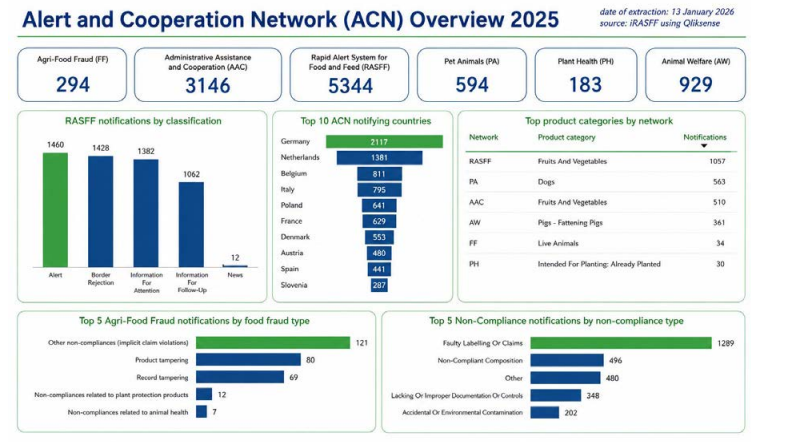
The top notifying countries within the ACN are Germany, the Netherlands, and Belgium.
Directorate-general for health and food safety Sandra Gallina said: “2025 once again demonstrated a simple truth: in a world of increasingly complex and globalised supply chains, vigilance is not an option - it is our collective responsibility.
“With more than 10,000 notifications exchanged, the Alert and Cooperation Network continued to prove its value as Europe’s backbone for rapid information sharing and coordinated action. But beyond the figures, the past year also tested our systems.
“The lesson is clear: even when signals are weak, the system works - and will continue to work, provided we continue to strengthen it.”
She said that the multi-country listeria outbreak linked to cheeses – with severe consequences, including fatalities – reinforced the importance of rapid detection, transparent communication, and coordinated recalls.
She added: “What emerges from all these developments is clear: Europe has a well-functioning Alert and Cooperation Network (ACN) that continues to mature with every incident and further refine its capabilities. In this endeavour, every notification matters. Every authority matters."
“Every signal – even the weakest – matters. Because beyond systems and tools, our mission remains unchanged: to protect citizens, to safeguard trust in the food supply chain, and to ensure the integrity of the food chain across Europe.”
Meat and meat products
In 2025, meat-related notifications accounted for 10.4% of all alerts in the ACN, comprising 5.8% for poultry and 4.6% for other types of meat.
A significant portion of these notifications were linked to potential health risks, affecting nearly 78% of poultry cases and 53% of meat cases.

Microbiological hazards account for almost half of notifications, with salmonella being the main reported issue, and appearing mainly in poultry.
Several issues regarding the composition of the products are recurrent: undeclared substitutions (e.g., beef and lamb substituted with chicken meat in processed and mixed meat products), undeclared use of mechanically separated meat, and unauthorized or undeclared food additives (e.g. glutamic acid).
Other notable issues relate to composition and labelling (e.g., false claims of origin or quality), indicating challenges related to product formulation and regulatory compliance.
Additional concerns involve the misuse of protected denominations, as well as deficiencies in traceability and documentation, which are essential for ensuring transparency and accountability throughout the meat supply chain.
Cases with physical hazards involving foreign bodies (e.g., metal fragments and plastic pieces from the manufacturing process or from packaging materials) in processed products remain common.
The most reported origins were Poland, the Netherlands and Brazil, mainly linked to salmonella and hygiene issues.
Cereals and bakery products
Cereals and bakery products represented around 6% of all notifications (487) in the ACN.
Of these notifications, 70% cover potential health risks and nearly 16% were flagged as potential fraud.
Other recurring concerns include natural toxins (e.g., ergot and tropane alkaloids). Ergot sclerotia are fungal structures that develop on cereal grains, particularly wheat, and produce toxic ergot alkaloids.
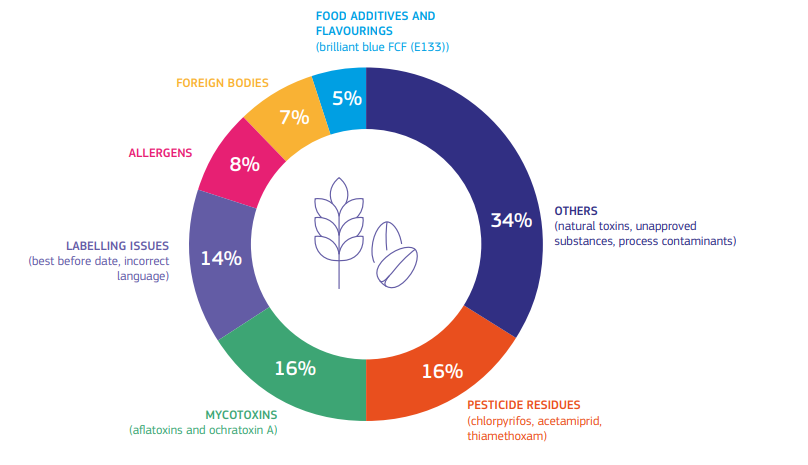
Natural toxins, unauthorised substances in snacks, wheat, and flour, as well as process-related contaminants (e.g., acrylamide and glycidyl esters) were found in biscuits and flatbreads.
Cereal products implicated in these notifications predominantly originate from non-EU countries (e.g. India and Pakistan).
However, several cases also involved products from within the EU, including those from Germany, France, and Italy (e.g., corn flour, organic wheat, and biscuits).
Milk and dairy products
In 2025, notifications involving milk and milk products accounted for 2.6% (228) of the total of notifications within the ACN, and 20.6% of these cases relate to possible fraud.
Approximately 23% of the products originated from France, followed by Italy (12%) and the Netherlands (10%), whereas 12% come from non-member countries.
Notifications concerning milk and milk products mainly related to pathogenic microorganisms, labelling deficiencies, and microbial contamination, followed by issues involving foreign bodies and other irregularities.
Cases involving pathogenic microorganisms represented the largest share of notifications.

Notifications related to labelling deficiencies mainly concern incorrect or incomplete product information, including inaccuracies in product description or composition.
Cases of misleading product denomination were also reported, particularly where the designation of the product does not correspond to its actual characteristics.
Several notifications related to the presence of foreign bodies, mainly plastic, metal or glass fragments.
Other issues concerned spoilage or unsuitable organoleptic characteristics, indicating deterioration of the product’s quality.
Further notifications involved mandatory border checks not carried out, as well as the presence of antibiotics and veterinary residues, such as florfenicol detected in goat milk.
Animal welfare
The Animal Welfare Network saw a major surge in activity during 2025, recording 929 notifications in total.
This marks a substantial increase since the network’s establishment in October 2024, particularly following the mandatory adoption of the system in February 2025.
While engagement across member states has been strong, the bulk of the reporting mainly came from three countries: Denmark, Germany, and the Netherlands.
Those three countries submitted 77.5% of all notifications in 2025.
Transport-related non-compliances overwhelmingly dominated the data, representing 95% of all notifications, while farm and slaughter incidents account respectively for only 4% and 1%.
This disparity stems from the network’s primary function of tracking cross-border non-compliances. Within transport notifications, the three most common non-compliances reported were:
- Temperature extremes (below 0°C or above 35°C) (24%);
- Animals unfit for transport due to injuries (22%);
- Wrongfully completed, incomplete or missing journey logs (11%).
Furthermore, the three most frequently reported species and animal categories are fattening pigs (41%), followed by fattening broilers (20%), and dairy cows (14%), while less common species, such as alpacas and other camelids, represented only 2% of notifications.