Beef and veal imports to the EU rose 25% - study


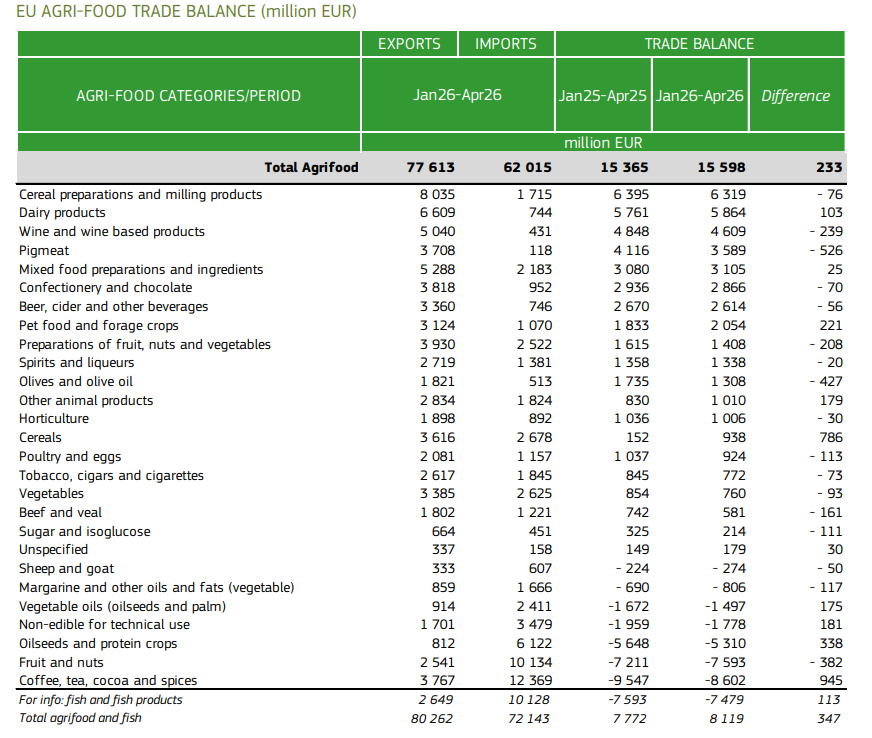
EU imports of beef and veal increased by €246 million (+25%) year-on-year, mainly due to higher imports from Brazil (+€113 million) and the UK (+€45 million), supported by the "current short supply and high prices" of EU beef and veal.
The figures come from a new report, ‘Monitoring EU agri-food trade: developments until April 2026’.
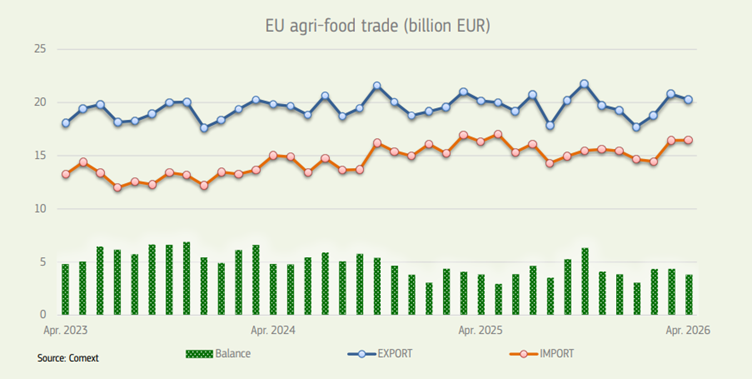
In April 2026, the EU exported €20.3 billion in agri-food products, down 3% month-on-month, but up 1% year-on-year.
Overall, the EU agri-food sector maintained and expanded a “positive trade balance in the first four months of 2026”, with a cumulative surplus of €15.6 billion.
That number is €233 million higher than in the same period in 2025.
It found that cumulative exports for January–April totalled €77.6 billion, €2.3 billion (3%) below the same period in 2025, mainly due to lower values of exports of cocoa products and pigmeat.
The UK remained the EU's largest export destination, despite a modest dip of 2% (€454 million).
Trade with Gulf countries was also affected by the closure of the Strait of Hormuz, with exports to the United Arab Emirates falling by 25% (€266 million).
By contrast, exports to Egypt increased by €302 million (+49%), driven by wheat, while exports to Ukraine rose by €104 million (+7%).
Cumulative imports reached €62 billion, down €2.5 billion (7%) year-on-year.
Farming produce
Looking at exports of farming produce for the four-month period, dairy saw a slight dip in exports year-on-year (down 1%), cereals are also down 1%, and pigmeat is down 12%.
Imports of cereals saw a decrease of €834 million (-24%), mostly due to lower import volumes of wheat (-€466 million, -47%), but also of maize (-13%) and rice (-21%).
Imports from the US and Ukraine also decreased, driven by lower purchases of soya beans and wheat respectively.
By contrast, imports from Viet Nam increased by €278 million (+16%), supported by higher coffee volumes.
Among product categories, imports of coffee, tea, cocoa and spices fell by €1.6 billion (-12%), while imports of fruit and nuts, beef and veal, and margarine and other oils and fats all recorded increases.