Flanagan: CAP cuts undermine food security and rural economies

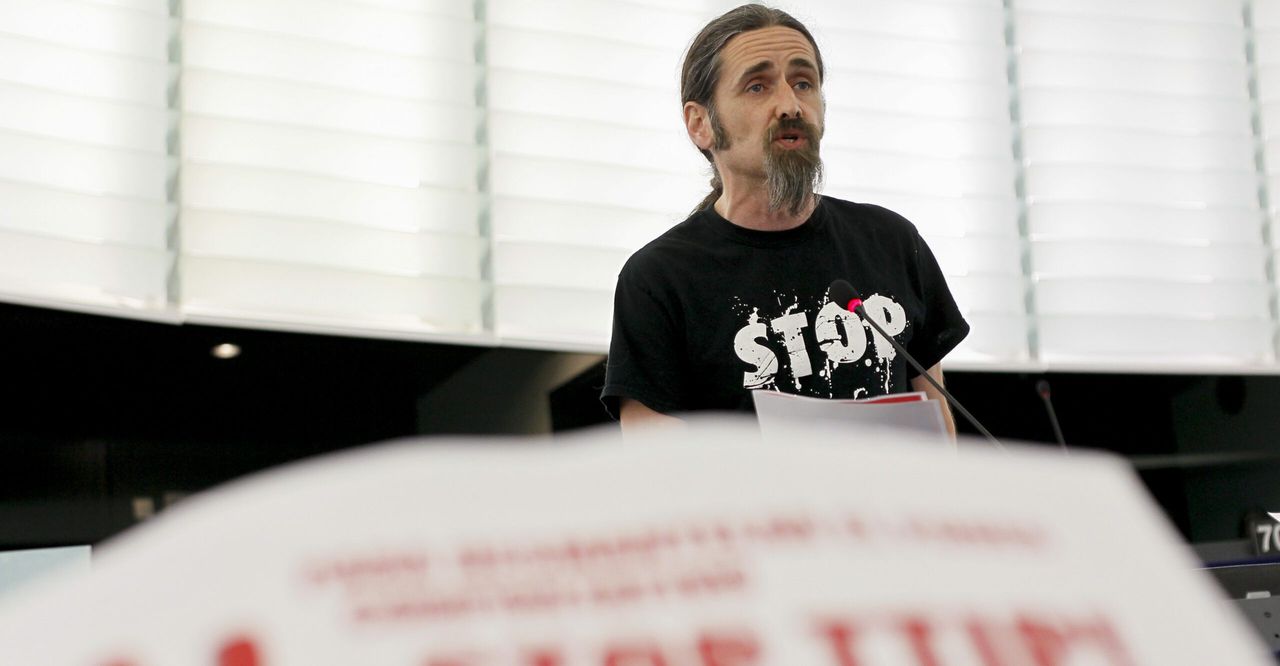
Irish MEP Luke 'Ming' Flanagan has warned that cuts to the Common Agricultural Policy (CAP) budget would undermine food security, weaken rural economies and make farming an even less attractive career for young people.
Speaking to Agriland in Brussels this week, the Midlands-North-West MEP said that his main priority for CAP beyond 2027 is abandoning proposals that could reduce funding "by in or around 25%."
Putting things into prospective, Flanagan highlighted that cuts to the CAP budget since 1991 have "been in the region of about 65%", adding that the such a reduction post-2027 "doesn't make any sense".
He claimed that the proposed decrease is due to "the European Union reorientating where it's spending its money."
The MEP outlined: "We're going to have in the region of €180 billion for defence spending in the next budget.
"In my opinion, the number one thing we can do to keep ourselves safe in Europe is make sure we have food in our bellies and have a good agricultural policy that's well-funded."
When it comes to generational renewal, Flanagan stated that he felt that discussion around the topic often overlooks the most fundamental issue facing young people who are considering a career in agriculture - getting a fair return for their produce.
"I am very wary of this idea that if we make it easier for young people to get access to finance, then they will be able to make a career out of farming.
"That would be wonderful if they were actually going to make a profit at the end of it," he commented.
In order to ensure that farming can be sustainable for the next generation, Ming suggested that farmers should continue to get paid for the "production of public goods" as well.
"A farmer's income should come from the return from what they sell as their product, but also from the money that they get from carbon sequestration or guaranteeing that nearby waterbodies are kept clean."
On an EU level, MEP Flanagan also warned that the EU-Mercosur trade agreement serves as another deterrent for young people entering the sector.
He stated: "The number one thing you could actually do for young farmers is not setting them up to compete against Mercosur countries, who have a complete different farming model.
"[Mercosur produce] is only competitive in one area and that is cheapness; it isn't very competitive when it comes to quality of product or animal welfare standards."
Rural economy
Moving closer to home, Ming told Agriland about how his support for CAP has been shaped by the impact that it had on his family and nearby farmers in Co. Roscommon.
He recalled how his father, who worked as a carpenter, returned from England with his mother and siblings in 1980s and said that CAP payments paid a crucial role in allowing them to remain in Ireland.
"If it wasn't for the CAP payments in the 1980s, we would have had to move back to England again."
Flanagan outlined that his father was able to make a living through local farmers commissioning him for carpentry work on their farms, which opened his eyes to how CAP funds can extend past the farm gate.
He said: "People need to understand that just because you don't live on a farm in rural Ireland doesn't mean that you're not benefiting from CAP payments.
"From putting in fitted wardrobes, windows and new roofs on sheds, my father actually made a living and that money would've been spent by my mother in the local supermarkets, hairdressers or with the local mechanics."
Ming estimated that €1 billion worth of CAP payments have been facilitated througout Roscommon in the 12 years since he has been a MEP.
"Farmers spend every last penny locally; [CAP] payments is the biggest driver of the economy where I come from," he added.