Managing feed efficiency with the winter milking herd

With autumn calving underway and grazing days limited, farmers must consider different diets to achieve optimum feed efficiency.
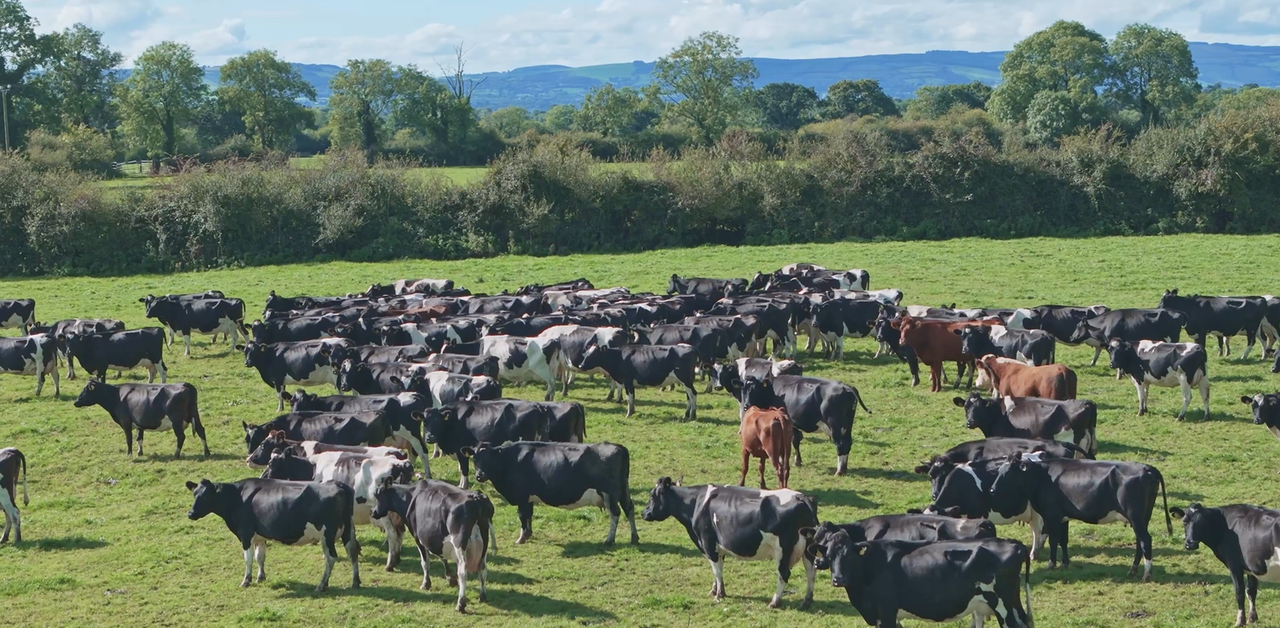
Many winter milkers may be hoping that their herd will get another couple of weeks at grass before coming in, but that does not mean they should not be preparing for housing.
Winter milking is already a costly system to operate; formulating the appropriate diet to meet the freshly calved cows' energy demand and maximise milk production is crucial.
And with fodder availability tighter than desired, feed efficiency will be crucial.
Testing silage is the first step farmers should take when planning the diet.
This will help ensure the freshly calved cows are getting enough protein, fibre, minerals, and energy into their system, as well as helping to reduce concentrate usage.
Farmers should also considering grouping cows to suit different diets and ensure they are getting adequate nutrition to help them flourish - this can be done using milk recordings, body condition scoring (BCS), or calving dates.
Diet
The diet should be promoting high milk solid production while simultaneously building body condition in your freshly calved cows.
Winter milking cows producing up to 30L/day will need a good quality silage of about 74% DMD (dry matter digestibility).
They need to be taking in 20-22.5kg dry matter (DM) at a rate of 60% dry matter intake (DMI) to meet their nutrient demands.
Nutritional requirements at differing production levels for a 600kg cow at 4.1% fat and 3.4% protein, according to Teagasc, are as follows:
| Milk/day | 25kg | 30kg | 35kg |
|---|---|---|---|
| UFL/day | 17.2 | 19.4 | 21.6 |
| PDI g/day | 1,675 | 1,930 | 2,238 |
| UFL/kg DM | 0.90 | 0.94 | 0.97 |
| PDI/kg DM | 90 | 94 | 98 |
| DMI (kg) | 19.1 | 20.7 | 22.5 |
The benefits of a high quality silage are evident in improved forage intake, higher milk solids, and better rumen health.
Silage quality will vary depending on the time of year it was cut, especially after the impact of the drought, so ensure the best of silage is being fed to the cows that need it the most (miking herd/low BCS animals).
If cows are receiving this diet, their demands will be relatively met; however, if they are not receiving this level of quality silage, their diet will need to be substituted with concentrates.
Remember, for every five unit drop in DMD, an extra 1.0-1.5kg of concentrates will be needed to compensate for the low energy levels.
Utilising your concentrates effectively will help maximise the margins/cow, this can be done by feeding concentrates according to the cows yield, using milk recordings and silage testing.
Grouping
Grouping cows during the housed period is not always possible for every farm; however, if you can, it is a good practice to carry out.
This winter, most farmers will group cows into autumn calvers, spring calvers, weanlings, yearlings, and bulls.
If possible, split the winter milking herd into a top-performing group and a bottom-performing group, based on production and BCS.
This allows the bottom performing to be fed separate diets to build energy, as they may be 'milking off their back' post-calving, and therefore producing less milk.
High UFL energy per kg promotes good milk solids and body condition, but it should be matched with PDI in the diet for optimum feed efficiency.
Total mixed rations (TMR) may be another option for the winter milking herd to help boost production, with the following being one of the most common mixes fed to whole herds; 9kg DM grass silage, 5kg DM maize, and 3kg of protein mix (i.e. barley, brewers, beet pulp, soybeans).
The spring calving herd should also be grouped according to their BCS in preparations for the calving season, while first-time calvers may be need to be kept separate to account for energy deficits and weight gains.
Grouping may seem like extra work, but it will boost production and save you on feed in case the spring turn up poor.