Lift to cattle trade as 4,000 male cattle wanted for new contract

There is positive news in the cattle trade this week as livestock merchant Viastar has commenced the purchase of 4,000 male cattle for a new contract.
Agriland understands the new contract for the 4,000 male cattle is for a market destination in North Africa and the purchase of these cattle has commenced this week.
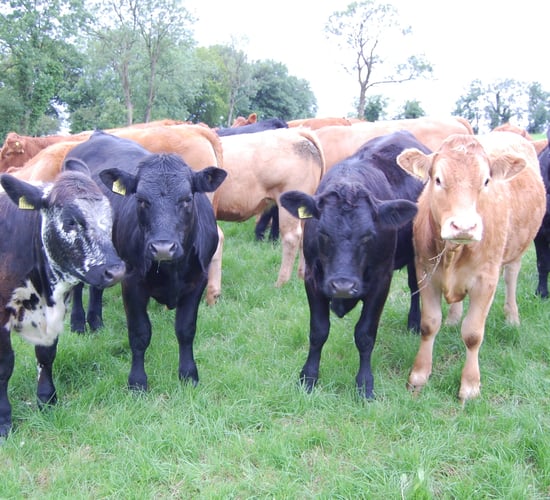
There are a range of cattle being sought for the contract, including Friesian, continental, as well as Angus and Hereford bulls and bullocks.
The specifications of the cattle being sought are as follows:
- Friesian bulls and bullocks from 200-500kg;
- Continental bulls from 250-500kg;
- Angus and Hereford bulls and bullocks from 250-450kg.
Farmers with suitable cattle can contact Viastar on 087 4875663.
The announcement of the new contract will be seen as a positive development for farmers with store cattle within these weight specifications to sell.
Irish export cattle trade in 2025
Speaking to Agriland recently on the performance of Irish cattle exports in 2025, Bord Bia's sheepmeat and livestock sector manager Seamus McMenamin set the scene heading into 2026.
Commenting on Irish cattle exports in 2025, McMenamin said that rising domestic beef prices and more limited supplies of cattle contributed to an increase in the value of all categories of live cattle traded during 2025.
The table below compares Irish cattle export figures as of December 13 of 2024 and 2025:
| 2024 | 2025 | Change | % change | |
|---|---|---|---|---|
| Weanlings | 65,715 | 47,145 | -18,570 | -28.3% |
| Stores | 50,536 | 37,024 | -13,512 | -26.7% |
| Calves | 200,521 | 223,307 | 22,786 | 11.4% |
| Finished | 56,533 | 40,796 | -15,737 | -27.8% |
| Total | 373,305 | 348,272 | -25,033 | -6.7% |
The Bord Bia representative noted that cattle numbers in Ireland recorded some contraction during 2025 but said that the availability of cattle was still good relative to other EU member states.
"This was a key factor behind a firm demand for Irish cattle, particularly in the early months of the year," McMenamin said.
"The Republic of Ireland’s position as the only European country with bluetongue-free status was also a factor in driving demand in key markets for Irish livestock."
In the latter months of 2025, according to McMenamin, the live trade was "more subdued".
The Bord Bia sector manager attributed higher live-weight prices, a slower international trade, and access to ferries as factors contributing to this trend.