Letter to the editor: The EU’s new livestock strategy will mean a healthier Europe


Dear editor, a decade on from passing its Animal Health Law to consolidate disease prevention under a single, unified code, the EU is facing a confluence of livestock health threats.
From foot and mouth and lumpy skin disease to bluetongue and bird flu, animal diseases are spreading and emerging in previously unaffected areas, showing that regulation alone is not enough to protect animal health.
Despite Europe’s strong record of disease control, variable factors like climate change and livestock movement are impacting the way outbreaks unfold. The result is often culling or losses to disease, and import restrictions, with ripple effects for farmers’ livelihoods, trade and food supplies.
Livestock strategy
The EU’s new livestock strategy recognises the centrality of animal health not only to safeguarding the livestock sector, but also to protecting Europe’s food and nutrition security, public health and economic growth.
In the face of new and evolving challenges, the strategy’s emphasis on animal disease prevention is critical for a healthier Europe and must be underpinned by greater collaboration with financial institutions, research institutes and the private sector.
Europe’s livestock sector generates a turnover of €400 billion a year, with exports worth €53 billion, and employs seven million people. And yet 20 per cent of animal production is lost to diseases.
Investing in and designing policies that encourage disease prevention not only improves the sustainability of the sector by reducing avoidable losses, but it also boosts a key economic sector. Integrating animal health into investment planning under the Common Agricultural Policy and working with the European Investment Bank to develop tailored insurance will provide additional buffer for the sector, where access and affordability of veterinary care is often an issue.
Diseases
A number of livestock diseases also increase the direct greenhouse gas emissions – mostly methane – from animal agriculture by impacting livestock’s digestive processes, accounting for eight per cent of the EU’s total emissions. Some also pose a direct threat to human health through their ability to jump species, as the world has seen with bird flu.
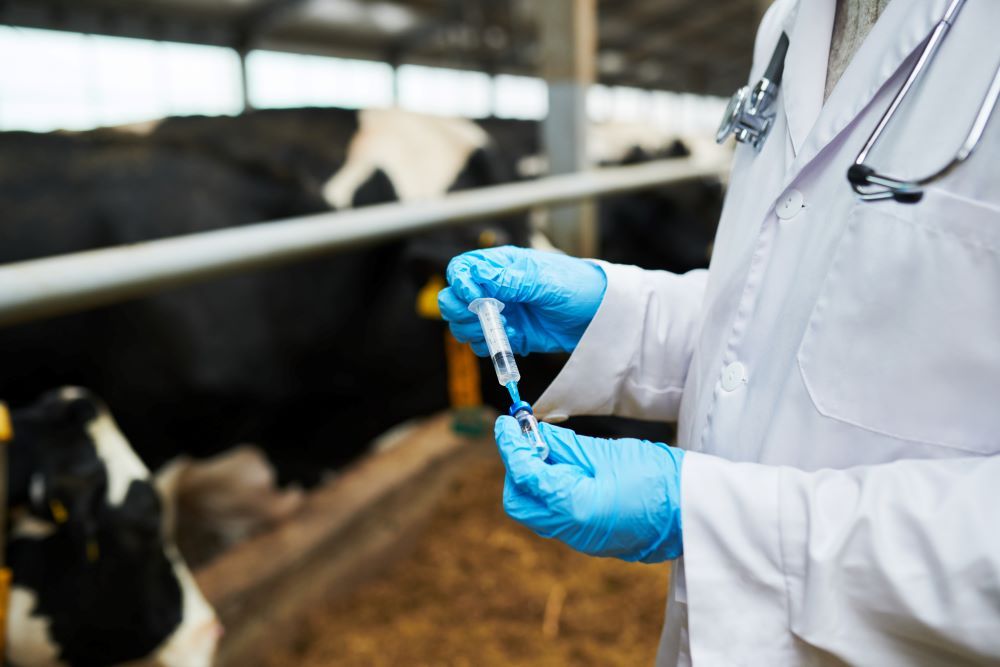
Many of the most common diseases that affect livestock are preventable through a combination of vaccination, biosecurity measures, surveillance and monitoring, but this requires supportive policies, investment and capacitating farmers with veterinary access, training and awareness.
The new livestock strategy’s commitment to strengthen disease prevention, support research and innovation, and review current vaccination rules will mean healthier livestock to ensure the same or greater meat, milk and egg production, even as animal populations decrease across the bloc.
Advancing innovations like Differentiating Infected from Vaccinated Animals (DIVA) vaccines by working with research across public and private sectors will add new and improved tools to the veterinary toolbox. And a review of current vaccination rules provides the chance to focus on lifting barriers to vaccination, including trade, finance, disease monitoring and regulatory inconsistencies.
Bird flu
The strategy will also reduce the risk of zoonotic diseases like bird flu spreading to people, while also reducing the need for antibiotics to treat bacterial diseases. This in turn will help limit the development of drug-resistant diseases, which also affect people.
And healthier livestock will help achieve the EU’s targets for reductions in greenhouse gas emissions, and in particular, methane, which is a more potent greenhouse gas than carbon dioxide. Preventing animal diseases and increasing livestock productivity would reduce emissions by up to 30 per cent.
Fewer losses to culling and disease means more food reaching supply chains, limiting disruption and price spikes like the egg shortage earlier this year, and increasing the income reaching farmers.
After years of animal health featuring as a footnote, the new livestock strategy integrates disease prevention within Europe’s agricultural policy – a much-needed step towards a healthier Europe.
Now, the EU must work with the private sector, research agencies and national governments to deliver on the strategy and fulfil its promise of “One Health”, for animals, people and planet.
From Roxane Feller, director-general, AnimalhealthEurope