Copa Cogeca: EU farmers need more funding for 'disease-related losses'

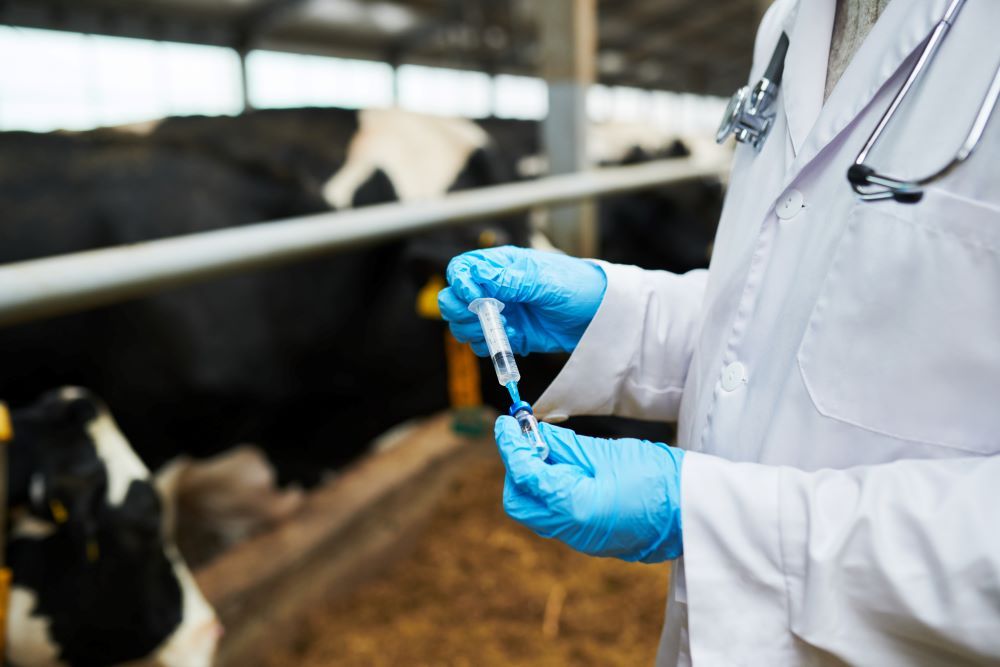
There are not enough financial mechanisms provided under the EU's Animal Health Law (AHL) to "compensate farmers for disease-related losses", according to Copa Cogeca.
The group, which represents farmers and agricultural co-operatives across the EU, made these comments in light of a new report on the effectiveness of the AHL.
The AHL, which came into force in 2021, is intended to protect animal health, support sustainable farming systems, safeguard public health, and maintain the effective functioning of the EU internal market.
Copa Cogeca said that the evaluation confirms that AHL "provides a strong foundation for a modern, risk-based EU animal health policy".
It said: "10 years after the adoption of the Animal Health Law, this evaluation comes at a pivotal moment, as animal diseases are becoming an ever-greater threat to livestock farmers across the European Union."
Key priorities
According to Copa Cogeca, the report identified the "key priorities", such as ensuring consistent implementation across all member states and reducing unnecessary administrative burdens.
It also called for legislation that "enables effective animal health controls while enhancing its adaptability to current and future challenges".
However, Copa Cogeca also stressed the need for better compensation for farmers whose business are impacted by disease outbreaks.
"The evaluation also rightly acknowledges that insufficient financial mechanisms to compensate farmers for disease-related losses remain a key challenge, underlining the need for an adequate crisis reserve and sustainable EU funding."
The organisation also said that prevention, preparedness, science-based vaccination, regionalisation and a well-functioning Single Market must remain at the heart of EU animal health policy.
Copa Cogeca is due to attend the Animal Health Conference marking the 10th anniversary of the Animal Health Law, due to take place tomorrow (Wednesday, July 8) stating the chair of its Working Party on Animal Health and Welfare "will bring the farmers' perspective".
AHL evaluation report
The report of the study, aimed at supporting the evaluation of the law, called for more frequent updates, "particularly in light of climate-driven changes in disease dynamics".
The report found that, in terms of effectiveness, the AHL is "widely recognised" in harmonising the EU's approach to animal health.
However, it added that this effectiveness is dependant on ongoing implementation of the law in individual member states' legislation.
The AHL “emphasises prevention through enhanced biosecurity”, the report said.
“The regulation establishes clear responsibilities for operators and competent authorities, requiring the implementation of biosecurity measures at the farm level and across the production chain.”
While this has led to improvements in awareness and risk mitigation, the report found that implementation “remains uneven”.
"Larger, intensive operations have generally adapted to enhanced biosecurity measures more easily, while small-scale and remote farms face challenges due to limited resources and veterinary coverage," it said.
Sharing of information across the EU is inconsistent, according to report, with the lack of harmonised guidance and training affecting uptake in some member states.
Shared responsibilities
One key feature of the AHL highlighted in the report is the reinforcement of stakeholder roles and shared responsibilities.
It said: “The regulation clarifies the duties of farmers, veterinarians, competent authorities, and other actors in the animal health chain.
“This has improved coordination and accountability, particularly in disease notification, surveillance, and outbreak response.”
However, the evaluation highlighted the need for broader awareness and capacity-building.
“Despite EU-level training initiatives as part of the Better Training for Safer Food activities, dissemination at the national level remains limited, and many stakeholders report difficulties in navigating the legal framework and understanding their obligations.
“In this regard, contingency planning and simulation exercises can also play a role in involving stakeholders and increasing awareness, but the alignment of national legislation is still ongoing.”
The report also cited delays in the alignment of national legislation leading to differences in new provisions, such as those on animal health visits, which it cited as an "important tool supporting disease prevention and early detection”.
Outbreaks
Another AHL goal is to strengthen the EU’s capacity to control and eradicate diseases through “structured eradication programmes and the recognition of disease-free areas”, which are essential for maintaining trade.
However, the current variability in national implementation has limited their full potential, according to the report.
Meanwhile, the study found that the use of restricted zones during outbreaks meant the AHL “has not led to a major disruption of trade flows".
“The AHL allowed member states to apply targeted restrictions rather than blanket bans, enabling the safe movement of animals and products from disease-free zones.
“The AHL has also clarified the conditions under which vaccination can be used as a preventive or emergency measure," it said.
The report found that this approach has enabled more strategic deployment of vaccines, such as in the case of Highly Pathogenic Avian Influenza (HPAI), where targeted vaccination campaigns have helped reduce outbreak severity and limit economic losses.
Unintended consequences
The report also revealed unintended consequences of AHL, particularly for small-scale operators.
“In certain cases, the requirements introduced at the national level, which sometimes go beyond what is set by the AHL, have resulted in increased administrative and financial burdens.
“This has, in some instances, discouraged participation in disease control programmes," it said.
In addition, the lack of adequate compensation mechanisms has been noted by stakeholders as a barrier to effective implementation.
'Risk-based animal health policy'
The report found that, in conclusion, the AHL provides “a strong and coherent foundation for a harmonised, preventive, and risk-based animal health policy in the EU”.
“Its effectiveness is evident in areas where implementation has progressed, particularly in disease categorisation, risk-based surveillance, biosecurity, and eradication efforts.
“However, the overall current picture remains one of transition.”
It added that continued support for member states, simplification of legal instruments, and broader stakeholder engagement will be “essential” to fully realise the regulation’s potential.