Govt urged to address 'VAT anomaly' that 'penalises' farmers

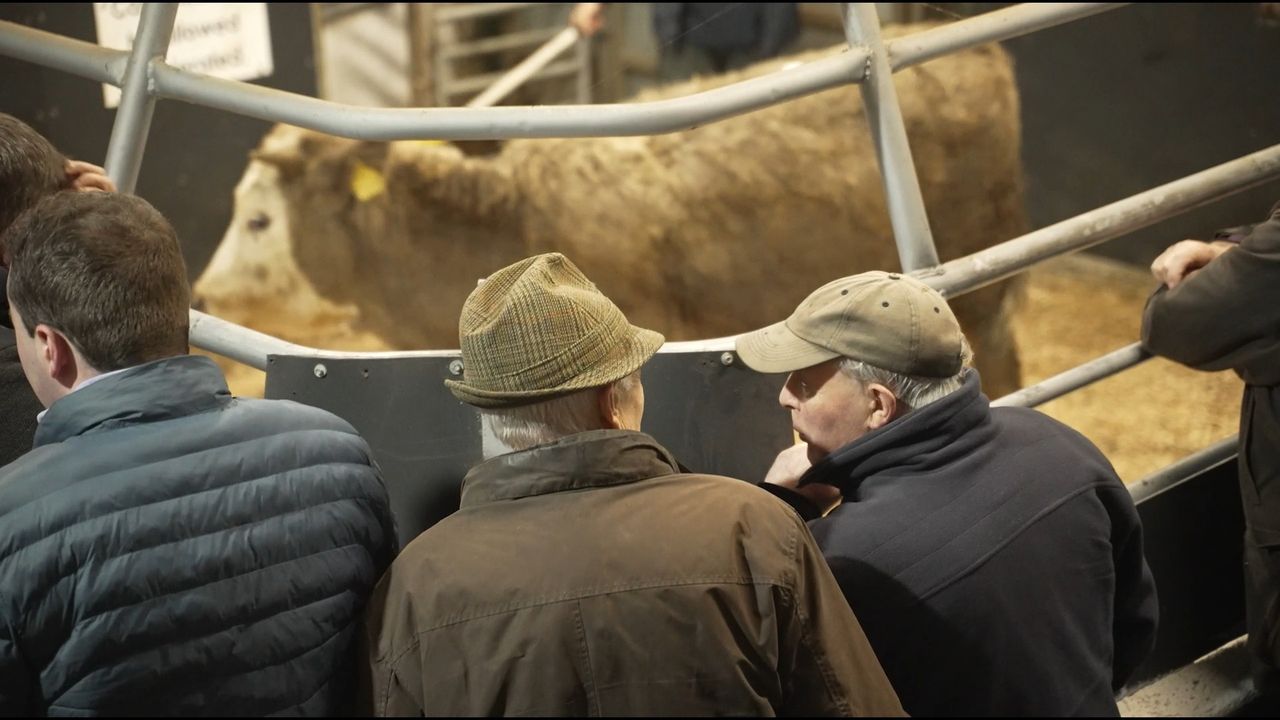
The government is being urged to to address a "VAT anomaly" that "financially penalises" non-VAT registered farmers selling livestock through marts.
The Irish Co-operative Organisation Society (ICOS) said all livestock auctions are on a VAT inclusive basis, and the livestock VAT rate is currently 4.8%.
It said Budget 2026 created a negative anomaly regarding non-VAT registered farmers selling their livestock in the marts which doesn’t occur if the transaction is completed privately between two unregistered parties.
"Many farmers are not VAT registered and when they sell their livestock through the mart, these farmers are being deducted 0.3% in VAT which is the difference between the livestock VAT rate of 4.8% and the flat-rate addition VAT rate of 4.5%," ICOS has said.
ICOS livestock and environmental services executive, Ray Doyle is among those appearing before the Oireachtas Joint Committee on Agriculture and Food today (Wednesday, September 23) on the issue.
Representatives of the Revenue Commissioners and the Department of Finance will also be appearing before the committee this afternoon.
Flat-rate farmers
The flat-rate addition is a special scheme for farmers who are not registered, or are not required to register, for VAT.
These farmers are commonly referred to as flat-rate farmers.
The scheme is designed to compensate non-VAT registered farmers for the VAT they incur on farming costs, such as fuel and other inputs.
Flat-rate farmers are entitled to receive an amount known as the flat-rate addition on their supplies of agricultural activities.
ICOS said the rationale for the difference in the two VAT rates lies in the fact that government has cited a Central Statistics Office-based VAT calculation as the basis for the change introduced in last year’s budget.
ICOS has requested the formula underpinning this decision and said "it has yet to be provided by government".
Balancing
At a recent meeting with the Department of Finance, ICOS said it stressed that if the state needs to address balancing within the VAT system, this can and should be managed over an extended period rather than through a sharp deduction in one year that penalises farmers and marts, only to be potentially reversed in another year.
"The flat-rate addition must be amended to ensure farmers selling livestock through marts are not disadvantaged," ICOS said.
"Livestock sales remain subject to the 4.8% VAT rate while the flat-rate addition has fallen to 4.5%, creating an anomaly that leaves farmers undercompensated.
"For every €1,000 traded in the marts, €2.86 is now deducted for the flat-rate addition."
ICOS said that many farmers mistakenly think the mart has deducted this amount for themselves, which is not the case.
"Some farmers are therefore now trading privately rather than through their local mart as a direct result of this unfortunate government policy," it said.
"One might feel that a €2.86 cost per €1,000 is minimal but the commission that marts receive to sell an animal is not substantial.
"In fact, it is often capped at approximately €20 so a seller who gets €2,000 for an animal is now deducted €25.72, including the VAT, whereas in 2025 his total deduction was €14.28.
"This is putting marts at a competitive disadvantage because the seller can sell farm-to-farm to a non-registered farmer without having to pay the VAT penalty."
ICOS said administrating the flat-rate addition scheme is also a burden for marts as they are required to ensure which sellers are VAT registered or not, collect the relevant VAT and return it to Revenue.
'Marts must not be discriminated against'
ICOS has proposed that the VAT rate addition is never set higher than the livestock rate for any individual year.
"If the state needs to address balancing within the VAT system, this can and should be managed over an extended period rather than through a sharp deduction in one year that penalises farmers and marts, only to be potentially reversed in another budget," it said.
"The flat-rate addition should be adjusted to align with the livestock VAT rate so that the scheme continues to fully compensate farmers, as originally intended, without distorting competition or imposing a hidden cost on livestock producers.
"Marts must not be discriminated against.
"Non-VAT registered farmers must not be financially penalised, and the flat-rate scheme must remain simple, fair and fit for purpose."
ICOS has said that Revenue should reclaim any VAT due via annual tax returns at individual farmers level, not via the mart, as all farm-to-farm moves will then be captured also.