Draft guidelines target 'inconsistent' rural planning policies

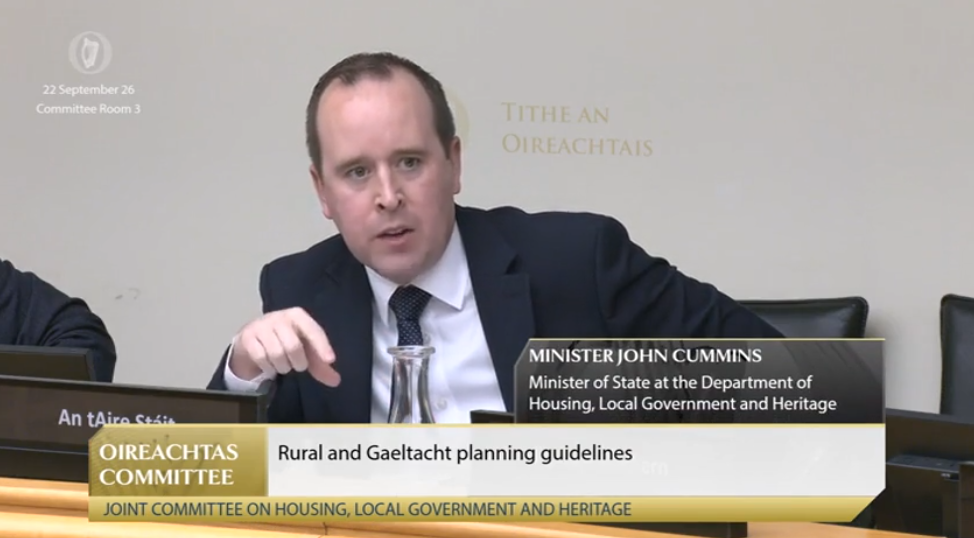
The inconsistent approach to rural housing policy will come to an end once new planning guidelines are published, according to Minister of State for Planning John Cummins.
The Joint Committee on Housing, Local Government and Heritage met yesterday (Tuesday, September 22), to discuss the draft rural and Gaeltacht planning guidelines, which were unveiled in June.
Minister Cummins told the committee the draft national planning statement (NPS) is currently being assessed under EU environmental directives.
When pressed by committee members for a timeline for the finalising guidelines, the minister said he could not commit to an exact date due to the ongoing Strategic Environmental Assessment (SEA).
"The draft NPS and associated environmental documentation will be published for public consultation and submissions will be invited before the statement is finalised for government approval," he said.
The minister noted that public feedback will be factored into the draft guidelines before the final version is presented to Cabinet.
Rural housing
Minister Cummins said the draft statement is "a significant much-needed overhaul of rural planning guidelines that have not been updated in over two decades".
"For too long people in rural Ireland have faced a planning system that can feel unnecessarily restrictive, complicated and above all inconsistent.
"That will change under this new National Planning Statement.
"If someone wants to build a home on a suitable site, in the community where they were raised, where their family lives and where they want to raise their own family, we should be asking how we can facilitate that – not looking for barriers to put in their way," he said.
The minister stressed that planning rules, environmental protections and proper development all remain important.
However, he noted that a person's Eircode should not determine their prospects of getting planning permission.
"I want to move the planning system towards a culture of facilitation rather than restriction," he said.
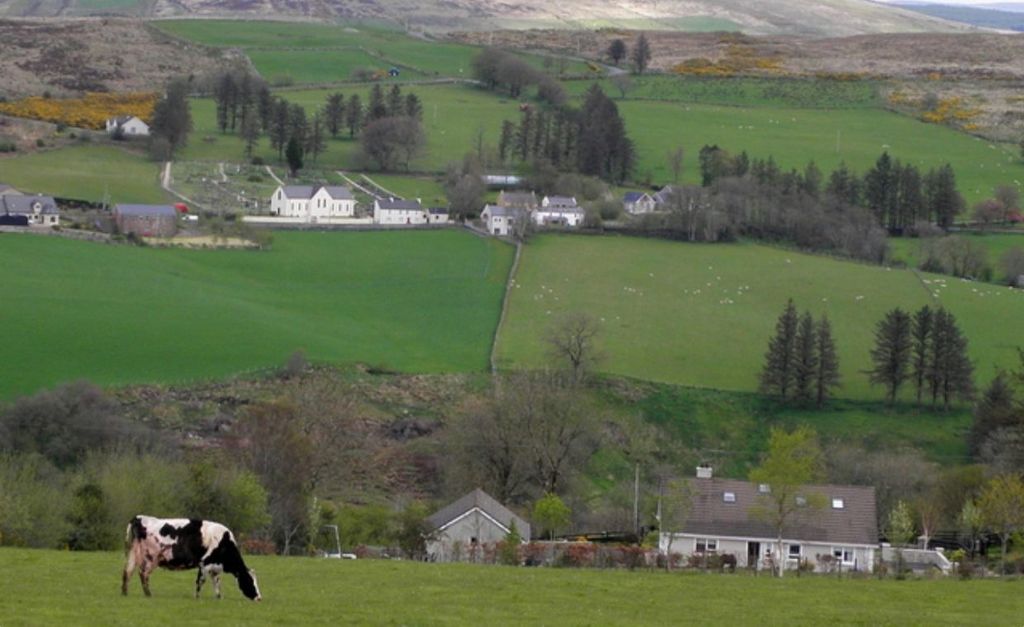
The minister said the proposed changes will allow people from a rural area to build their first home in that area, regardless if they owned a home in an urban area previously.
"This is a particular problem for young people who go to college, get a job, buy a home but when they have a family, they want to move back to where they are from, close to their family and their support network - that will be possible under these changes," he said.
The draft guidelines also seek to address the use of "blanket bans" by local authorities on ribbon, infill and back land development or caps being placed on the number of homes that may be built on family farm holdings.
Under the draft proposals local authorities would operate under a "nationally standardised local need criteria" which would establish "a clearer framework for assessing proposals in rural areas".
"Crucially, this will end the current inconsistent approach where a house may be permitted in one part of the country while down the road in a neighbouring county, permission would be denied for the exact same type of development," Minister Cummins said.
Planning
The minister told committee members that once the guidelines are approved they will apply immediately for local authorities.
"I would expect local authorities to ensure that they are consistent with this National Planning Statement as speedily as possible.
"But the important thing for applicants and those that are interacting with the planning process is that this National Planning Statement stands in its own right.
"I would expect local authorities to be basing decisions based on what is confirmed in the National Planning Statement as opposed to what may currently be in their development planning," he said.
One-off houses
When asked if the new guidelines would result in an increase in planning permissions, Minister Cummins said predictions around that would be "very challenging".
He said there are around 6,000 one-off homes built every year with 4,500-5,000 of these in rural areas.
"It would be reasonable to say that there will probably be an increase in planning applications as a result, but you can never obviously determine the outcome of what an individual planning application would be," he said.
Sinn Féin spokesperson on Rural Affairs, Community Development and the Gaeltacht, Conor D. McGuinness has criticised the government for failing to establish how many additional homes will be delivered under its proposals.
He said the success of this policy will ultimately be measured by whether more people are actually able to build homes.
In response to a question on whether the proposals would address concerns about road access and rural development, Minister Cummins noted there are "different categories of roads".
"In terms of national roads, I can't override national transport policy in this rural national planning statement.
"What we've specifically called out in relation to local and regional roads is that we will generally support, or be more favourably disposed towards, shared entrances where they exist, but not to exclude new entrances.
"In relation to national secondary roads, that we can cater for development on lightly trafficed sections, which is in line with national transport policy", he said.