Galway discovery reveals evidence of farmers 6,000 years ago

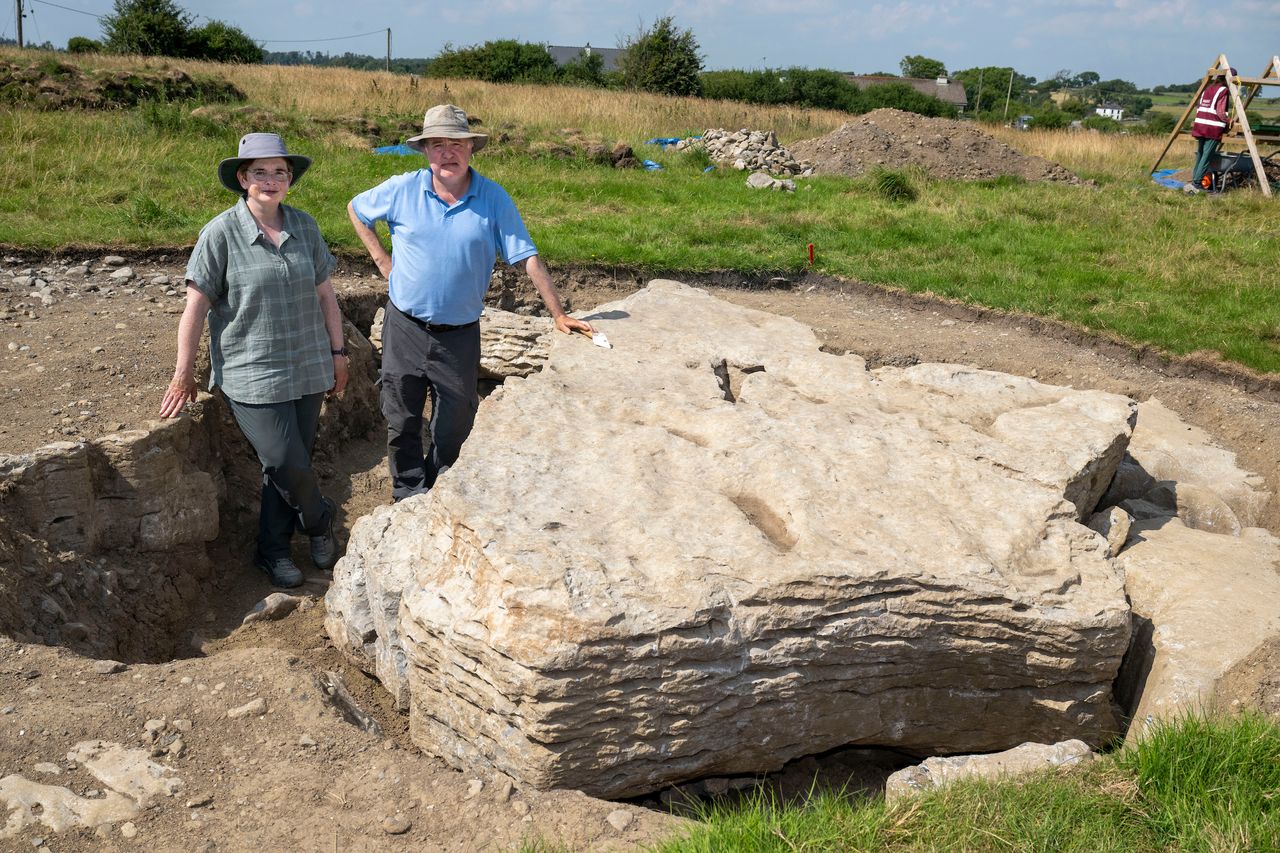
Archaeologists have discovered a tomb from the late Stone Age which they say reveals new evidence about the earliest farming communities in the west of Ireland some 6,000 years ago.
The archaeologists have rediscovered what they call a "lost" tomb from the Neolithic period, which comprises the latter part of the Stone Age.
As well as that, they also located a second, previously unidentified tomb during excavations at a site in the Maree area of Co. Galway.
Apart from that, a number of artefacts, including stone tools, were also discovered.
The researchers say the discovery reveals new evidence about the earliest farming communities in the west of Ireland.
Led by Dr. Michelle Comber and Dr. Noel Murphy at the Discipline of Archaeology at the University of Galway, the excavation revealed tow different types of megalithic tombs dating back to around 4,000BC.
The researchers believe the site represents the only known example in Ireland where a court tomb and a portal tomb are found together, offering important new evidence about the people who built them during the early Neolithic period, who were the first farmers in that part of the world.
Court tombs were burial monuments with an open area or ‘court’ where ritual or ceremonial activities took place, while portal tombs were stone-built burial chambers marked by a large capstone (such as a dolmen).
The discovery of these two monument types side-by-side provides a rare opportunity to examine different approaches to burial, ritual and monument building among farmers in the Ireland of the Stone Age.
The discoveries are made as part of the University of Galway research project, 'MAREE - Land Use Through Time', which is exploring how people lived and used the landscape in the area over thousands of years.
The researchers say that the discoveries have extended the project's timeline back into prehistory, "offering new evidence about the origins of farming, settlement and territoriality in the west of Ireland".
They say that this "is key to understanding the long and continuing relationship between people and land in this landscape".
Project co-lead Dr. Michelle Comber commented: "The chance to find and excavate sites like these within the area of our larger research project provides a golden opportunity to locate - and attempt to understand - the first farmers of this place."
Dr. Comber added: "The size and scale of the tombs, and the efforts required to construct them, reflect a sizeable community living in and farming this part of coastal Galway."