Opinion: Heydon must be acknowledged for his support of SIM

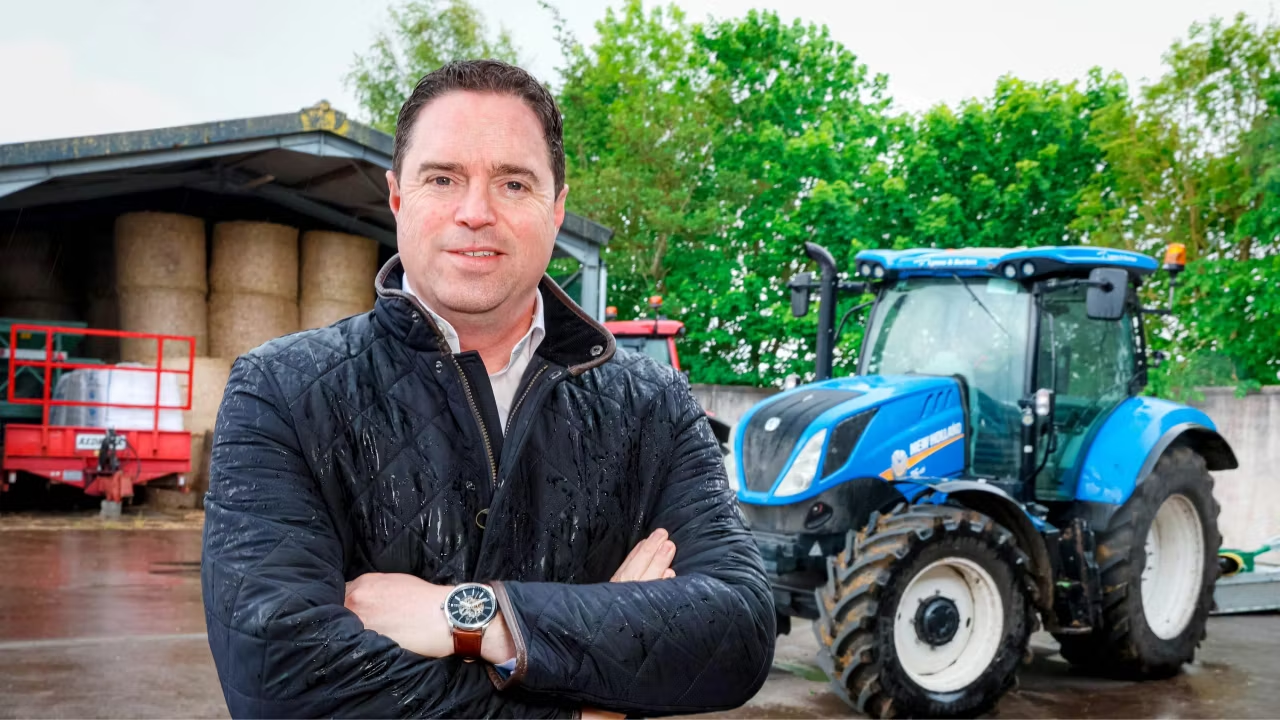
Minister for for Agriculture, Food and the Marine Martin Heydon must be congratulated for his unequivocal support of the 2026 Straw Incorporation Measure (SIM).
He was asked by the farming organisations to come up with the extra money required to meet the full cohort of SIM applications and he has responded in kind.
The minister has said quite clearly that he will commit to finding the extra money involved and one must take him at his word in this regard.
This boost for tillage comes at a time when the sector needs all the friends it can get.
Harvest 2026 yields are nothing to write home about.
Yes, world grain prices have strengthened over the last week or so.
But, given the strengthening of fertiliser and all other crop input costs last spring, there will still be very little left in the coffers for cereal growers once they pay all their bills later in the season.
Budget 2026 saw Martin Heydon find additional support monies for the tillage sector. And it is important this process is repeated as 2027 starts to feature on the horizon.
CAP
There is also a need to make the new Common Agricultural Policy (CAP) more tillage-friendly, from an Irish perspective. And Minister Heydon has a key role to play in both these regards.
Ireland hosts the presidency of the European Union for the next five months; plenty of time then for Ireland’s agriculture minister to stamp his views on the outworking of the CAP reform negotiations.
Part of this process must centre on the greater role that individual member state governments can be allowed play in delivering bespoke national support funding for individual sectors, when required.
Everyone realises the importance of a sustainable and vibrant tillage sector within Irish agriculture. But, up to this point, no one has come up with the magic formula to make this a reality.
Ireland’s current Climate Change Act contains a commitment to expand the footprint of the crops’ sector up to 400,000ha prior to 2030.
Given current circumstances, all of this seems like wishful thinking.
But the real elephant in the room confronting the Irish crops’ sector is that of genetically modified (GM) maize and soya coming into Ireland from countries outside the European Union (EU).
It all adds up to a non-level playing field for the Irish tillage sector.
Quite rightly, the farming organisations make the point hat nothing can be done to prevent cereals produced in other EU members states from coming into Ireland.
But is the idea of introducing a duty on GM grain and protein imports worthy of consideration? I think it is.