Farmers warn they face 'stark choice' between fodder and tax bill

Farmers have "very hard choices" coming down the line as tax bills from 2025 start coming through, the Irish Creamery Milk Suppliers' Association (ICMSA) has said.
At the same time, calculations are "being done frantically on how to ensure that their animals will have enough fodder for the coming winter".
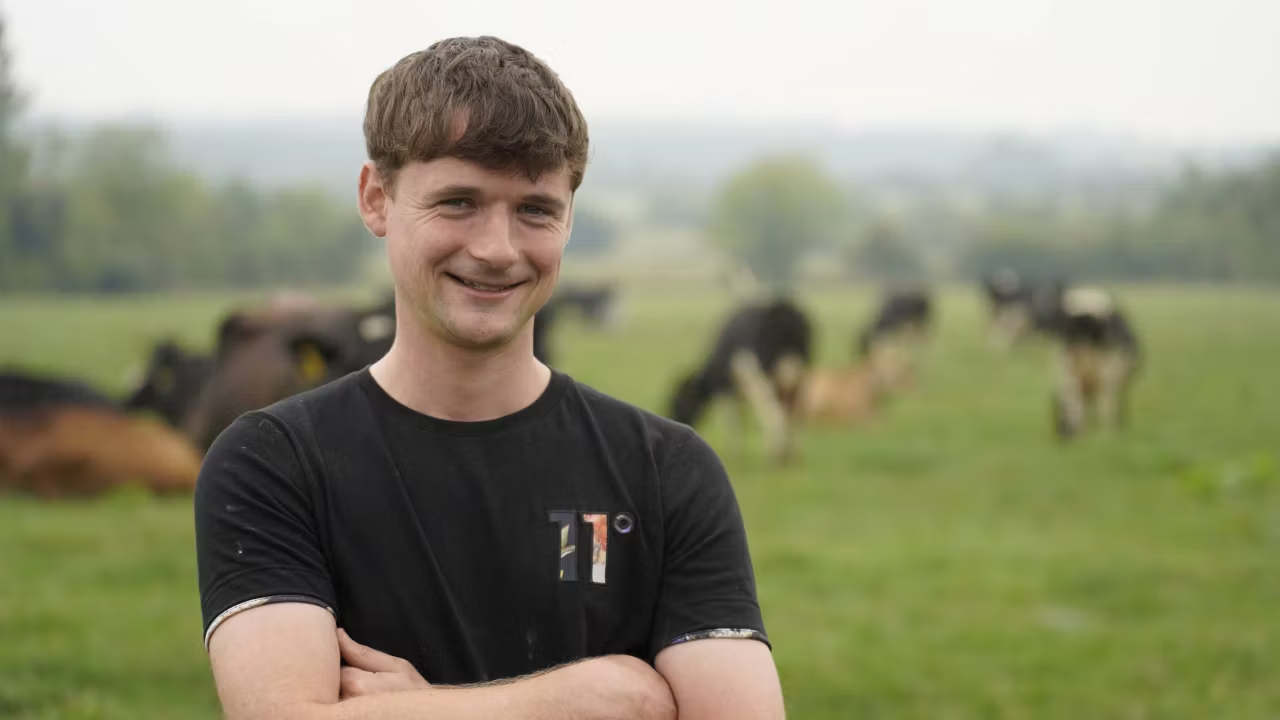
ICMSA farm business committee chairperson, Pat O'Brien said that Revenue "will have to understand that it’s not a case of farmers trying to avoid their liability".
Rather, they "simply don’t have the money to do both: pay their 2025 tax bill and buy the fodder that will be necessary to get their herds through the winter after a summer of unprecedented low grass growth".
"In the continuing absence of an income volatility scheme that could deal with precisely this kind of extreme situation, there has to be a greater level of understanding from Revenue in relation to tax payments," O'Brien said.
"Farmers also need clear guidance on the different options available to manage their 2025 tax liabilities.
"Phased payment arrangements are an option, but they come with an interest charge. That is simply unfair and penal.
"People only enter these arrangements because they have to preserve enough cashflow to keep their businesses operating.
"Penalising them with interest on top of that is unreasonable and just puts people trying to do the right thing in a deeper hole."
'Wiped out'
O'Brien said it is not the fault of farmers that weak milk and beef prices have "wiped out the cash" that was generated last year.
He continued: "Many farmers have already used last year's income just to keep their farms viable through 2026, yet they are now expected to pay tax retrospectively on profits that no longer exist in their bank accounts.
"ICMSA believes Revenue has to be fair to farmers in these circumstances.
"The interest charge on phased payment arrangements for farmers should be removed immediately.
"There should also be a clear, written commitment from Revenue outlining the practical supports available to farmers who are genuinely struggling to meet their tax obligations."
O'Brien said for some farms, the choice is "stark - having enough money to buy fodder and keep livestock fed or keeping the taxman happy".
"That means that the choice is between keeping a farm viable or meeting a tax liability on earnings that are long gone," the farm business chairperson said.
"That’s the reality of it and we want Revenue to work constructively with the sector rather than adding further financial pressure at an already difficult and very fraught time."
Income averaging
O’Brien dismissed the idea that income averaging was a solution to the problem of "wildly erratic" farm incomes.
"Many accountants can't even advise farmers to go into income averaging because it could crucify them," he said.
"After last year’s profits and the good year in 2022, income averaging could well be counterproductive.
"We have a major problem with wildly erratic and volatile incomes in farming and our taxation system is actually compounding that problem."
The ICMSA said it has designed and recommended several changes that have worked in other jurisdictions and which it is positive would work here.
The association said it is advising any farmer who is concerned about meeting their tax obligations to engage early with their accountant, tax advisor, or other suitably qualified professional to discuss the options available.