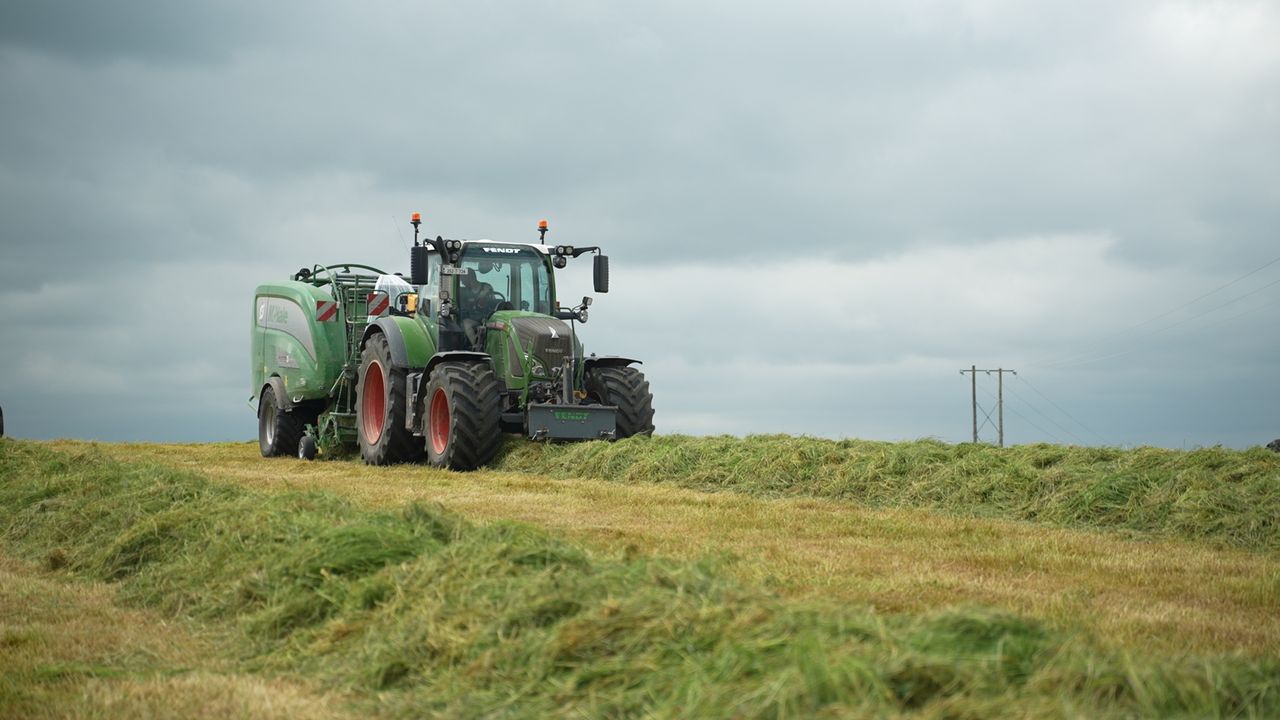
Farmers get €100,000 for new farm roads under TAMS 3


28 applications for new farm roads have been approved under the Targeted Agricultural Modernisation Scheme (TAMS) 3, according to latest figures.
A total of 11 applications have been completed to date and payments totalling more than €100,000 have been paid out to farmers.
TAMS 3 provides funding for new farm roads but what are the requirements for a road to qualify?
There are a number of schemes under TAMS 3 which qualify for funding for new farm roads.
The eligible schemes include:
- The Animal Welfare and Nutrient Storage Scheme (AWNSS);
- The Young Farmers Capital Investment Scheme (YFCIS);
- The Women Farmers Capital Investment Scheme (WFCIS)
- Organic Capital Investment Scheme (OCIS).
However funding is not available under TAMS 3 to repair or resurface existing internal farm roads.
This is because of a legal requirement under the EU Nitrates Directive for farmers to maintain their roadways and ensure there is no run off directly to a watercourse.
Requirements
Farm roadway hard surface width requirements depends on the number livestock in a herd.
| Herd size | Roadway width (m) |
| 50 | 3.5 |
| 100 | 4.0 |
| 200 | 4.5 |
| >250 | 5.0+ |
According to the Department of Agriculture, Food and the Marine, in preparation for a new roadway construction, "all topsoil and soft material shall be excavated to a minimum depth of 150mm or down to a solid stratum".
This material must be disposed of, whether that means it is being repurposed or through waste removal services.
The roadway has to be built during dry soil conditions and must sit above the level of the ground upon completion. This is to avoid drainage onto the roadway.
The foundation layer may consist of granular fill material, of which the usual depth is roughly 200-300mm.
In addition to that, the biggest stones should not exceed 1/3 the thickness of the layer.
A foundation layer can also consist of existing farm rubble or graded stone mixed with dust.
Any crossfall (slope along the width of the road) intended for the surface layer should be incorporated into the foundation layer.
The department noted that a vibrating road roller should be used to interlock the material in the foundation layer through compaction.
The surface layer must consist of 25-50mm of fine material (shale dust, quarry dust, etc.) and be spread evenly.
A geotextile layer can be added between road material and the soil to prevent stones becoming mixed with the soil.
Geotextile layers can also provide physical support against deformation, which is recommended on heavy or wet soil.
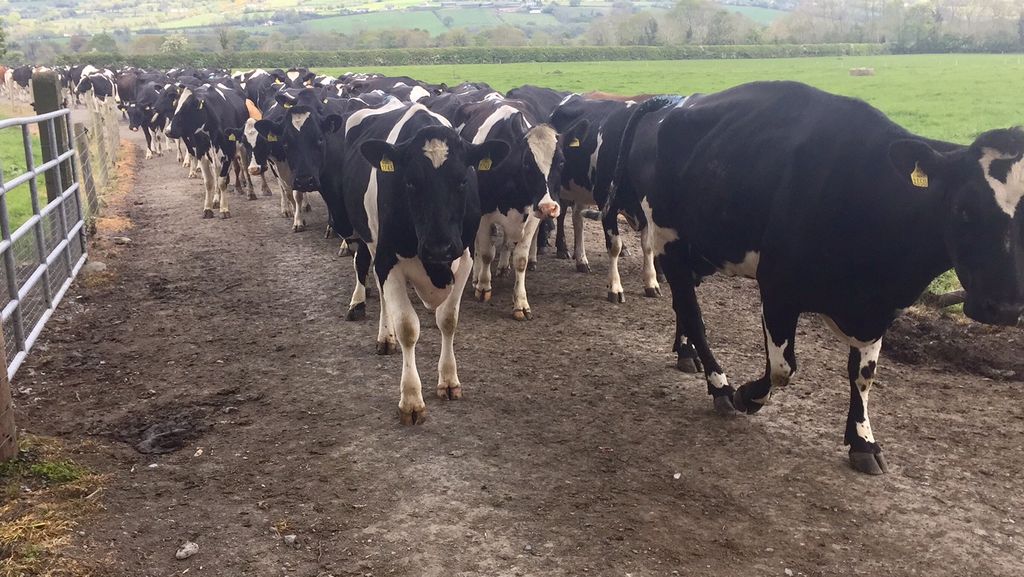
Roadways that have fields for cattle grazing on either side must have a fence built along it.
A fence must also be built for any roadways that have cattle travelling along it, and must be positioned about 0.5m from the edge of the roadway.
Cow tracks
Cow tracks can be installed as extra roadways, spur roadways off regular roadways or at the end of the main farm roadway.
Cow tracks are not suitable for long stretches due to their lack of proper surface material and drainage to handle heavy daily use.
Despite this, they can act as a cheaper alternative to standard roads in less-trafficked areas.
They can be used to access silage ground, out of the way paddocks and to make grazing management easier early and late in the season.
On the requirements for cow tracks DAFM specifies that "a depth of about 150mm of material is laid on the surface of the ground".
This should be compacted and topped off with a fine surface layer and the surface layer should be compacted also.
The width should range between 1.8m and 2.5m.
Concrete
Width requirements for a concrete roadway are the same as a dust-finished roadway.
For a concrete roadway, topsoil and soft material must be removed to a minimum depth of 150mm or down to a solid stratum, before being disposed of.
Hardcore should be laid and compacted in 150mm layers using a vibrating or heavy roller.
This area then has to be 'blinded over' (a process to level out the surface, protect membranes beneath hardcore and prevent moisture loss).
A light gauge polythene sheet is recommended to be placed under the concrete slab.
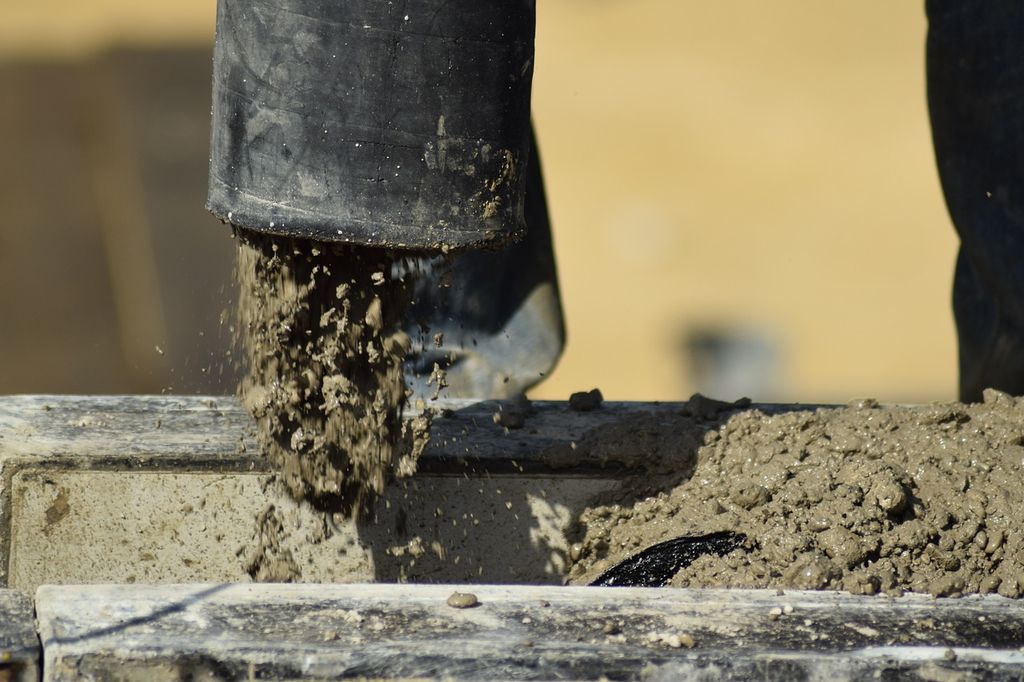
This will help the concrete maintain its moisture so that it can cure and to prevent it from continually dampening from the ground's moisture below it.
The thickness of the concrete must not be less than 125mm at any point, and if the concrete is subject to heavy mechanised traffic, reinforced paving should be provided.
The concrete is to be finished as notched or brushed.
While concrete roadways are more durable and require less maintenance, they have an increased chance of lameness due to a higher risk of loose gravel and pebbles lying on the surface.
The risk of lameness becomes significantly less if concrete roads are regularly cleaned and swept.
Roads
According to the EU's Good Agricultural Practice for Protection of Waters Regulations 2022, "there shall be no direct run off of soiled water from farm roadways to waters".
"The occupier of a holding shall comply with any specification for farm roadways specified by the Minister for Agriculture, Food and the Marine pursuant to this requirement."
Because of this maintenance requirement, existing roadways cannot be updated under TAMS 3.