EU Council agrees to 5% market distortion trigger in Mercosur trade deal

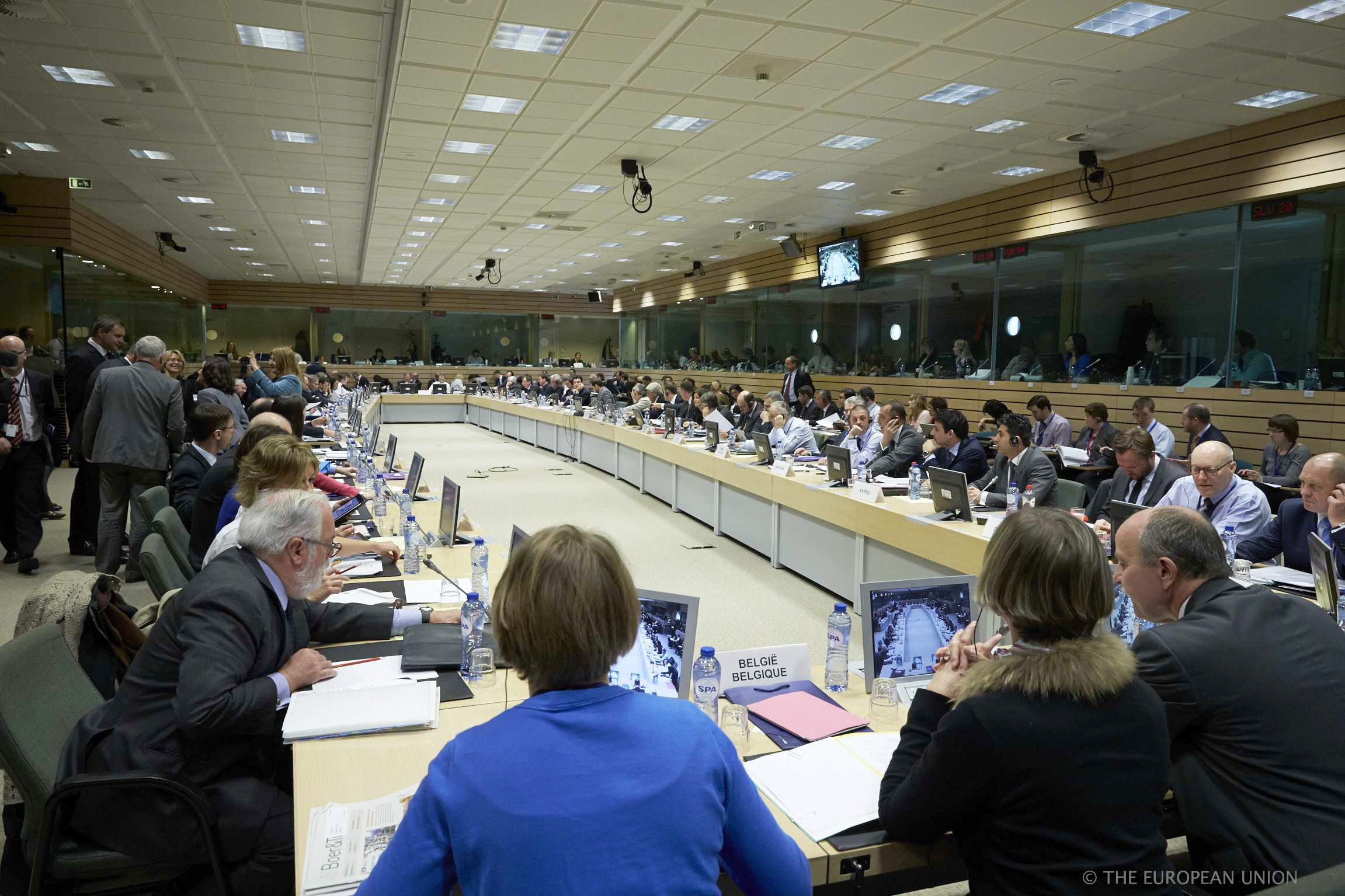
The European Council of Ministers, which has today (Friday, January 9) voted in favour of the EU Mercosur Trade Agreement has rowed back slightly in relation to a safeguard proposed by the European Parliament relating to market disruption.
During negotiations between the European Commission, Council and Parliament some weeks ago in relation to safeguard clauses within the free trade agreement, the commission had proposed that an investigation would be triggered if the volume and prices of sensitive products in the EU market dropped by 10% as a result of South American imports.
The parliament countered this proposal by insisting that an investigation must automatically be triggered if there were to be a 5% change and after discussions, a compromise of 8% was accepted by the commission.
However, today as part of the Council vote on the trade deal, the original proposal from the parliament of 5%, rather than 8%, has now been accepted in what some sources in Brussels have described as a 'sweetener' to try and sway parliamentarians.
European Commission President Urusla von der Leyen needs the European Parliament to vote in favour of the deal when it comes before the gathering in Strasbourg later this month.
In the meantime, she may well travel to Paraguay as soon as next Monday, armed with a majority member state mandate, to sign the deal with Mercosur bloc, led by Brazil and its president 'Lula' da Silva.
The EU Mercosur Trade Agreement would eliminate tariffs on 91% of all products exported between the two regions.
A maximum limit (quota) will be put on the amount of agri-food products imported from Mercosur that benefit from lower tariffs:
- 99,000t for beef - this corresponds to 1.5% of the EU’s total production;
- 25,000t of pigmeat - 0.1% of total EU production;
- 180,000t for poultry - 1.3% of total EU production per year.
In exchange, the EU will be able to export goods to the Mercosur countries at much more favourable tariffs, such as machinery and cars.
Market monitoring
In the document relating to the safeguards for the trade deal, the bilateral safeguard clauses allow for the temporary withdrawal of tariff preferences to counteract possible negative impacts of the tariff reductions, including for products whose market access is constrained by the limits contained in tariff rate quotas.
In the agreed document today, it states: "Further to exchanges between the co-legislators after the trilogue, the [EU] presidency suggests accommodating the original European Parliament proposal as regards article 6 (3) and article 6 (4) on the thresholds for initiating an investigation for sensitive products at 5%, rather than the 8% agreed at the trilogue.
"The presidency considers this to be a balanced compromise package that fully takes into account the main concerns expressed by delegations."
It is acknowledged that a delay in applying justified safeguard measures could lead to injury to EU farmers in one or more member states that could be difficult to remedy.
The Council has said that the reliability of statistics relating to all imports from the countries concerned to the EU is crucial when determining whether the conditions for the imposition of safeguard measures are met.
The commission will therefore constantly and proactively monitor imports of any sensitive products from the date of entry into force of the ITA or the EMPA.
It has been agreed at council level that monitoring should be extended to other products or sectors if the relevant EU industry makes a duly justified request to the commission.
The commission will be required to present a monitoring report at least every six months, containing its assessment of the impact of imports of sensitive products benefitting from preferential market access under the agreement, including data on import volumes and prices for all sensitive products, including beef and other agricultural products.
European Parliament vote
The decision by the majority of member states to vote in favour of the EU Mercosur Trade Agreement today now means that the proposed deal goes back to the European Parliament to formally ratify, potentially later this month.
The only countries which voted against the deal today were: Ireland; France; Hungary; Poland and Austria. Belgium abstained.
There had been rumours that Romania might oppose the deal, but as it does not have a significant agricultural industry and is the producer of the Dacia car brand, its representative voted in favour of the trade agreement.
Italy too, which had delayed a vote on the deal before Christmas citing concerns for farmers, seems to have had its concerns quelled as it voted in favour of the deal also today.
Farm lobby groups will now turn their attention to MEPs and the European Parliament in the coming weeks in an effort to try to stop or at the very least delay the implementation of the trade agreement.
By the same token, member states in favour of the deal will try to rally support among colleagues in the parliament.
Ireland's government has officially voted no to the deal, but it is uncertain at this point which way each Irish MEP will vote.