Co-ops: Fodder committee 'should meet without further delay'

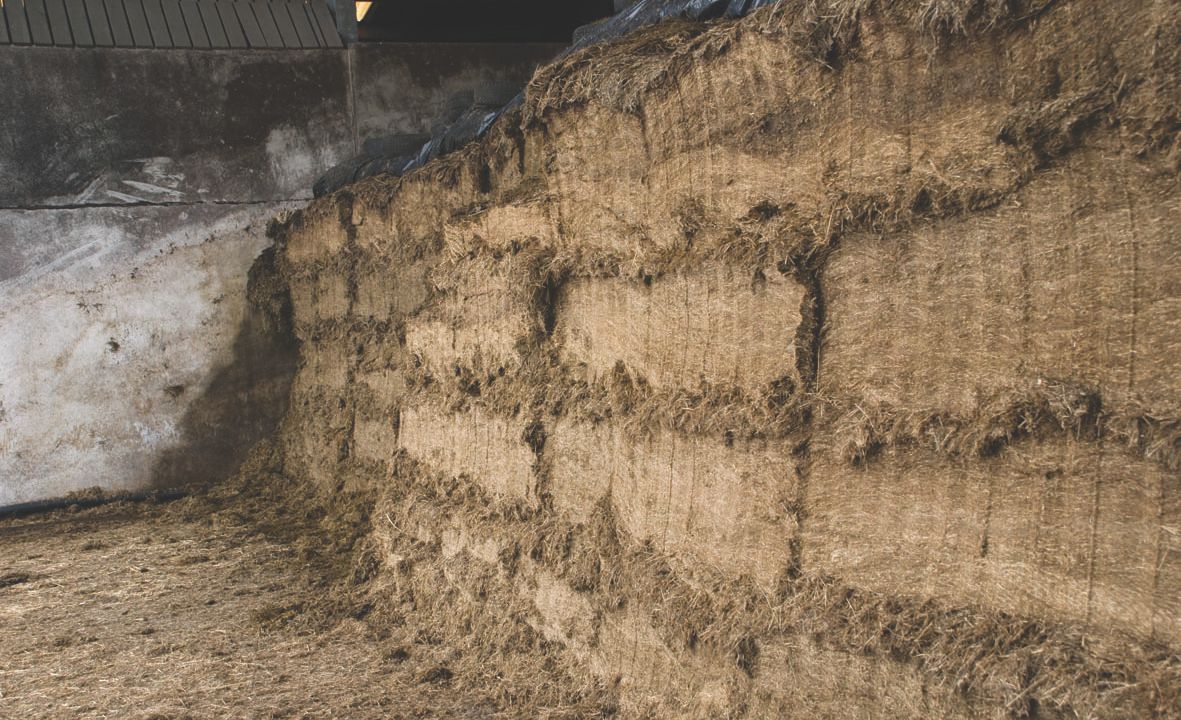
The ongoing drought has seen numerous calls for the National Fodder and Food Security Committee to reconvene.
Now, the Irish Co-operative Organisation Society (ICOS) has added to those calls, saying the committee should meet "without further delay".
In a statement today (Friday, August 14), ICOS said: "The prolonged dry period is having an extreme effect in parts of the south, southeast and midlands, whereas in other regions, growing conditions in some parts are under pressure and in other areas are relatively normal.
"This is due to the uneven rainfall patterns experienced over the past number of weeks.
"Farmers are extremely resilient and have come through similar challenging periods in the past; however, a collective response is needed to ensure that all stakeholders and agencies can ensure that farmers get the right advice in a timely fashion to deal with a very dynamic situation," the statement added.
The organisation said that a "joined-up" stakeholder response under the Fodder and Food Security Committee - with input from the Department of Agriculture, Food and the Marine, Teagasc, co-operatives and farm organisations - has played "a crucial role" in the past.
ICOS said this response provided "clear, accessible and actionable advice to farmers" at the time.
The committee was initially set up in 2022 to respond to the disruption caused by the war in Ukraine.
"At the start of the drought period, fodder reserves across the country were in a very strong position, but it is very clear that a targeted approach will be needed in the areas most affected by drought," the ICOS statement said.
The organisation said the drought is "causing significant financial stress" as well as mental and physical pressures from managing the extra workload, as farmers "seek to prioritise the health and wellbeing of their livestock".
Government urged to 'get ahead' of crisis
The government has been urged to "get ahead" of what has been described as a "looming fodder crisis".
The Irish Creamery Milk Suppliers' Association (ICMSA) said that low-stocked farmers should be allowed to spread more fertiliser to boost their own grass growth and secure additional fodder supplies.
"It’s perfectly obvious that there’s going to be severe pressure on fodder and winter silage and while we understand the need for a ‘fodder inventory’ calculated by Teagasc, the obvious point to make is that it’s very difficult to measure the stock of something that’s actually falling as you try to measure it," ICMSA president Denis Drennan commented.
"So getting the fodder inventory shouldn’t delay for even one day the implementation of measures that it’s obvious are going to be required.
The ICMSA is calling for tillage farmers to be incentivised to grow both short rotation grasses, and specific catch crops like stubble turnips, fodder rape and westerwold grass.
The association is calling for lowly stocked farmers to be allowed spread more fertiliser when the rain comes.
"That will provide fodder for sale in the coming months and next spring. An increased allowance is already in place for farmers with no stock and perhaps this allowance should be amended for farmers with low stock numbers to encourage additional fodder production without compromising water quality”, Drennan said.
"These farmers are in a position to produce fodder but the fertiliser limits imposed on them do not take account of fodder sales and the department should ‘up’ this limit to allow, specifically, for fodder sales," he added.
The ICMSA president also said it was "almost certain" that state subvention of the importation of forage would be required.
"Based on the summer drought, it’s almost certain that the fodder shortage will be worse than that experienced in 2018 and what ICMSA would be saying is that the measures introduced – and which worked reasonably well then – must be the minimum benchmark in terms of government response," Drennan said.