Call for 'evidence-based measures' to improve water quality

An Taisce has called for the implementation of "evidence-based" measures to improve water quality in the country.
The comments come as a report from the Environmental Protection Agency (EPA), published today (Wednesday, June 17), found "overall water quality remains unsatisfactory in many areas".
The EPA said that nutrient levels remain too high in "a large proportion of water bodies" and while improvements do occur, they are not being sustained.
43% of river sites have elevated nitrogen levels, many of which are in the east and south of the country.
The agency said that "a range of pressures arising from human activities affect water quality in Ireland, and all sectors have a role to play in addressing these impacts".
"Despite some short-term variation in concentrations from year to year, there is no clear evidence that nutrient levels are falling over the longer term," the report said.
Water quality
An Taisce said a particular concern is the finding that Ireland has lost a quarter of our cleanest rivers since the 2010-2012 period.
These are the best of the best river sites, supporting species such as salmon and freshwater pearl mussel.
Once polluted the ecology of these sites is difficult to recover.
An Taisce said nitrogen pollution is primarily attributable to intensive agriculture, which is a particular problem on free draining soils in the south and east.
Urban wastewater and agriculture are also significant sources of phosphorus pollution.
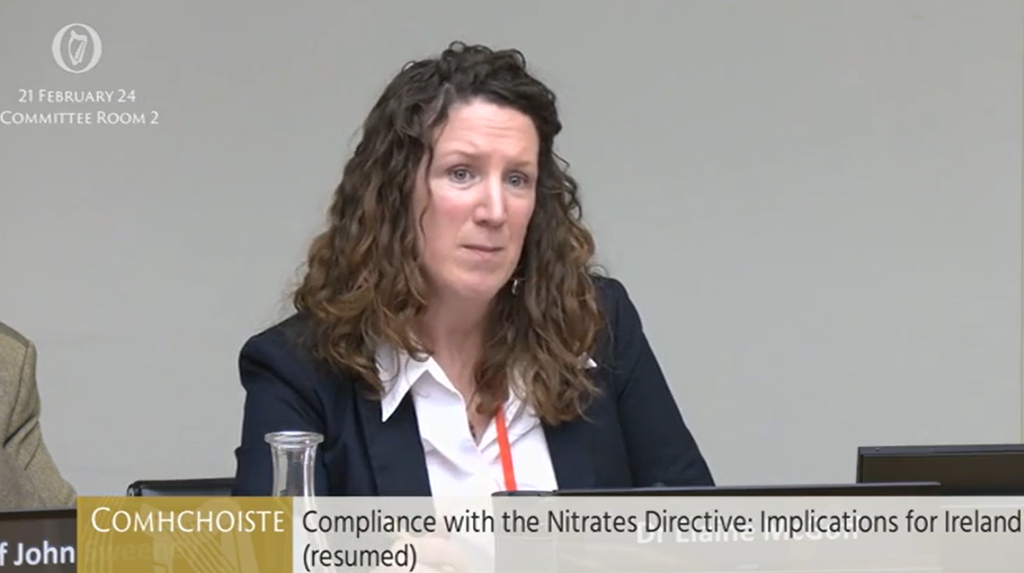
Dr. Elaine McGoff, head of advocacy with An Taisce said, the report "once again" highlights a lack of improvement in water quality in Ireland.
"Farmers are jumping through a number of environmental hoops, but the measures they’re being asked to put in place don't work for all pollutants, and by and large they’re not designed for addressing nitrogen pollution.
"So the fact that agricultural nitrogen pollution didn’t improve in the south and southeast of the country should come as no surprise to anyone.
"Despite all the talk about turning the tide on water quality in Ireland, there is still no evidence of the necessary improvement across the board in our waters," she said.
"Until we implement evidence-based measures to address that we’re only fooling ourselves if we think the water quality trends are going to dramatically improve.
"Combine that with entirely avoidable pollution from malfunctioning urban wastewater treatment plants, and it’s really not a good news story for our rivers, lakes and seas.
"We now need an honest appraisal of how we’re managing our waters, our land and our wastewater.
"We can’t keep doing largely the same thing and expecting a different outcome," McGoff said.
Urban wastewater
Meanwhile, Social Democrats environment spokesperson Jennifer Whitmore said the EPA report "provides a worrying snapshot of Ireland’s water quality that requires immediate government attention".
"With the EPA warning that Ireland will not meet its target of restoring our waters to good standards by 2027, the government needs to rise to the challenge.
"This must include adopting a zero tolerance approach to repeated wastewater operational failures by Uisce Éireann," she said.
The EPA's 2025 wastewater report found that 59% of Ireland’s treatment plants failed to consistently meet standards set in EPA licences to prevent pollution.
Nearly half of these failures were due to poor operational management.
"As of last week, the EPA has prosecuted Uisce Eireann 35 times for failing to properly treat wastewater. Of the 505 wastewater licences issued to the utility, there were 118 breaches," Deputy Whitmore said.