Boosting milk protein with good grassland management

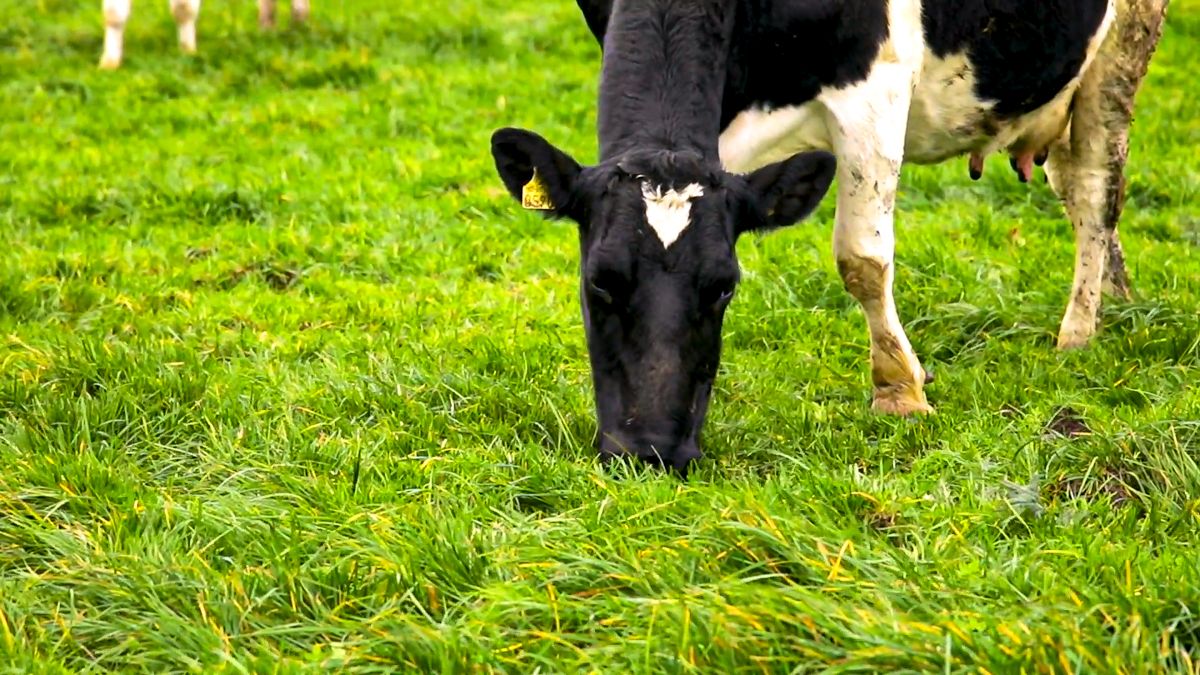
From mid-May onwards, average milk protein has been sitting at 3.53%, a figure we need to maintain throughout the mid-season.
A lot of farmers have a tendency to let milk protein drop during the summer months, losing up to or over 0.2% during June and July.
There is no real reason for milk protein to drop during the grazing season other to sub-optimal grassland management.
When growth rates take off, it is easy to start falling behind on the rotation and next thing you know, cows are going into heavy pre-grazing covers well above 1,500kg of dry matter (DM)/ha.
This is a position a lot of farmers are finding themselves in this week, as average growth rates surpass 90kg DM/ha.
As a result of this, milk protein starts dropping and money starts disappearing from the milk cheque.
Another issue during the middle of the grazing season can be grass allocations.
Ideally we need to keep livestock covers at 180-200kg DM/Livestock Unit (LU) during the summer, with the average PastureBase recording farm currently sitting at 205kg DM/LU.
If cows are not allocated enough grass they will start to run low on energy, with a reduction in milk protein the first issue.
Poor energy intakes can also lead to reduced body condition, ketosis, and even fertility issues.
According to the Irish Cattle Breeding Federation (ICBF), the average milk kg/cow in the last week of May was 27.22kg.
So if we look at a cow producing 27kg/milk, she will have an energy requirement of roughly 18 UFL.
A rough guide for the UFL required is as follows;
| Milk yield (kg) | UFL required |
|---|---|
| 20 | 15 |
| 25 | 17 |
| 30 | 19 |
| 35 | 21 |
Once you calculate how much UFL your cows require, you need to figure out how to get it into them.
Every feed had a different UFL, so there is no point in saying grass is 1 UFL, meaning cows need 18kg of grass.
Grass quality depends on the graze-out of the previous rotation, the pre-grazing cover, and the nutrients available.
When grass goes beyond the three leaf stage, it starts to deteriorate quickly.
We have all been at the stage where cows are entering a paddock heavier than desired, which is ok every now and then, as long as the diet in terms of grass allocation and concentrates fed is adjusted to match the quality and promote the correct intake.
A rough guide on dry matter digestibility (DMD) and UFL is as follows;
| DMD | UFL | |
|---|---|---|
| Green Leaf | 80 - 90 | 0.95 - 1.0 |
| Green Stem | 60 - 70 | 0.73 - 0.8 |
| Mature Stem | 40 - 50 | 0.45 - 0.55 |
| Dead Stem | 35 - 45 | 0.35 - 0.45 |
When covers do go beyond 1,500kg DM/ha, decisions need to be made on whether or not it is more feasible to take paddocks out for surplus bales, allowing the herd to slot back into the correct stage of the rotation rather than playing catchup.
As it stands, approximately 70% of PastureBase recording farms are entering paddocks with pre-grazing covers of 1,500kg DM/ha, meaning most farms will have decisions to make regarding surplus grass this week.