Australian beef production at ‘highest level on record’ - AHDB

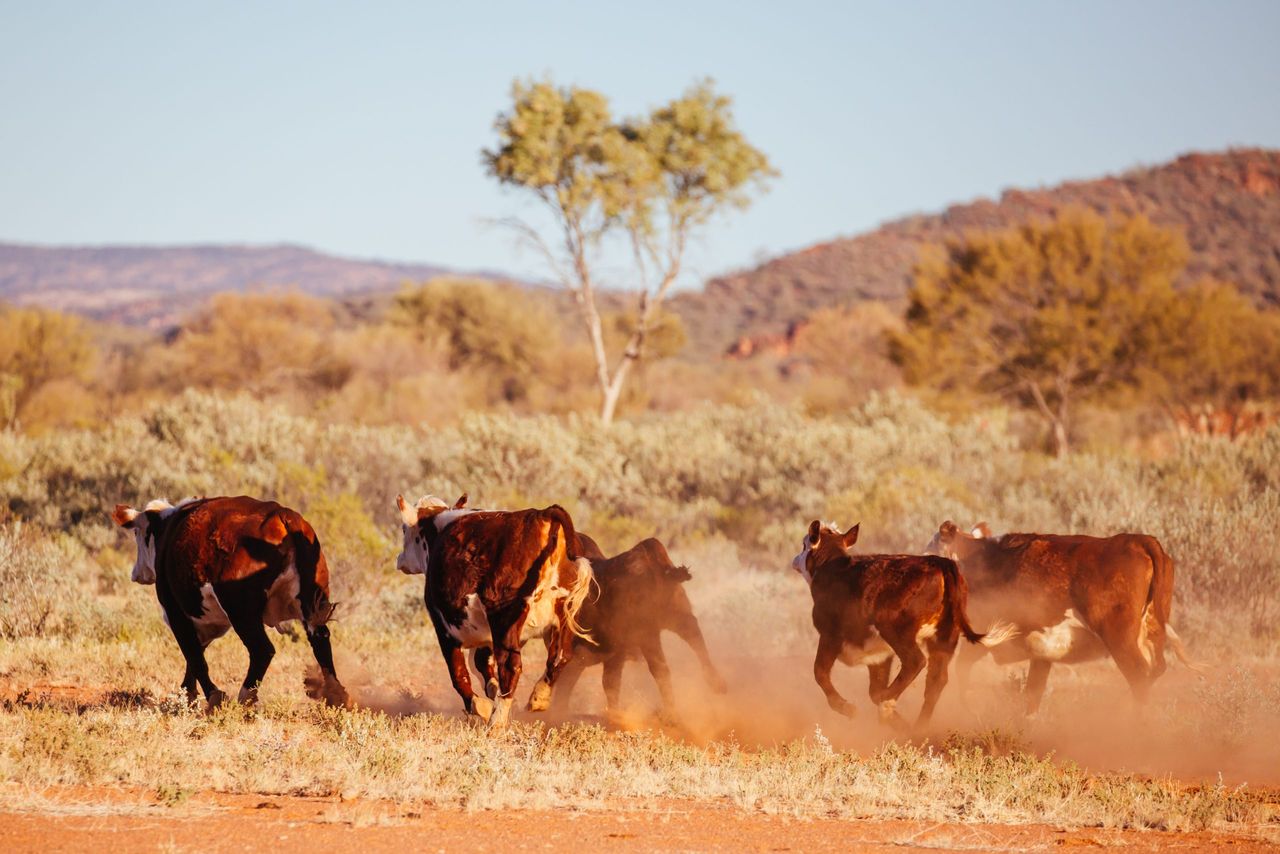
Australian beef production is currently at “record highs”, according to the latest data from the Agriculture and Horticulture Development Board (AHDB).
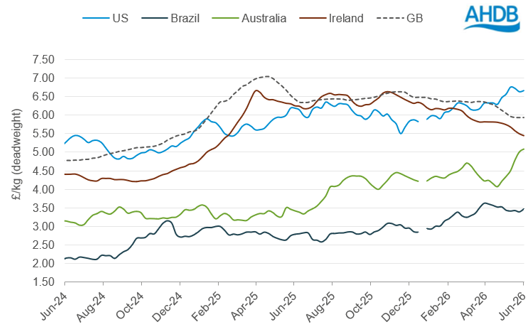
According to the report, Australian beef prices are forecast to remain firm into the mid-year, as the average deadweight for the price week ending June 12, 2026 stood at £5.09/€5.90kg equivalent.
The graph below shows deadweight global cattle prices for key markets, with Ireland in brown, the US in light blue, Brazil in dark blue, Australia in green, and Great Britain (GB) as the dotted line.
“Australian beef production was up 8% year-on-year for the Q1 (Jan-Mar) period, totalling just over 730,000t," AHDB said.
“This is the highest production of beef for the quarter on record.
“Output has been underpinned by growth in slaughter and carcase weights, helped by improved pasture conditions and a high grain-fed turnoff rate.”
Forecasts
According to AHDB, Meat and Livestock Australia’s (MLA) latest forecasts show beef production peaking at 2.9 million tonnes for the full year of 2026, up 4.1% year-on-year.
However, as the Australian cattle cycle peaks and the herd enters a retention phase, beef production is forecast to contract in 2027 and 2028 following a period of liquidation.
The national female slaughter rate lifted to 53% in the first three months of 2026, below recent peaks but still reflecting ongoing herd contraction.
However, output is expected to remain “historically high”, AHDB noted.
It added that the development of El Nino weather patterns will be an important watchpoint for slaughter rates given the large herd inventory.
Prolonged dry conditions may mean more cattle are marketed.
Beef trade, supply and geopolitics
Australian beef exports grew 16% in Q1 compared to the previous year, "bolstered by increased exports to the US, China and South Korea among others", AHDB said.
Exports to China increased by 32% year-on-year, with the Chinese government reported on June 1 that Australia had used 90% of its 205,000t safeguard quota.Once filled, a 55% tariff applies.
Australia is also expected to hit its South Korean beef safeguard quota limit earlier than previous years, after which a 24% tariff applies.
The current quota situation may mean more Australian beef needs a home on the global market later in the year.
According to AHDB, MLA forecast a 1.4% rise in beef exports to 1.57 million tonnes by the end of 2026, driven by the high global demand for lean beef - most notably the US lean mince market.
US beef imports were up 15% in Q1 2026, of which Australia was the largest contributor.
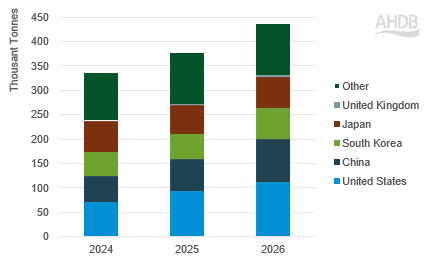
In Q1 2026, the UK was the eleventh largest market for Australian beef, taking just under 4,500t of product.
Like other markets, conflict in the Middle East has driven up fuel and fertiliser prices for Australian producers.
AHDB added that live cattle exports have dropped 27% as shipping issues to the region continue.
Sheep
Meanwhile, Australia’s sheep meat export volumes have fallen, though trade to a few markets, including the UK, bucks the trend.
Q1 exports (fresh/frozen sheep meat and offal) dropped 16% year-on-year to 141,000t, notably to China (-24%), the US (-6%) and the Middle East.
Disruptions to air freight due to the US-Iran conflict has made trade limited and expensive to the Middle East & North Africa (MENA) region, with volume exported to the region down 36% year-on-year.
The UAE and Saudi Arabia are currently the largest markets in the region for Australia.
Growth areas for Australian sheep meat exports during Q1 included South Korea (+37%), the UK (+15%), and Japan (+41%).
Beef quotas
While Australian beef prices are supported by a tight global market, exports remain “competitive”, AHDB said.
It described the pace at which Australian exporters are filling the Chinese and South Korean safeguard quotas as a “watchpoint for global markets (including the UK) in the second half of the year”.
For the UK, Australia is currently not filling its free trade agreement beef quota and "volumes are small but rising quickly", it said.
Imports of Australian beef into the UK rose by 153% year-on-year for Q1, making it the fifth largest supplier of beef (including offal) to the UK, and the third largest for just fresh and frozen beef.
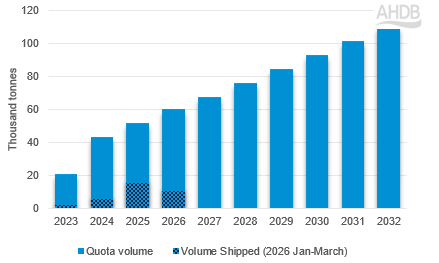
Although Australia has technical quota room to grow shipments, AHDB said that other trade considerations remain.
It said: "Firstly, the UK is a relatively small market for Australian beef, making up 1% of exports in Q1 this year, up from 0.5% Q1 2025.
"While demand persists from more dominant (US) or proximal (China, Asia) global markets, these will likely be prioritised.
"However, geopolitics and quota limits are of course key watchpoints here."