Are we facing a fodder crisis or a cashflow crisis?

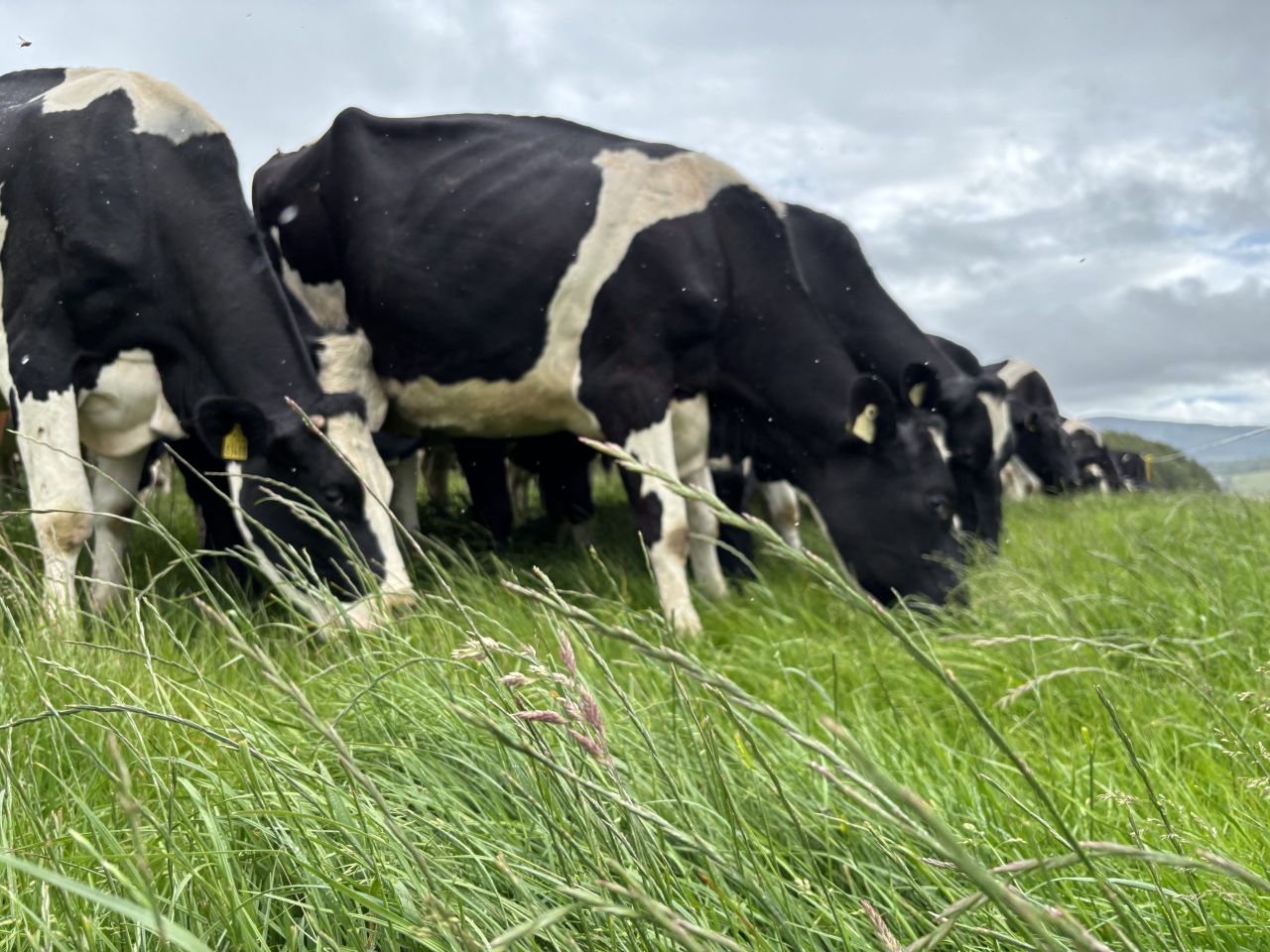
Are Irish dairy farmers facing a fodder crisis or a cashflow crisis? The simple answer is both.
It is no secret that the south-east got hit hard with drought this year, which has left fodder availability tight across the country.
Farms will be hoping to get a final cut in this month, but it is doubtful that cut will make up the deficit in terms of quality or quantity.
A fodder crisis is a big enough headache in the best of years, but 2026 has already seen poor milk prices, and soaring costs across the board.
With margins already squeezing, the thoughts of buying in additional fodder is a bitter pill to swallow, that is if it can be sourced.
Speaking at the recent Shinagh dairy farm open day, Teagascs Padraig French said: "People think we are in a fodder crisis, what we actually have is a cash
flow crisis coming ahead of us.
"It might not be apparent now, but it is likely to be very problematic next March or April.
"There is going to be a deficit, it's how big that deficit is going to be, and how are you going to finance that."
If we look at Shinagh dairy farm as an example, it is an operation that has been set up to be as profitable as possible, yet we can still see just how tight cashflow is going to get on the Co. Cork farm.
Case study
The dairy farm has been making an average net profit of €86,502 annually since 2011 while paying full land rental costs to Shinagh Estates, and full labour costs to two full-time employees.
As well as that, the farm does not draw any Basic Income Support for Sustainability (BISS), a cheque which the majority of farms would sorely miss in the back end of the year.
Despite the farm's strong finances, it is now preparing to enter a cash deficit this November, a situation in which it predicts to be in until at least May 2027.
The Shinagh dairy farm is aware that this is its last month with a positive cashflow until next April, when milk cheques finally start to make a dent again.
The farm is expecting cashflow to drop as low as €-100,000 for the month of December as its rental cheque will be due.
That will result in its cash balance falling to an excess of €-160,000 by February.
This highlights how challenging the next few months will be, and the importance of farms putting plans in place now.
It will be almost impossible to not end up with a negative cashflow, but each individual farm must look at their own figures and decide the best route to safeguard the farm and your own personal finances until the bulk tank starts to fill next spring.