Dairy focus: A look inside the gates of Shinagh dairy farm

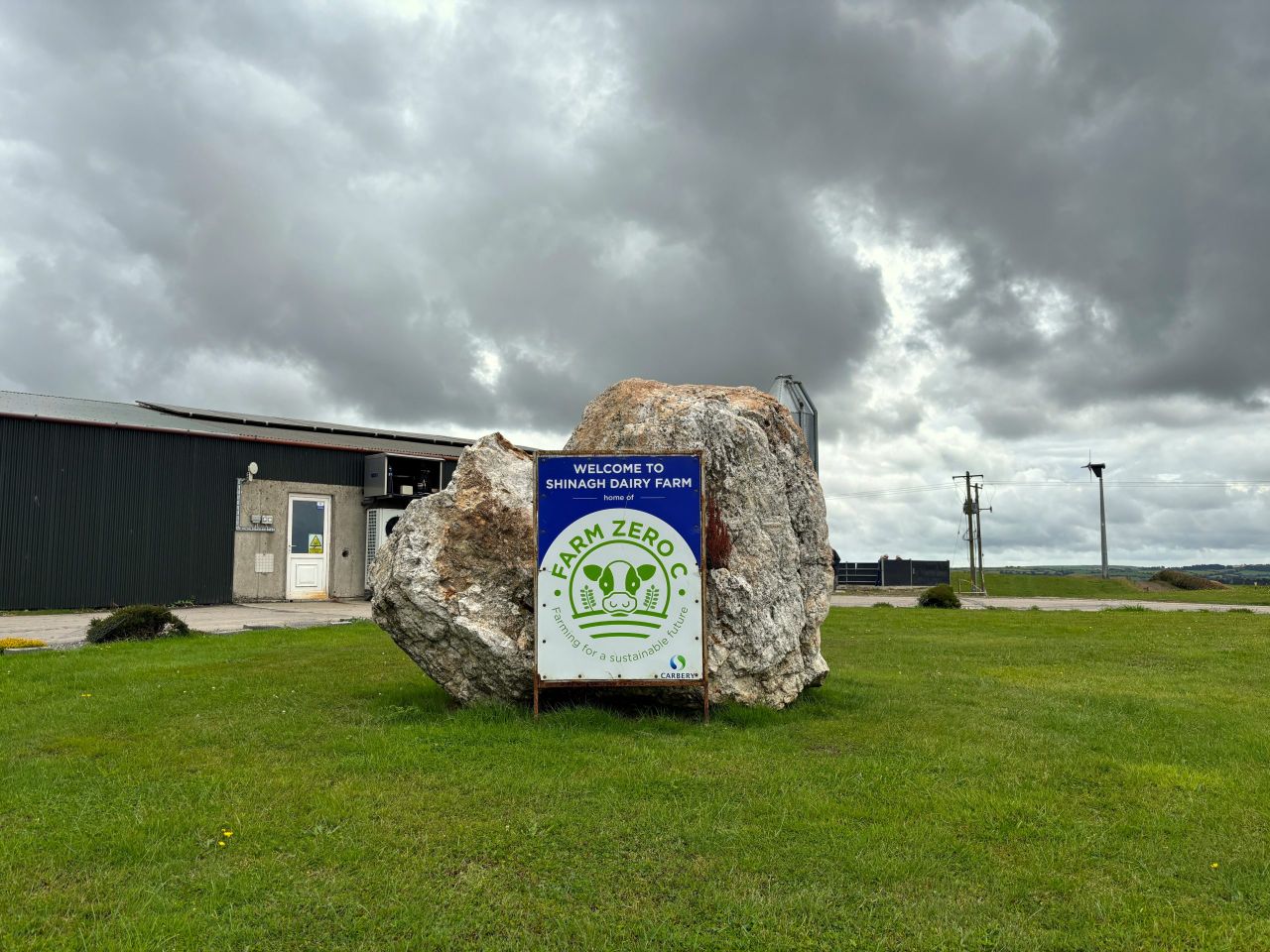
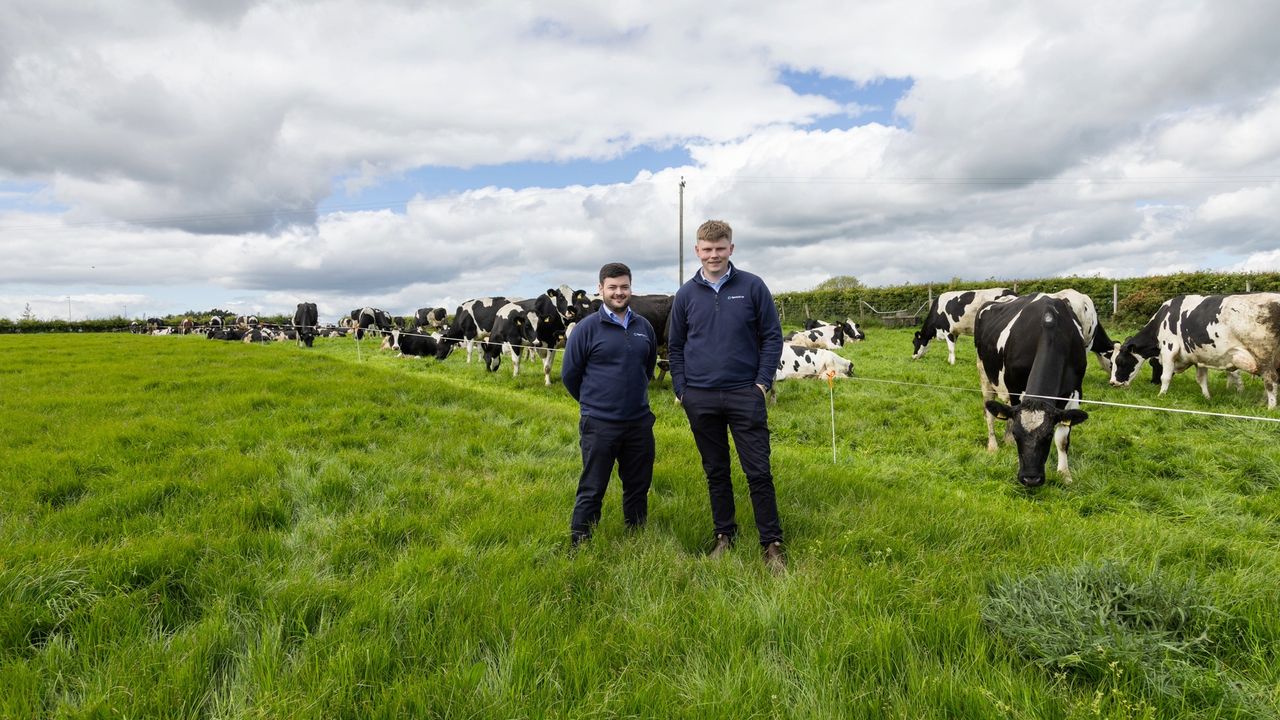
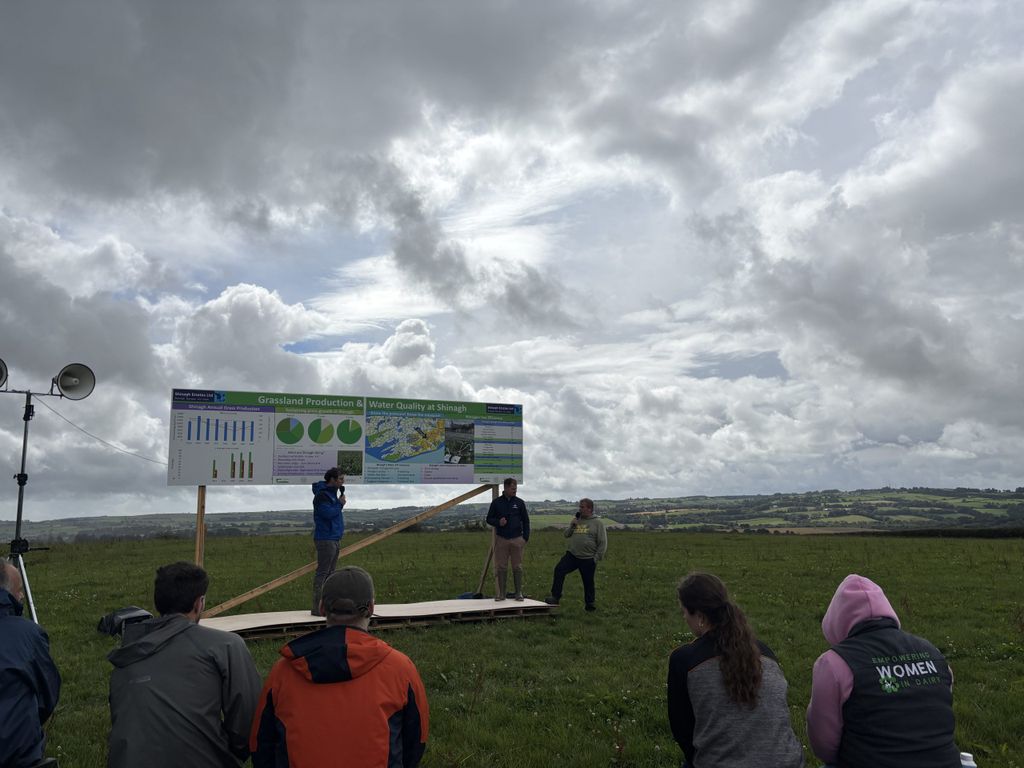
Shinagh Dairy Farm recently celebrated its fifteenth year of operation, welcoming farmers from across west Co. Cork and further afield to view its internal operations.
The farm, owned by Shinagh Estates, was originally an artificial insemination (AI) station where the progeny of AI bulls were fattened.
However, when the 2008 EU Common Agricultural Policy (CAP) signalled the removal of milk quotas, Ireland began to prepare by easing butterfat quotas, with some of the national quota being allocated to Teagasc.
Teagasc then decided to approach Shinagh Estate to see if it would be interested in a beef to dairy conversion.
By 2010, Shinagh Estate had officially collaborated with Teagasc and Carbery to begin its path to dairy.
Shinagh Dairy Farm
The 78ha farm began milking In spring of 2011, following the calving of 200 heifers sourced by Teagasc's James O'Loughlin.
The 200 heifers consisted of 50% Holstein and pure Friesians, 25% Jersey crosses, and 25% Norwegian Red crosses.
The farm had increased to a 102ha block by 2019, and was milking 250 cows by 2025 under the supervision of farm manager, Kevin Ahern.
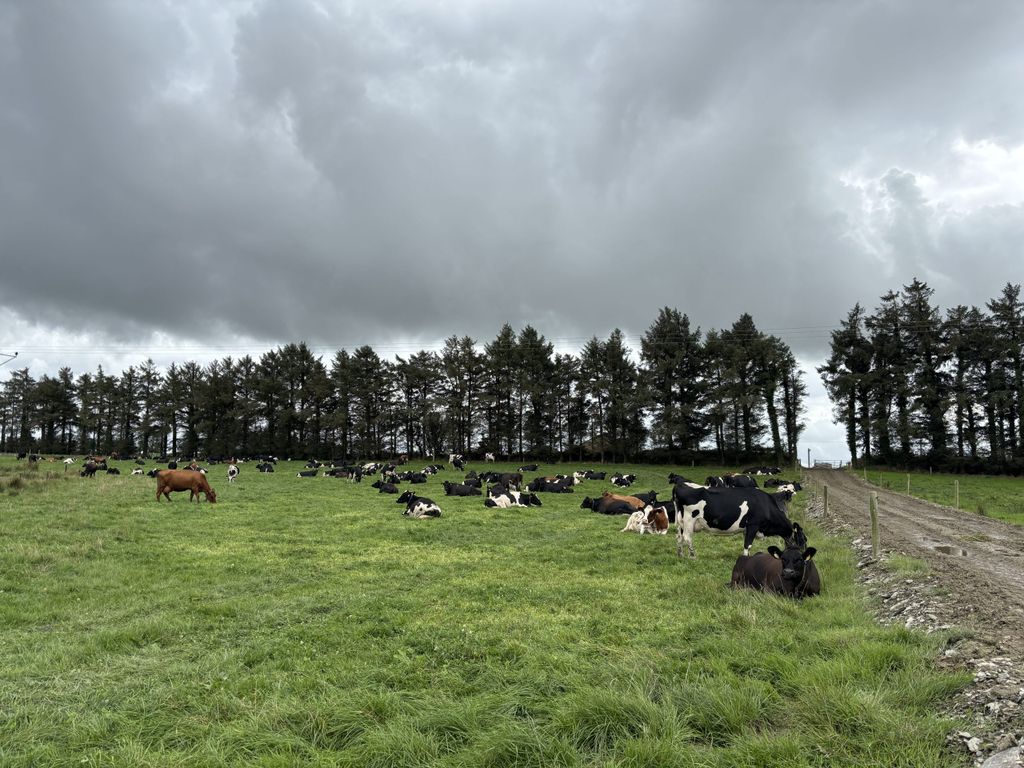
Currently, the herd is producing an average of 1.40kg of milk solids (MS)/cow with fat sitting at 5.14% and protein at 3.85%, off 3kg of a 12% dairy nut, 6kg of fresh grass, and 9kg of zero grazed grass.
In 2025, the herd produced an average of 459kg MS/cow while stocked at 2.54 livestock units (LU)/ha, with 2.2t/ha of feed purchased in.
The farm has always bred cows with the Economic Breeding Index (EBI) in mind, as Teagasc states every €1 EBI delivers €2 extra profit.
As it stands, the herd now consists of 22% Jerseys and 78% Holstein/Friesians, with its combined average EBI sitting at €181, broken into a milk sub-index of €41, and a fertility sub-index of €81.
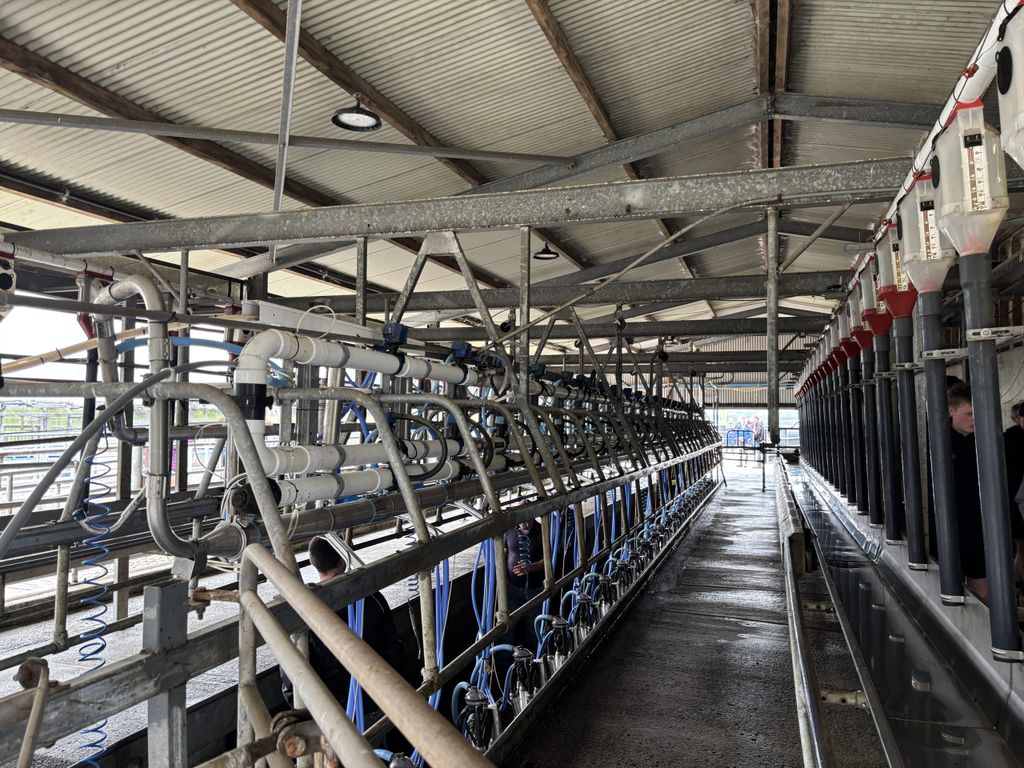
In 2025, the herd maintained an 89% six-week calving rate and a 4% empty rate, highlighting the work being put into breeding as well as the impact of heat detection collars.
Grassland and sustainability
From its establishment in 2011 up until 2019, the farm's main focus was delivering as much profit as possible through breeding strategies, grassland management, and strict cash flow management.
Then in 2020, the farm moved towards adapting sustainable and environmentally friendly practices, which would not affect profitability, hence why the farm is known as Farm Zero C.
A big part of environmental farming falls back on grassland management, so the Shinagh farm set out to reduce its reliance on chemical fertiliser while maintaining grassland production.
By 2025, nearly every paddock on the farm had some bit of clover incorporated in it, with just shy of 60% of all the paddocks having a 20% clover content rate, a sweet spot which allows the farm pull back on chemical nitrogen.
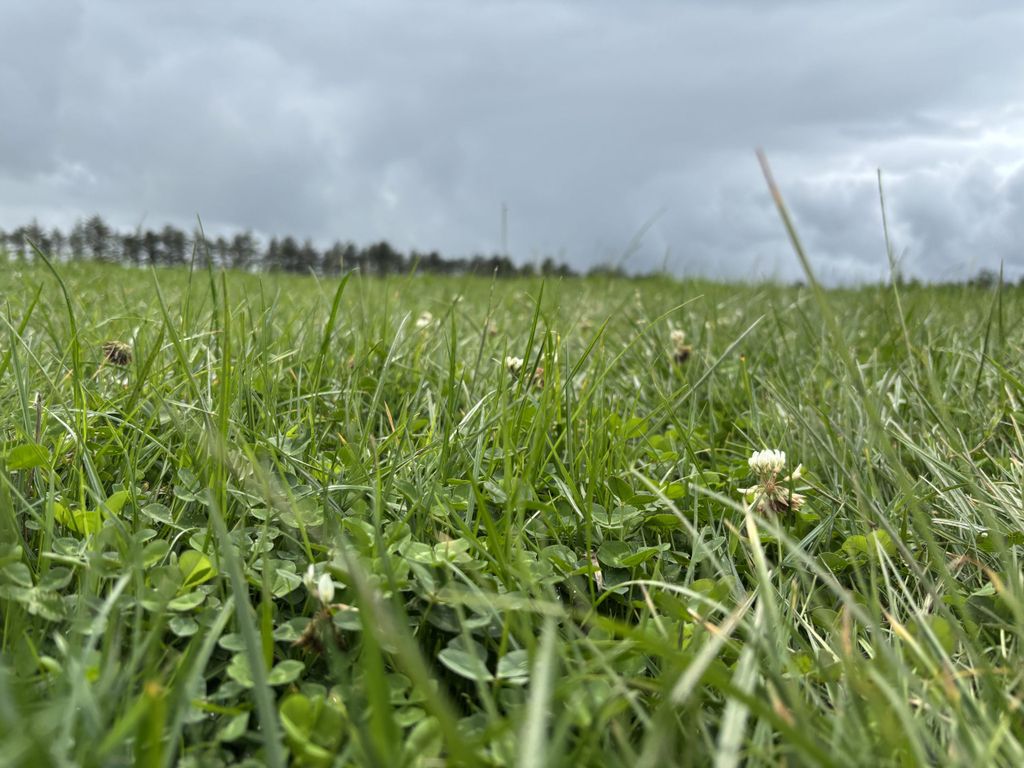
To succeed with clover, the farm needs soil fertility to be excellent, which it has achieved as 60% of the farm is now in optimal conditions across pH, phosphorus (P), and potassium (K).
That is a strong on-farm figure, considering that the national average of optimal paddocks sits in or around 20-25%.
Ahern noted that they react to soil tests quickly, a practice which they carry out every two years.
For example, if a paddock needs a tonne of lime, they will go in with the tonne rather than waiting for it to need 2t.
They then spread K and sulphur alongside any N, while their P allowance is targeted on high ground which does not receive slurry.
10% of the farm is reseeded every year, with white clover constantly incorporated.
Seven years ago, the farm made the decision to plant 7ha of their silage block with 4kg/ha of red clover, which lasted for five years without any chemical N.
Another 5ha was reseeded last year, with those paddocks getting a bag and a half of 0-7-30 for first cut, and every round of silage getting 3,000g/slurry.
The farm is free-draining, meaning it is in a high priority area for nitrate leaching.
That left the farm putting work into reducing nitrogen mobility as well as improving nitrogen use effeciency.
The farm has installed a farm yard willow bed to take reduce nitrate leaching from the yard, and is planning to install targeted hedgerows to break the pathway of any nitrates leaching out of paddock during heavy rainfall.
The farm also invested in slurry storage, giving them an additional three to four weeks than required to allow for targeted spreading as well as taking labour pressure off during spring calving.
The farm aims to spread 15-20 units/ac of sulphur to enhance nitrogen use efficiency in clover.
| Shinagh's nitrogen use efficiency | |
|---|---|
| Farm inputs | Kg N/ha |
| Fertiliser | 180 |
| Concentrates | 42 |
| Forage purchases | 19 |
| Livestock purchases | 6 |
| Slurry imports | 0 |
| Total inputs | 247 |
| Farm outputs | |
| Milk sales | 74 |
| Forage sales | 0 |
| Livestock sales | 8 |
| Slurry exports | 0 |
| Total outputs | 82 |
| Farm gate surplus (kg N/ha) | 165 |
The 165kg N/ha surplus is what is left in the soil at the end of the year with a potential to be lost, with studies showing that roughly a third of that is leached in free draining soils annually.
Finances
The farm has made a cumulative net profit of €1,297,527 since its conversion in 2011.
That works out at €86,502 a year, while the farm claims no Basic Income Support for Sustainability (BISS).
They also pay full rent costs towards Shinagh Estates, as well as paying for the two full-time staff to run the operation, all of which works out at roughly 34-35c/L.
The farm typically receives 6c/l over the Carbery base due to their solids, which is allowing to turn said profit.
In 2025, costs were sitting at 47c/L, but as long as Carbery paid a base price of 34c/L, the farm would break even with the price paid for solids and livestock sales, as it rears and sells surplus heifers, as well as beef stock through the Ballyvadin beef farm.
The farm's profits have been rising since turning towards a sustainable approach with high clover content and reduced nitrogen, although milk prices and livestock prices have both risen in that time too.