Winter oilseed rape the stand-out crop of 2025 for agronomists


Winter oilseed rape ticked all the boxes in 2025, according to Goldcrop cereal variety manager, John Dunne.
He explained: “Crops yielded extremely well. And this reflected the high levels of radiant energy that impacted on plants throughout the entire flowering and pod setting period.
“But there were other winter crops in 2025. Winter barley crops yielded well, particularly when sown out after a break crop.
“By taking this approach, growers are dramatically reducing the threat of Take All.”
However, when it came to other crops, the weather gave recurring periods of almost drought-like conditions which played a big role in determining final yields.

Dunne said: “Spring barley was a case in point. Crops that were sown out at a time when rain allowed the full impact of applied fertiliser to be achieved performed well.
“However, in those instances when fertiliser did not get the chance to affect plant growth because of very dry weather conditions, the polar opposite was the reality.
“And in my own case, both scenarios unfolded. In 2025, I had crops of spring barley yielding up to 4t/acre and others coming in at 2.6t.”
The Goldcrop representative went on to highlight that the role played by the Irish weather at those critical times in the development of all tillage crops is essential.
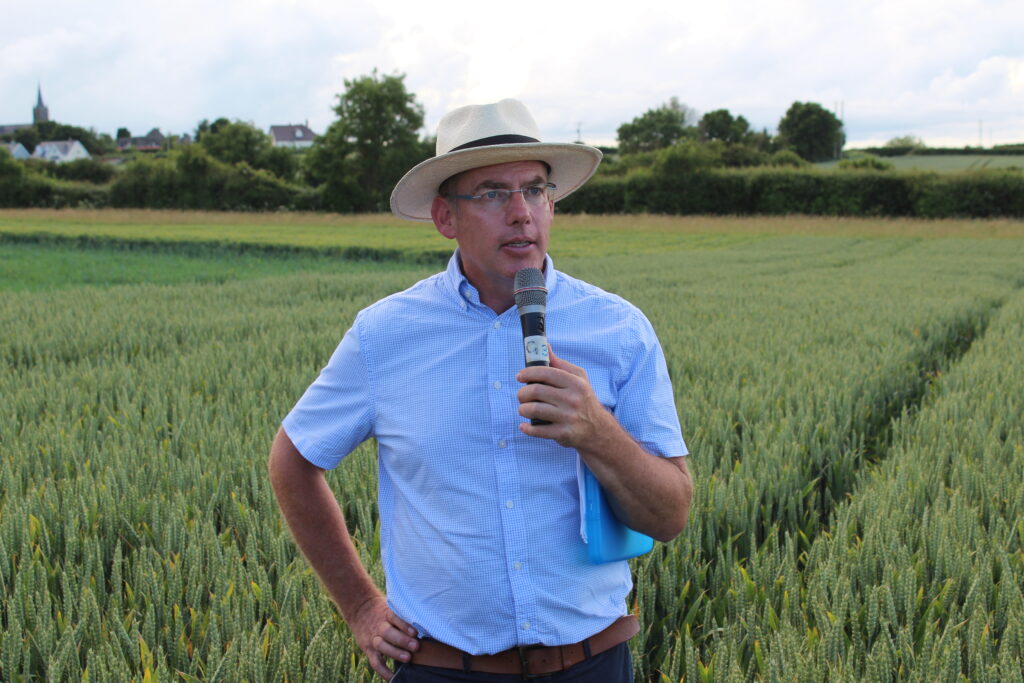
“Good establishment rates rank as the number one priority in this context,” Dunne commented.
When Irish agronomists were asked in a survey to reflect on the levels of crop performance achieved in 2025, many pointed to the very direct correlation between good establishment levels and final yields.
Winter crop performance
According to Dunne, this principle will also hold when it comes to predicting the performance of winter crops planted out during the autumn period of 2025.
“Both the weather and ground conditions that unfolded through the late September and October period were extremely conducive to the planting of cereal crops," he said.
“And the end result was the achievement of excellent crop establishment rates.
"Yes, there has been a lot of very wet weather impacting across the country over recent weeks.
“However, the potential for winter crops to yield well during Harvest 2026 remains very positive.”
Spring planting
Looking ahead towards the spring planting season of next year, Dunne is very conscious that tillage farmers will be working within a scenario of increased fertiliser costs.
He commented: “This factor alone brings spring beans very much centre stage.
“Crops require no fertiliser nitrogen and they are eligible for the Protein Aid Scheme.
“There’s also little doubt that 2026 will see a scaling back of the malting barley contracts that are offered to Irish growers.
“Growing feed barley is the obvious option for tillage farmers in this context.
“But here it is very much a case of maximising the physical performance achieved from the crops that are planted out.”
Dunne noted that 2025 has seen forage maize crops performing extremely well.
"There has also been a strong demand from both dairy and beef farmers, when it comes to using the silages that were produced," he added.
“So, yes, maize is a spring planting option on tillage farms.
"But crops should only be grown on the basis of end-use customers having been identified prior to planting.”