Sponsored
Why this Waterford farmer continues to invest in soil pH

Sponsored by

Just two months after we last visited Conor Mulligan, we are back to see how one of the simplest investments on his Co. Waterford dairy farm continues to deliver results.
While fertiliser remains one of his biggest annual costs, maintaining optimum soil pH with Grolime agricultural lime is helping ensure every euro spent works harder.
With fertiliser prices continuing to influence farm profitability and sustainability remaining firmly in focus, applying agricultural lime is one of the most cost-effective ways to unlock existing soil nutrients, improve grass production and reduce greenhouse gas emissions.
Fertiliser represents one of the biggest annual costs on Irish farms, so ensuring every application delivers maximum value has never been more important.
"Our fertiliser bill alone is €30,000 a year. If we're not getting the benefits out of that fertiliser, we're throwing money down the drain.”
That is how Conor Mulligan sums up the importance of maintaining optimum soil pH.
Conor recently completed his Walsh Fellowship master’s degree with Teagasc investigating farmers' attitudes, beliefs, and practices in relation to Agricultural Lime and Nutrient Management Planning.
Conor is now implementing his findings on his own family farm.
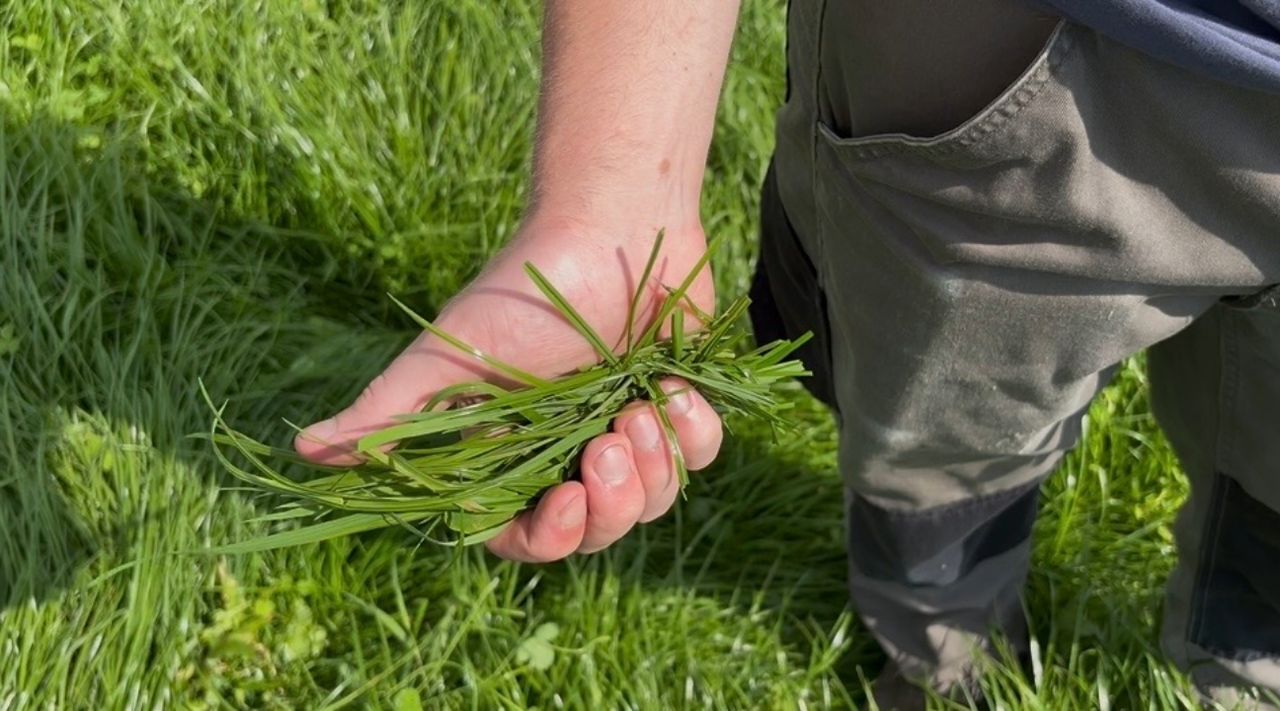
In the video below, he explains why applying Grolime agricultural lime has become a routine part of his farm management.
By maintaining optimum soil pH, he is improving fertiliser efficiency, encouraging stronger grass and clover growth, while ensuring every euro invested in fertiliser works harder.
An investment that continues to pay back
Few farm inputs offer benefits across productivity, profitability and sustainability in the same way as agricultural lime.
For Conor Mulligan, that is why agricultural lime forms part of a long-term soil management strategy rather than being viewed as an occasional input.
He said: "Lime is applied every year on this farm. We like to ensure fields get lime at least once in a five or six-year cycle.
"It's cheap, it's effective, and by keeping your soil pH correct, it makes sure you get the best grass growth on your farm and the best utilisation out of your fertiliser.”
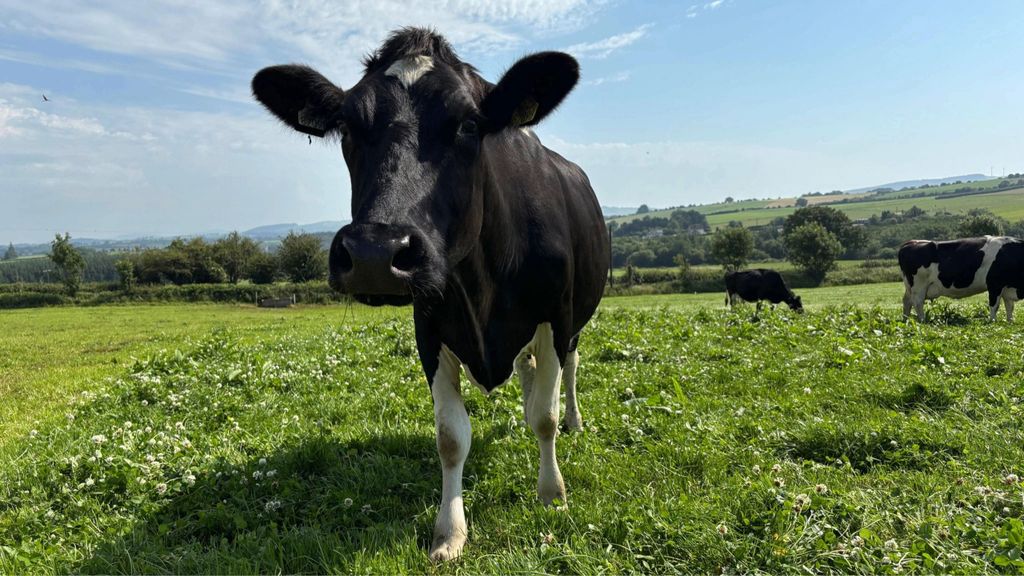
Since liming earlier in the summer, Conor has already seen the difference in his reseeded ground, saying, “the grass and clover have really taken off in the reseeded land”.
By maintaining the correct soil pH, he has created the conditions for strong establishment and healthy growth, showing how good soil fertility can continue to pay dividends long after the lime has been applied.
Soil pH: The foundation of profitable grass production
Maintaining the correct soil pH is the starting point of every successful soil fertility programme.
When soil pH falls below the optimum level, the efficiency of applied fertiliser declines and valuable nutrients already present in the soil become less available to growing crops.
That is why correcting soil pH is often described as the first step in any soil fertility programme because it improves the availability of essential nutrients already present in the soil.
Teagasc recommends maintaining a soil pH of 6.3-6.5 for grassland.
At this level:
- Nitrogen is used more efficiently;
- Phosphorus and potassium become more available;
- Soil biological activity becomes more active
- Grass responds better to fertiliser applications.
Without the correct pH, even the best fertiliser programme cannot deliver its full potential.
Turning existing nutrients into greater profitability
Applying lime remains one of the lowest-cost investments available on Irish farms.
By correcting soil pH, nutrients already present in the soil become more available, allowing fertiliser to work more efficiently.
According to Teagasc, maintaining optimum soil pH can release up to 70kg of soil nitrogen per hectare annually, improving nitrogen use efficiency, supporting higher grass production and reducing reliance on purchased fertiliser.
Teagasc research has also shown that increasing soil pH from 5.8 to 6.3 can increase annual grass production by up to 2.5t dry matter (DM)/ha, valued at €105/t DM, helping extend grazing seasons and reduce purchased feed requirements.
Environmental benefits go hand-in-hand with economic gains
Improving soil fertility benefits not only profitability, but also environmental performance.
A Teagasc study in Johnstown Castle measuring greenhouse gas emissions has shown that increasing soil pH by liming, results in a significant reduction of nitrous oxide (N2O) emissions and increased grassland productivity compared to the un-limed plots under the same management and fertiliser regime.
When soil pH was increased to 6.9, N2O emissions were reduced by 39% compared to a control soil at pH of 5.0.
As Veronica Nyhan, soil and plant nutrition specialist with Teagasc, explained: "The use of lime improves soil fertility by increasing its microbiological activity levels, which leads to better soil nutrient recycling and release.
"Liming represents a climate-smart, cost-effective and impactful method of reducing greenhouse gas emissions while also improving profitability and productivity."
Build stronger soils for the future
Healthy soils support healthier crops, improved drainage and stronger root development.
Correct soil pH also improves soil structure by encouraging the formation of stable aggregates, helping:
- Improve water infiltration;
- Reduce compaction;
- Minimise nutrient run-off;
- Increase biological activity.
Why Grolime certification matters
Every Grolime certified producer is independently licensed by the Department of Agriculture, Food and the Marine (DAFM) and undergoes twice-yearly testing to ensure consistent product quality.
Testing includes:
- Total Neutralising Value (TNV);
- Moisture content;
- Product grading.
Choosing a Grolime certified producer gives farmers confidence that the lime applied meets independently verified quality standards and will deliver the expected improvement in soil pH.
The Ground Limestone Producers Association of Ireland is a representative body of 15 member companies operating in approximately 30 locations throughout Ireland, all of which manufacture and sell ground limestone to farmers throughout the country.
Grolime is available nationwide.
Sponsored by