Farm inspection ready: are you prepared?


You have got the date in the diary for a local authority farm inspection. Now comes an important question: what do you need to do to make sure you are ready?
Local authorities across Ireland must carry out risk-based farm inspections as part of the National Agricultural Inspection Programme (NAIP) which is overseen by the Environmental Protection Agency (EPA).
The chief aim of NIAP is to "protect and improve water quality in Ireland".
The NAIP is also part of the EPA's oversight role under the Sixth Nitrates Action Programme and the Water Action Plan.
Inspections are targeted at priority areas where water quality is falling short of good status, so knowing what inspectors are looking for - and getting the farm in order - is essential.
Last year local authorities inspected 4,315 farms under the GAP regulations.
According to the Environmental Protection Agency (EPA) 2,935 enforcement actions were taken by local authorities in 2025 - 68% higher than the previous year.
Out of these 43% were found to be non-compliant and needed follow up actions by farmers to resolve key problem areas.
The EPA has blamed "poor farm management practices" as the main reasons for non-compliances.
Areas to get right
If you need to prepare for a local authority farm inspection, it is important to start with the basics.
Last year one of the biggest non-compliance issues was in relation to farmyard manure.
Uncontrolled runoff from farmyard manure was by far the most common non-compliance issue identified by local authorities.
Other key trouble spots included:
- Inadequate gutters and downpipes;
- Clean and dirty water separation;
- Silage storage infrastructure:
- Slurry storage and management;
- Organic fertiliser spreading.
Before any inspection farmers are advised to take a walk around the farm with these areas firmly in mind and tackle problems as soon as you identify them.
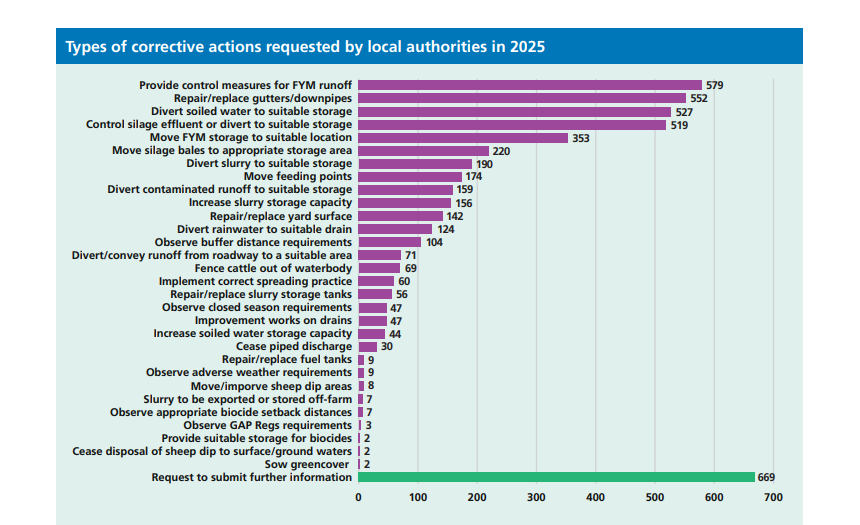
This data also provides a useful signpost to farmers about where they need to be most careful when it comes to meeting the GAP Regulations.
If you are getting ready for a local authority farm inspection, these are the areas worth checking first:
- Farmyard manure: Make sure it is not running off into drains or waterways, and that storage is properly managed;
- Gutters and downpipes: Check they are working properly and that clean rainwater is being kept away from dirty areas;
- Clean and dirty water: Make sure the two are properly separated and that soiled water is not finding its way into drainage ditches or watercourses.
- Silage: Check silage pits, bales and effluent management - particularly around storage and potential leaks;
- Slurry: Make sure you have adequate storage capacity and that slurry is being stored and managed correctly;
- Organic fertiliser: Check spreading practices, particularly during closed periods and near surface waters.