How should a sustainable future for the Irish sheep sector be delivered?

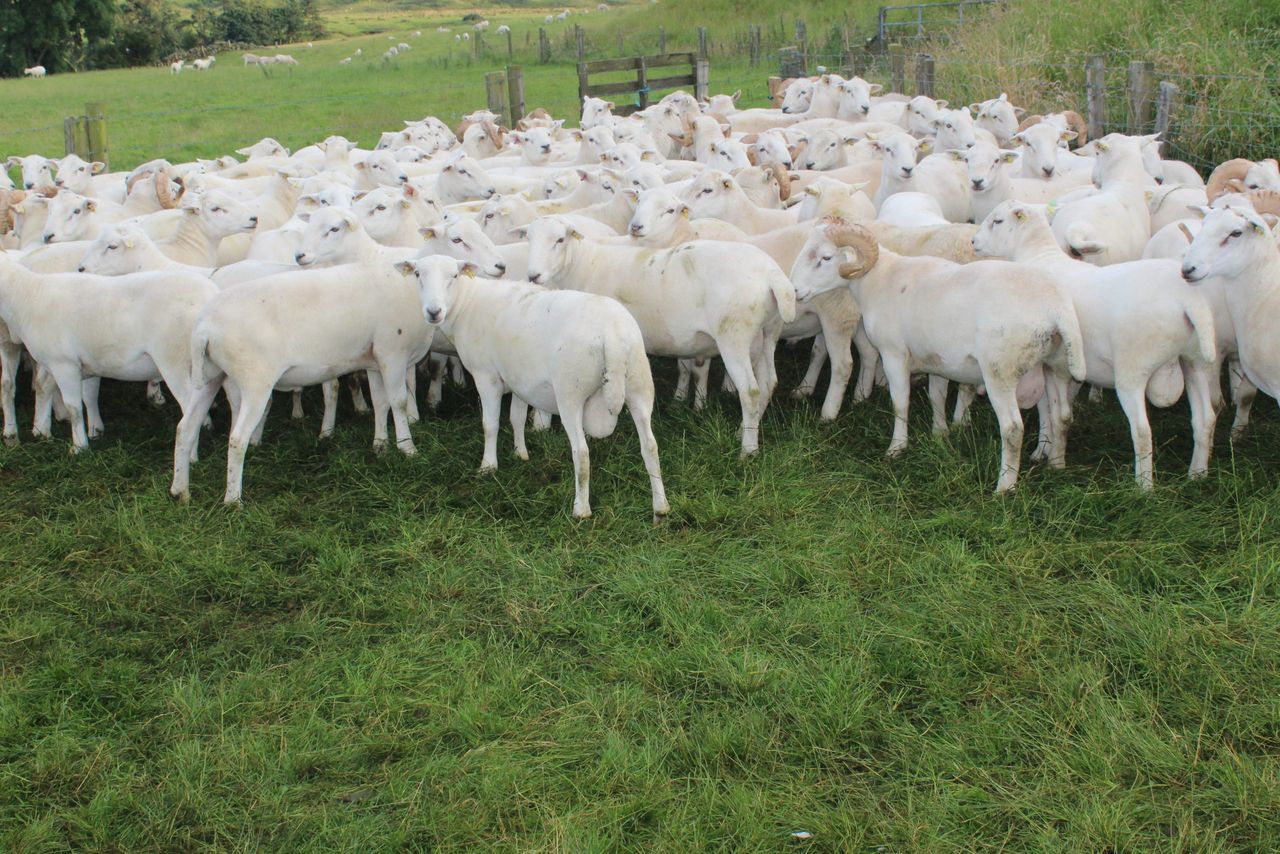
Sheep farmers will not be able to work on improving the environment if they are unable to generate adequate incomes from their farms.
That's according to Dr. Philip Creighton, who heads up the ongoing sheep research programme hosted at Teagasc Athenry.
The research scientist believes that delivering a sustainable future for the sheep sector will require securing adequate farm incomes in ways that are fully compatible with the highest standards of environmental protection.
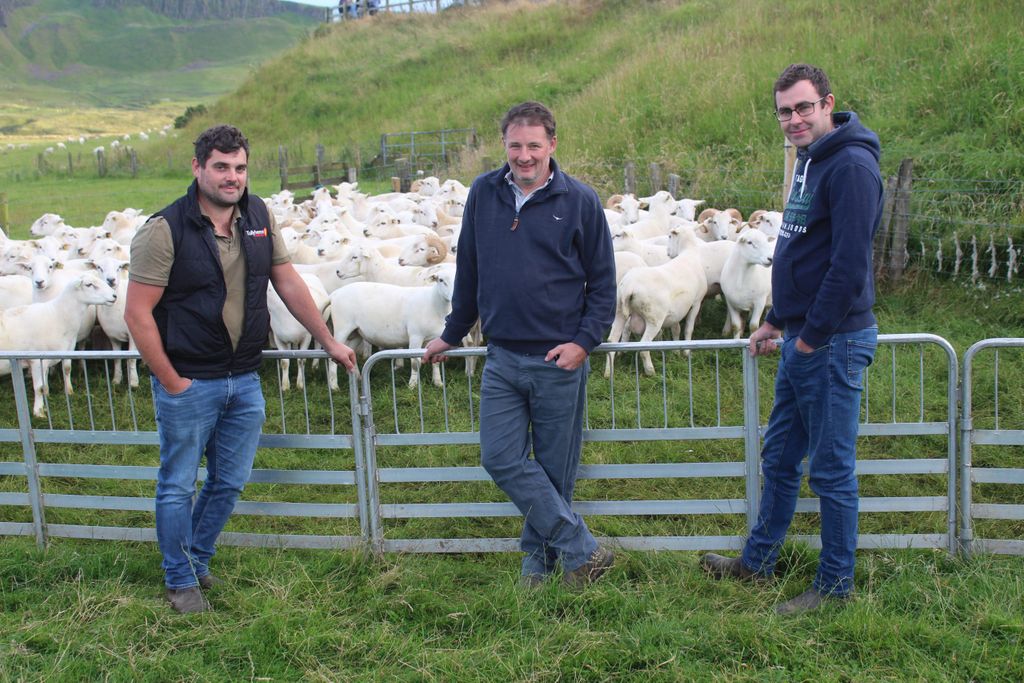
He made the comments at a recent EasyCare open evening, hosted by flock owner Campbell Tweed on his farm near the east Co. Antrim village of Carncastle.
Dr. Creighton said: “Sheep farming tends to take precedence in areas of the other country where there are very few other farming options.
“This fact alone brings with it a very strong social dimension.”
He went on to explain that the current Teagasc sheep research programme has a number of focal points:
- Health and welfare, including the issue of wormer resistance;
- Determining overall output and profitability of a sheep enterprise;
- The use of new technologies, particularly from a farmer age perspective;
- Production efficiency and associated environmental outcomes.
According to the Teagasc representative, improving efficiency and delivering an enhanced environmental footprint are, in essence, two sides of the same coin.
He commented: “It is not possible to discuss production efficiency and environmental outcomes separately.
“If flock owners improve the efficiency of their businesses, then they are improving the carbon footprint that they generate.
He also noted that the "vast bulk" of the lamb produced in Ireland is destined for export.
"So, it is important that we have the information available with regard to the environmental efficiency of our sheep enterprises in order to retain these markets," he added
Lamb quality
Breeding and genetics constitute a vital aspect of Teagasc’s current sheep research programmes, according to Dr. Creighton.
He explained: “We work very closely with Sheep Ireland in this regard.
"Addressing animal health is another important aspect to our research work, as is product quality.
“This is an all-embracing issue. We set out to improve lamb quality in the context of all the sheep research activity.
“This cannot be achieved in all instances. However, the work undertaken must confirm that, at the very least, lamb quality is not diminished in any way.”
However, Dr. Creighton stressed that there is "no point" carrying out research if the results cannot be communicated effectively to the industry as a whole.
“Knowledge transfer is effected by our various research teams working closely with the Teagasc advisory network.
“Making our research relevant is crucially important.
"Making this happen is driven by the feedback received from farmers and other stakeholder bodies representing the sheep industry," he said.
Hill sheep
Significantly, Teagasc views hill sheep production as a standalone research area.
Dr. Creighton again: “Yes, hill flocks provide the replacement breeding females for lowland sheep enterprises.
“However, upland flocks play a standalone role in maintaining the landscapes of our hill areas: which are so important from both an environmental and conservation-related perspective.”
Dr. Creighton confirmed that ewe numbers in hill areas has declined over recent years.
In turn, this has provided an opportunity for flock owners in these localities to look at the option of finishing the lambs they produce, as a way of bossing flock sustainability.
The Teagasc research carried out to date has assessed both outdoor and indoor finishing systems.
This work has shown that finishing hill lambs in upland or hilly areas relies heavily on utilising green-bye ground, alternative forage crops like forage rape, or strategic indoor concentrate systems.
However, finding indicate that moving away from selling light store lambs allows farmers to capture higher margins, provided they match the finishing system to the quality of enclosed land and target market specifications.
Efficiency
All Teagasc sheep research projects are focussed on the conversion of grass and forage into lamb in the most efficient way possible, according to Dr. Creighton.
Reducing application rates of chemical nitrogen (N) on to swards is seen as a priority. In turn, this has brought a greater focus on the use of legumes, which can fix N from the air.
Where methane is concerned, the Irish government has fixed targets where emission levels of this greenhouse gas are concerned.
“Sheep are not immune from this issue,” Dr. Creighton stressed.
“So we have been doing a lot of work that addresses this issue in different ways.
“Identifying sheep bloodlines that naturally produce less methane is one approach in this regard.
“But we also need to look at our systems in term of how we feed sheep."
The Teagasc representative outlined that it is now known that by including legumes in grass swards and introducing sheep to multi-species swards, production efficiency levels can be increased and methane emission levels reduced.
“This represents a win/win scenario for the sheep sector," Dr. Creighton said.
Teagasc research has also confirmed that meat quality can also be improved through the inclusion of both legumes and herbs in animal diets.
Meat quality can also be selected for as a genetic trait.
Meanwhile, organic lamb production has been a fast-growing area of Teagasc research activity over recent years.
This trend has been encouraged by the changing grant incentives available in Ireland.
Teagasc’s research programmes have, therefore, been adapted to address the deficit of advisory information on organic lamb production.
Grass swards
Teagasc’s sheep research programmes have always been very much grazing focussed.
This work has evolved from a direct assessment of ryegrass pastures to an investigation into multi-species swards and the specific impact that the individual components of these swards - legumes, chicory, plantain etc. - can have on sheep output.
According to Dr. Creighton, legume swards can deliver higher levels of daily live weight gain and a reduction in the number of days to slaughter.
What’s more, these increases in efficiency levels deliver positive environmental impacts for sheep production systems.
However, he noted that swards containing a mix of grass and plantain produced lamb that was slightly less tender: but not to any significant extent.
Genetics
Where sheep genetics is concerned, Teagasc has placed a strong focus on assessing the validity of the accuracy and the data produced courtesy of the performance ratings produced by Sheep Ireland.
This work has entailed the establishment of the INZAC flock at Athenry, Co. Galway.
Initially, the project allowed a genetic comparison of New Zealand and Irish elite ewes to be undertaken in a common environment.
More recently, an assessment of breeding rams has also been included within its remit.
The INZAC flock consists of 180 ewes from two main breeds, Texel and Suffolk, representing the top genetic merit animals in the Irish and New Zealand maternal indexes.
The objective of this flock is to allow for the benchmarking of elite Irish genetics compared to elite New Zealand genetics and the role of New Zealand genetics within the Irish flock.
It will also help to validate the Sheep Ireland replacement index.