Sponsored
Roscommon dairy farmer sees the benefits of crypto vaccination


Sponsored by

When Tommie Devine made the move into dairy five years ago, giving his calves the best possible start was a priority from day one.
Today, he farms alongside his father, Thomas, outside Frenchpark, Co. Roscommon, where they run a 170-cow Jersey-cross herd across 400ac.
The family previously operated a beef and sheep enterprise, but since converting to dairy, Tommie, a 2019 Animal Science graduate from University College Dublin, has focused on developing a healthy and productive herd.
Bovilis Rotavec Corona has been part of the farm’s calf health programme for the past two calving seasons, with Bovilis Cryptium introduced last spring.
Tommie said: “We calve all 170 cows in a tight spring calving window between February and March. It’s a very busy time for us.
“The last thing anyone involved in calf rearing wants is an outbreak of any kind, and that’s the whole reason behind using both Bovilis Rotavec Corona and Bovilis Cryptium.
"They really act like an insurance policy for us.”
Working with your vet
Tommie administers Bovilis Rotavec Corona to the herd in preparation of each calving season, and added Bovilis Cryptium to his vaccination schedule before last spring’s calving season.
The decision followed advice from their vet, Kevin Henry of Castlerea Veterinary Clinic (XLVets), who recommended using Bovilis Cryptium given its concurrent licence alongside Bovilis Rotavec Corona, making it the next logical step for the herd.
To Tommie’s relief, he has yet to face the time-consuming reality of addressing or responding to an outbreak of calf scour.
“Prior to last spring, we’d been using an oral solution to prevent cryptosporidiosis in the calves, which had to be administered once a day for seven days.
"But once Kevin told us about Bovilis Cryptium, we knew that would take a lot of the labour out of it for us.
"The fact that you can give Bovilis Cryptium and Bovilis Rotavec Corona to the herd on the same day was another huge timesaver.
“You’re talking about a few minutes to vaccinate a dozen cows. We’d have the whole herd done in no time," he explained.
The vaccines behind the protection
Bovilis Cryptium is the first and only vaccine to protect calves against cryptosporidiosis.
It works by raising specific antibodies in the cow before calving, which are passed to the calf through colostrum and transition milk when fed for a minimum of five days.
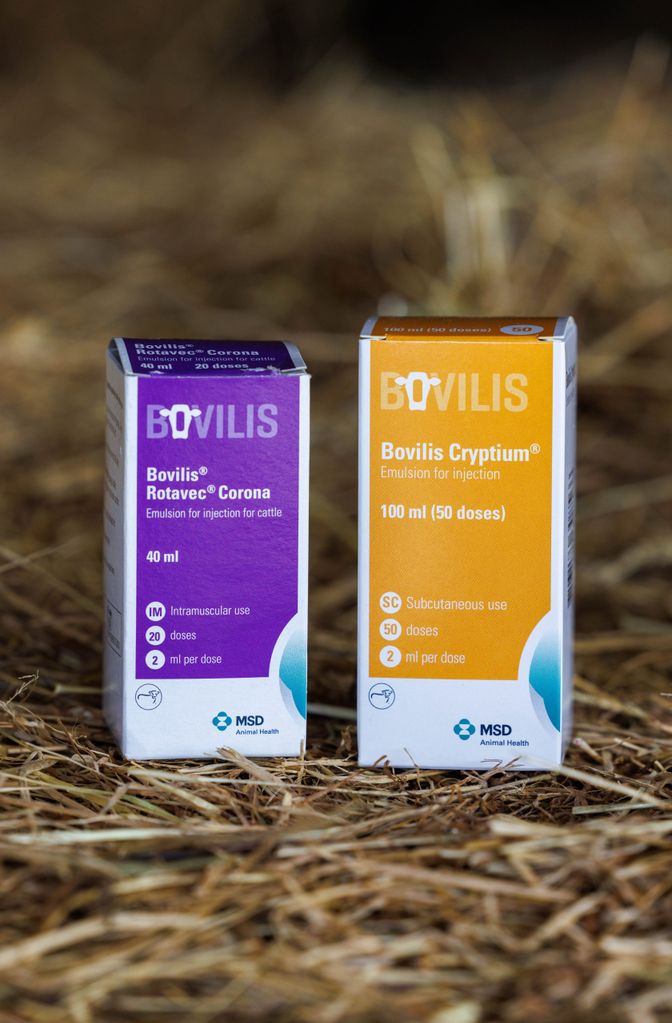
The primary course consists of two doses of 2ml, given under the skin, four to five weeks apart.
These vaccinations must be completed between 12 and three weeks before calving. After that, a single booster dose is given 12 to three weeks before each subsequent calving.
Bovilis Rotavec Corona is a single dose vaccination, given under the skin or into the muscle of the cow, 12 to three weeks before calving to passively provide protection to calves from diarrhoea caused by rotavirus, coronavirus and E. coli via adequate colostrum and transition milk feeding.
Bovilis Rotavec Corona can conveniently be given on the same day as Bovilis Cryptium. The vaccines should be given at different sites.
Importance of colostrum
Tommie added: “We put a big focus on testing colostrum and managing those first five days of colostrum feeding properly, so the calves got the full benefit from it.
"We had a good system in place last spring, and it worked really well for us. The calves were off to a strong start straight away.
"We’re using a range of MSD Animal Health Bovilis vaccines, which all complement each other and have made life easier for the cows, the calves and ourselves.”
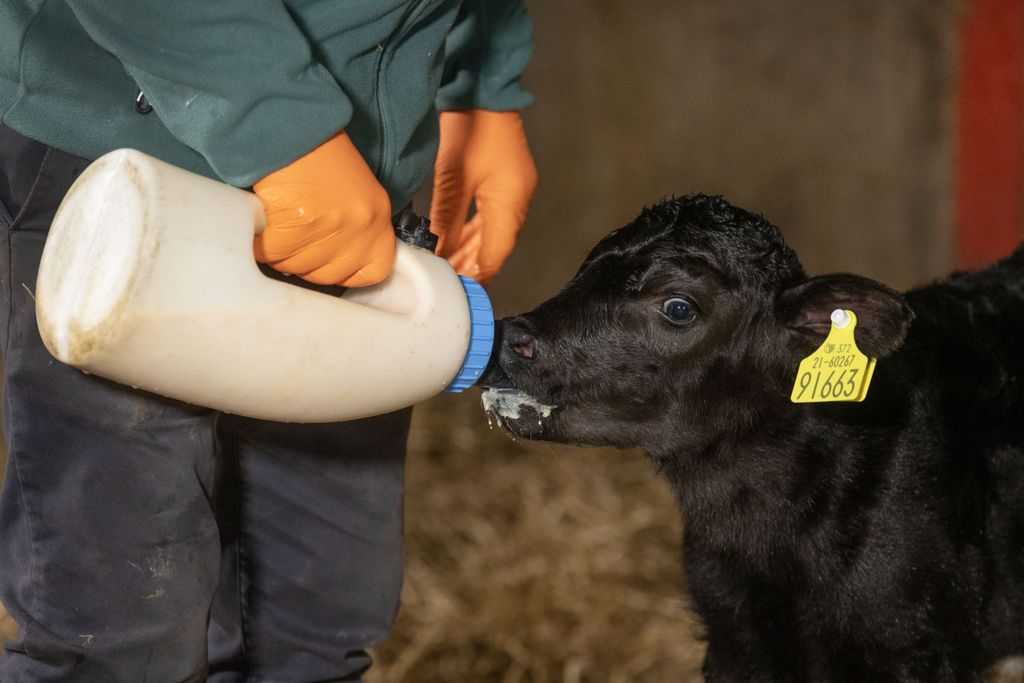
The management of calf scour on farm requires a broad approach with adequate colostrum management, hygiene, nutrition and husbandry being essential in reducing the risk of disease.
Speak to your veterinary practitioner for advice on what vaccination and therapeutic options will help to provide the best results on your farm.
Planning for next spring? Speak to your vet about adding Bovilis Cryptium and Bovilis Rotavec Corona to your calf health programme, so your cows are vaccinated in adequate time before calving.
Topics
Sponsored by