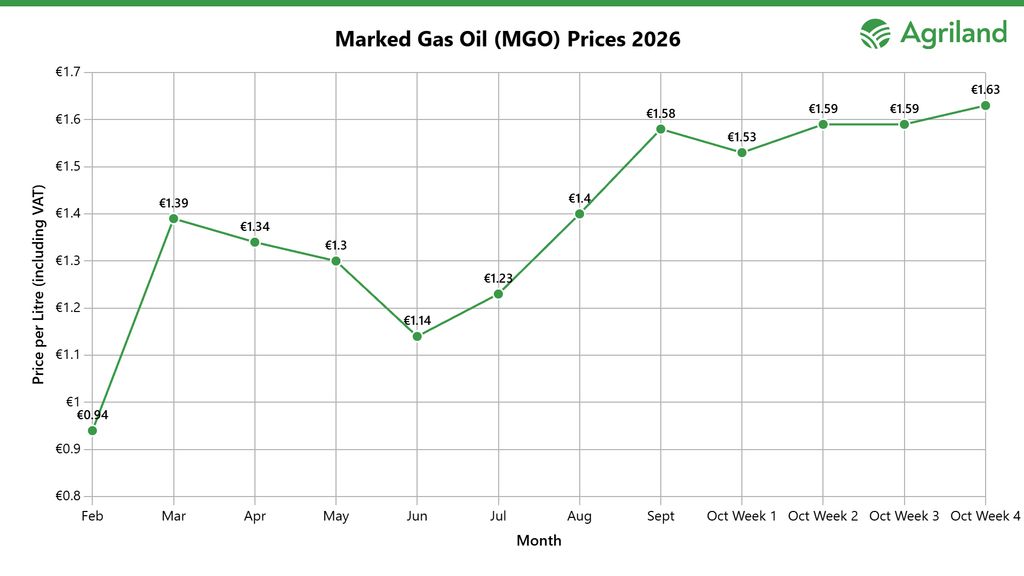
What has been the peak for green diesel so far this year?
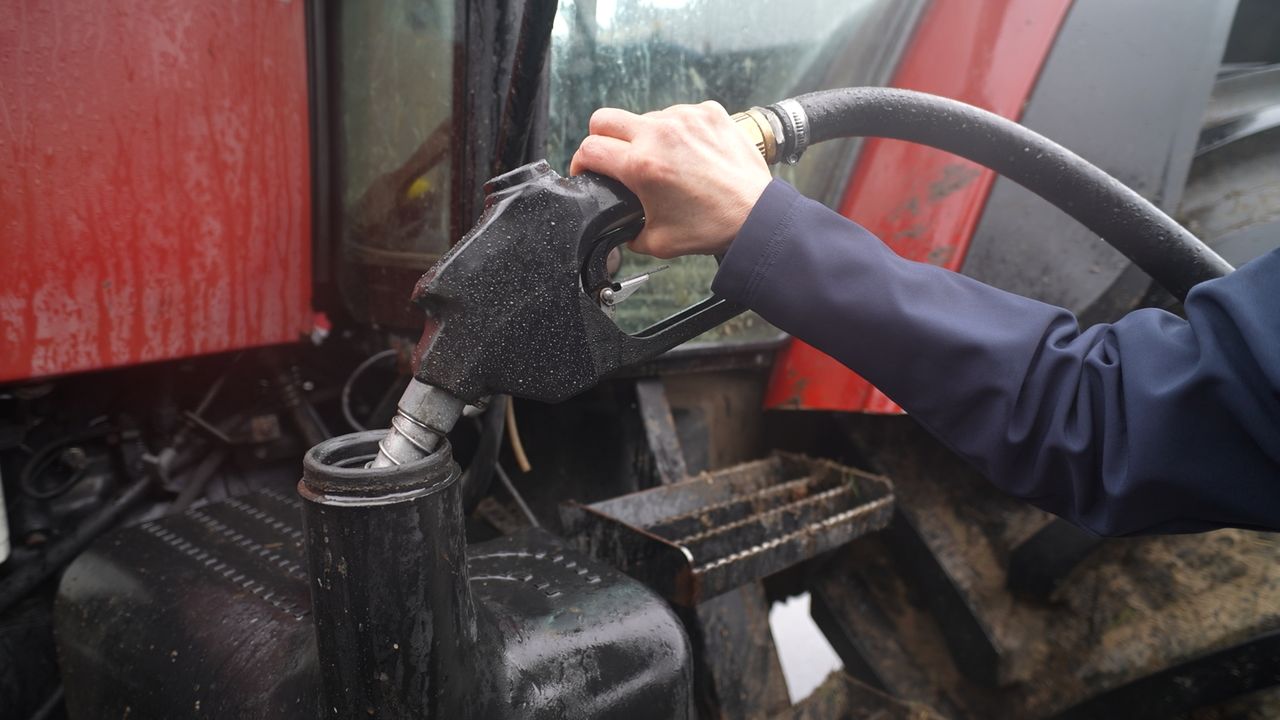
As contractors and farmers alike adjust to the clocks 'going back' in October, the price of marked gas oil - commonly known as green diesel - has not followed a similar trend.
The average price of green diesel in October was €1.58/L, including VAT, according to farmers and contractors from around the country who were contacted by Agriland this month.
There had been signs of diesel prices reducing at the start of October, but as the month progressed, prices rose again, with this week's average price of €1.63/L the highest of the month.
With the majority of winter crops now in the ground and as we enter into the traditionally slower period in the contracting calendar, the mood within contracting circles remains downbeat when it comes to their main input: fuel.
Admittedly, the government's Fuel Income Support Scheme (FISS) has been a welcome relief, but with fuel prices now over 60c/L more expensive than last year, the 20c/L FISS rebate falls well short for contractors who do not add a diesel surcharge to their prices.
Even adding a fuel surcharge to contracting charges does not come without complications.
With fuel prices fluctuating day-to-day, contractors reported having to find more 'out-of-cab' time to keep their prices up-to-date.
To avoid having to constantly change rates, one contractor explained how he added more storage for diesel at considerable cost, but he maintains that it has been a worthwhile investment.
Some contractors who added a diesel surcharge are reportedly being met with pushback from farmers, who are asking why they are being charged more if the contractor is receiving the FISS.
Who is to blame for the high prices?
Ultimately, fuel prices began to rise sharply after the US and Israel entered into conflict with Iran - the country that controls the Strait of Hormuz.
In February 2026, Iran blocked off access to the Strait of Hormuz, a key route for oil to be transported from the gulf region.
As a result, oil could not get out and there were fears of a supply shortage so prices immediately rose.
While the Strait has reopened allowing some access, there are still concerns about the danger of travelling through the Strait and where there is risk... there is cost, so fuel prices remain stubbornly high.
As the year progressed, the finger of blame for the high fuel prices has shifted from suspect to suspect, with contractors and farmers now turning their focus to diesel suppliers.
Contractors, in particular, have expressed frustration at what they feel is a lack of competition when it comes to bulk diesel deliveries in rural areas, with the continued acquisitions of smaller suppliers by big brand names a particular cause for concern.
While the question of exactly who is to blame remains up for debate in contracting circles, one thing that they seem to be in agreement on is that the high fuel prices might just be the new normal.