Watch: Govt to use EU presidency role to boost CAP funding

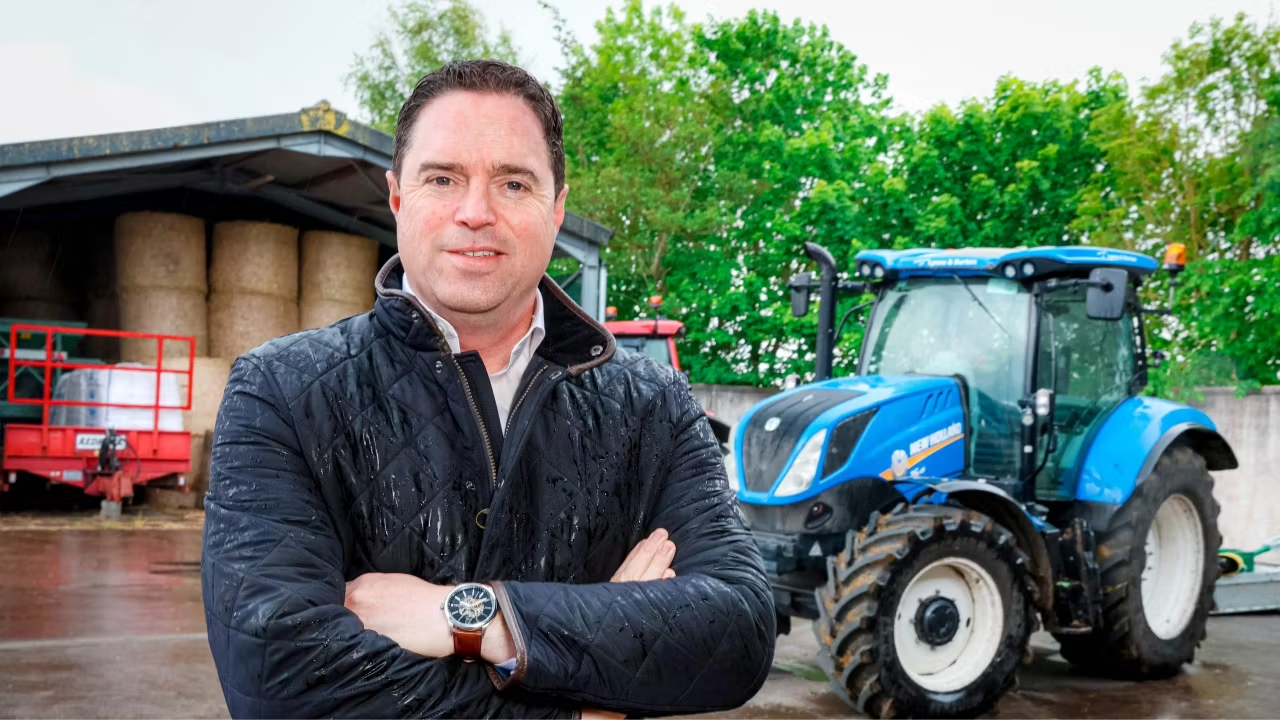
Minister for Agriculture, Food and the Marine Martin Heydon has said that Ireland will use its presidency of the Council of the EU to try to secure increased funding for the Common Agricultural Policy (CAP).
Ireland will hold the presidency of the council from July 1 to December 31, and during that time the EU budget from 2028 to 2034 - and therefore the CAP budget for the same period - will be top of the agenda.
Most of the key negotiations between member states, the European Parliament and the European Commission will take place while Ireland is in the council hot seat.
This week, the council adopted a preliminary position on the long-term budget - the Multiannual Financial Framework (MFF) - and, within that, a position on agricultural funding.
However, the European Parliament has adopted a position that is considerably more generous towards CAP funding than the council's view.
It is one of a number of areas of divergence on the future CAP between two of the EU's key decision-making institutions.
When asked by Agriland today (Wednesday, June 17) where he stands on these two different perspectives on how EU support for farming should look, Minister Heydon said: "What I can say is across government, across everyone in government, we understand how important the common agricultural and fisheries policies are to our overall economy.
"Ireland is a net contributor to the EU, and we obviously pay in more than we get back, but 75% of the receipts we get back from the EU are through the CAP and the CFP," he said.
"And that’s critically important, particularly for balanced regional development, particularly for our rural and coastal communities."
Minister Heydon added: "So every member of government in Ireland, not just the ones involved in agriculture and fisheries, are absolutely determined to make sure that we can get the most amount back out of this, and that we don’t have a diminished return out of that.
He highlighted: "Obviously agreeing the overall collective position, and the decisions we need to make around structures of the Common Agricultural Policy, will be ultimately impacted by the amount of money available."
The minister also noted that, depending on the amount of money ultimately available in the CAP, this might mean having less, more streamlined agri-schemes.
"I’ve said very clearly, I'm not the first minister for agriculture who is determined to deliver simplification, and we really struggled to do that in the past. The financial means that are available to us will mean a necessity to have less schemes and to have a more streamlined system here," he said.
"But we are determined to fight for more money in that regard and use our position though these negotiations to get that CAP funding up," the minister added.
CAP stakeholder event
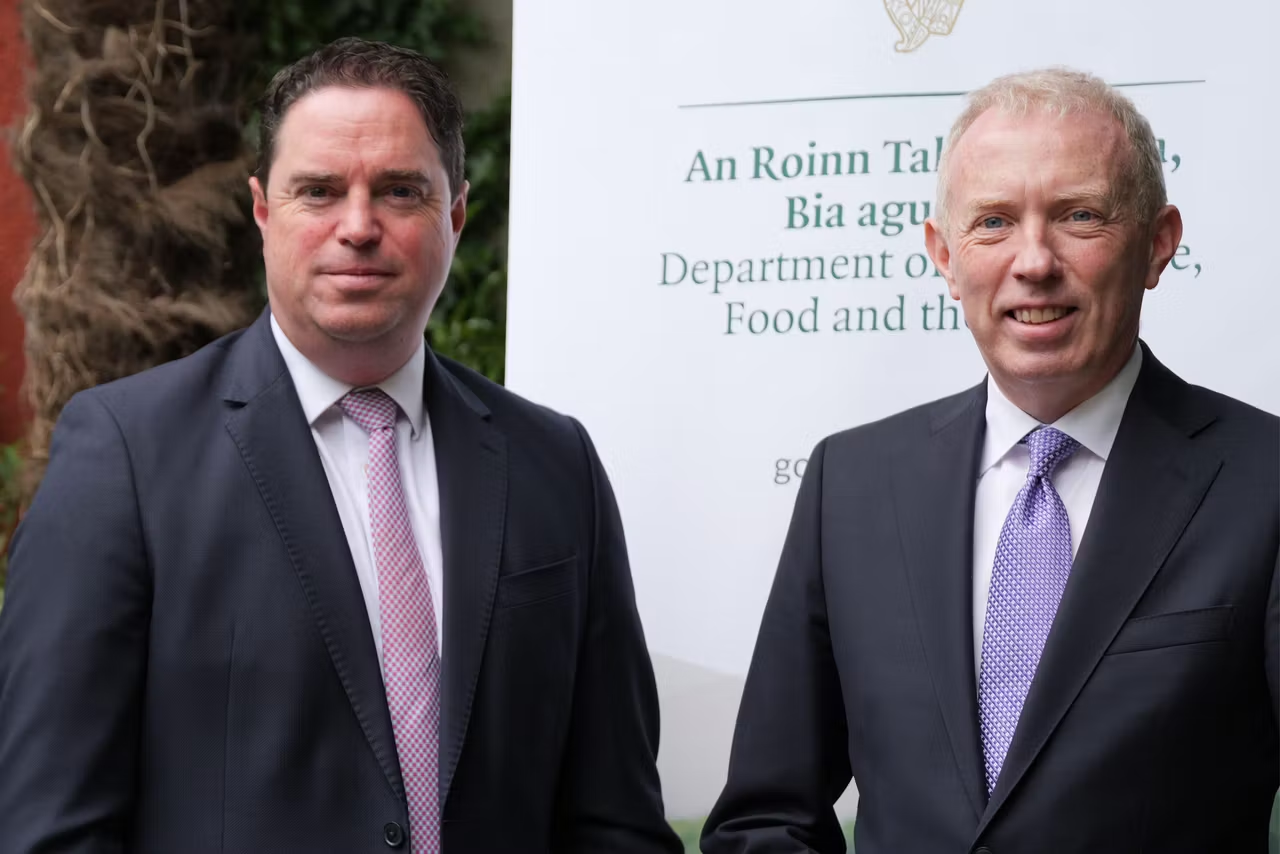
Minister Heydon was speaking at an EU presidency stakeholder event organised by the Department of Agriculture, Food and the Marine.
Stakeholders from across the agri-sector, including farm organisation representatives, attended the event in Portlaoise.
Speaking during the event, Minister Heydon said: "Today’s event marks an important milestone in our preparations for Ireland’s Presidency of the Council of the European Union, which begins in just two weeks’ time. This is a significant responsibility, but it is also a significant opportunity to lead the European agenda at a pivotal time.
During Ireland's presidency, the minister will chair meetings of his counterparts across member states in the 'Agrifish' component of the council.
"At Agrifish Council, Ireland’s work will be guided by a clear objective: to support farming and fishing families; protect incomes; strengthen competitiveness; sustain rural and coastal communities; and strike the right balance between the economic, social and environmental pillars of sustainability," he said.
"Our two central priorities will be to progress discussions on the future of the Common Agricultural Policy post-2027, and to successfully conclude the annual fishing opportunities negotiations," Minister Heydon added.
"The CAP reforms must preserve the policy’s ability to contribute to food security, secure farm incomes, and support rural resilience with predictability and fairness.
"Farmers need certainty, accessible schemes, proportionate rules, flexibility that reflects regional realities and sectoral differences, and a framework that allows them to plan and invest," he said.