What will Dairygold pay for May milk?


The Dairygold board today (Wednesday, June 17) confirmed it it has increased the May quoted milk price by 0.5c/l to 37.5c/L.
This is based on standard constituents of 3.3% protein and 3.6% butterfat, inclusive of sustainability and quality payments and VAT.
According to the co-op the May milk price equates to an average farm gate milk price of 41.9c/L for the month - based on the average milk solids, achieved by Dairygold milk suppliers.
Meanwhile the quoted milk price for May, based on EU standard constituents of 3.4% protein and 4.2% nutterfat, is 41.2c/L, inclusive of VAT.
Dairygold milk price
According to the chair of the Dairygold board, Pat Clancy, global dairy markets "remain challenging".
Clancy said that "elevated milk supply" is continuing to weigh on returns, particularly across butter and cheese.
"Against this backdrop, overall market fundamentals are finely balanced.
"Dairygold remains focused on maximising returns to members and the board will continue to monitor markets closely," the Dairygold chair added.
GDT
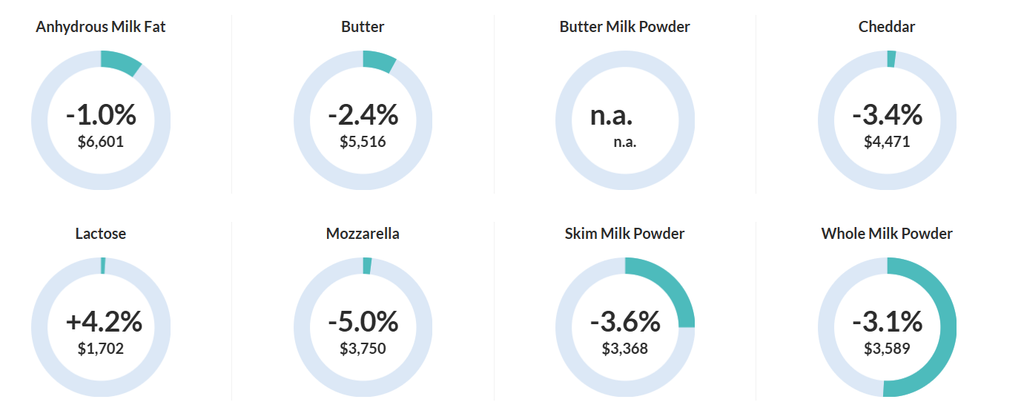
Ongoing fluctuations in the global dairy sector was borne out in the latest Global Dairy Trade (GDT) event yesterday (June 16).
Prices fell across the majority of categories as the GDT Index slipped by 2.8% with an average price of €3,428/t recorded.
This marked the second consecutive decline, which had reversed the recent upward trend.
A total of 12,922t of product was sold at yesterday's event, with 151 bidders participating.
According to the latest Global Dairy Quarterly Q2 report by Rabobank global milk production growth has begun to slow into quarter two following four consecutive quarters of expansion.
However the report highlighted that across most regions, rising input costs are the most "pressing concern", with energy, fertiliser, and interest rates set to impact on margins in the second half of the year.