Was Cyrus McCormick the greatest ever farm machinery innovator?

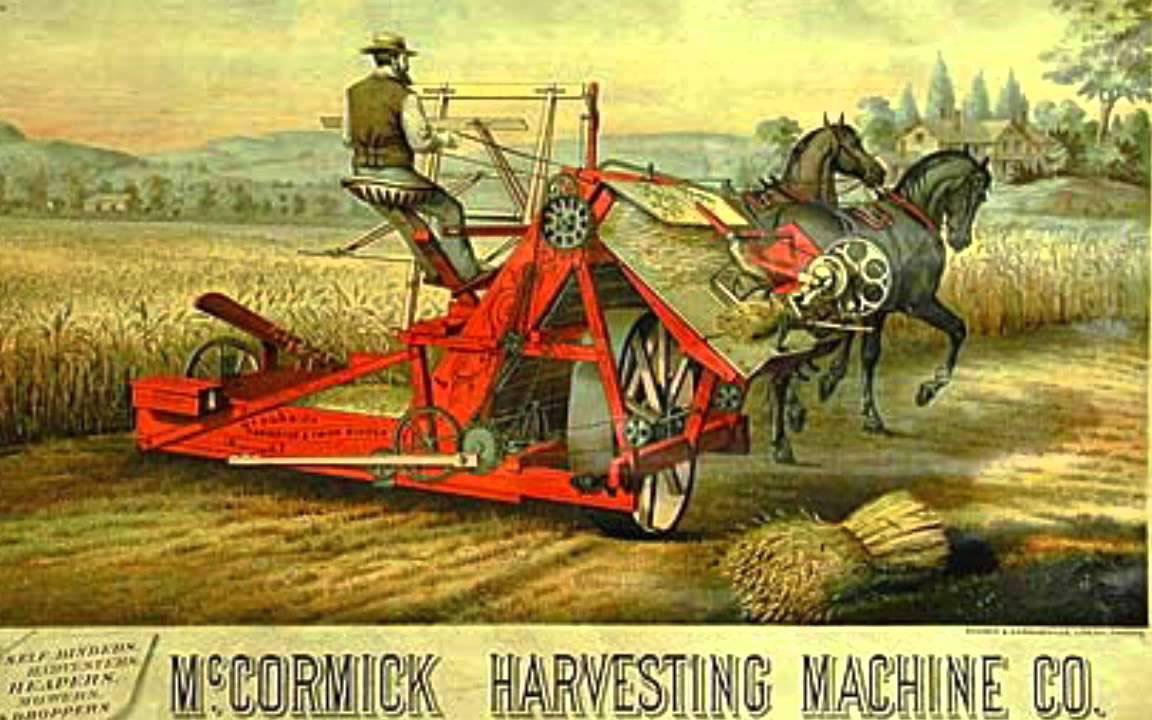
As the frontier line of the wild west pushed across north America, it encountered two major features: vast tracts of land which were ideally suited for farming; and native Americans who naturally resented the intrusion.
As history has shown, it was the settlers which won out, giving them access to these lands for growing crops - land that was extensive and topographically perfect for mechanised farming.
However, mechanised farming was in its infancy during the mid-1800s and much invention and innovation would be required to make the most of what was available.
Staff shortages are nothing new
One of the main constraints to exploiting the land was lack of labour.
As a new country, America was still filling with immigrants from Europe and most of those found work on the eastern seaboard.
The result was that, from an American perspective, in response to a lack of labour, the major advances in mechanisation took place in the prairies and in the far west, especially California, where combine harvester development was of particular importance.
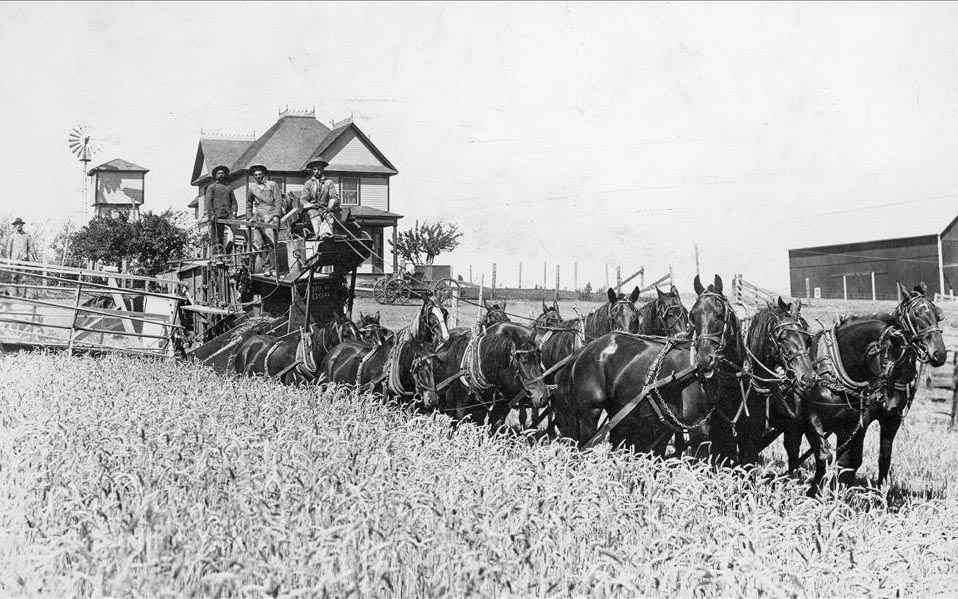
The results were impressive: in 1895, the labour requirement for harvesting an acre of wheat had dropped to just 7% of what it had been in 1830.
All this had been achieved with draught animals and steam; the internal combustion engine had yet to arrive.
The first great innovator
When we think of the great mechanical innovators in agriculture, the names Ford and Ferguson spring to mind, yet this great revolution in farm mechanisation took place before either had come to have any influence on farming methods.
If there is one innovator that that stands out above all others in this period of development, it is Cyrus Hall McCormick, a name that still lingers within the industry, though little heed is paid to its origin.
Cyrus was born in 1809 to a farming family in Raphine, Virginia. The farm was self-reliant with a workshop and forge, and it was in here that Cyrus' father, Robert, created his own horse-drawn reaper.
This machine, however, foundered on the need for a reliable cutter bar and was put on the long finger, yet it was amongst this air of invention and enquiry that the young Cyrus was brought up.
Cyrus takes it on
In 1831, Cyrus took up the project where his father had left off and, by further refinement and the addition of a straw-collecting reel, the machine successfully cut 6ac of oats in a public demonstration that year.
His was by no means the only attempt to produce a reaper, as any others were working towards the same goal.
By reaper, or harvester, it refers to a machine that cuts a standing crop for transport to a stationary thresher.
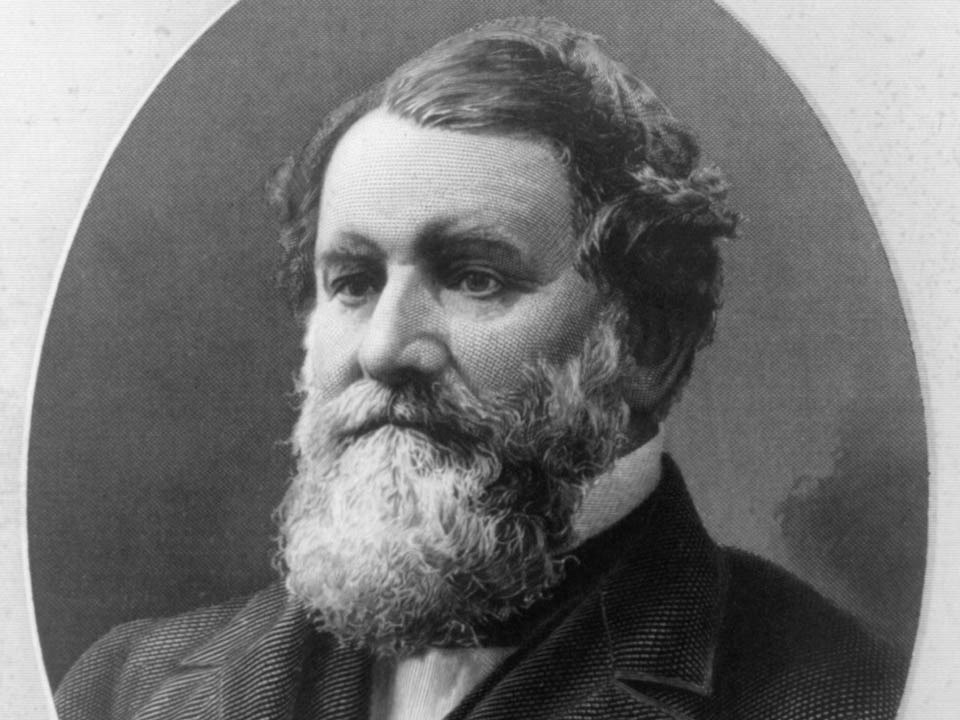
Yet it was McCormick junior who brought together the essential features of such a machine and made it work for the first time, although he did not immediately patent it.
These features included the cutting apparatus with reciprocating knife, the reel, collecting platform, and the ground drive wheel to power it all.
It was a major advancement in farm mechanisation at the time and one McCormick should be more widely credited with, although a fellow inventor of the time, by the name of Obed Hussey, had created something similar which was more orientated towards the cutting of grass.
Slow sales
Serious production of McCormick's harvester on the family farm did not start until 1840.
To increase production, further manufacturing was put out to contract during the following decade, the largest licensee being The Globe Works of Indiana.
There was not too much enthusiasm for the harvester in McCormick's hilly home state of Virginia, so in 1844 he took himself off on a tour of the new western states to assess the market potential.
Upon his return, he declared that "If reapers were luxuries in Virginia they were necessities in Illinois, Ohio, and on the great plains of the west".
Armed with this new insight, he decided to move operations to Chicago which, at the time, was a town of just 17,000 souls, yet it became the centre of America's grain trade and so ideally suited to the manufacture and distribution of farm machinery throughout the west.
Start of the Harvester Wars
It was also at this time that Hussey's harvester appeared in the same market space as McCormick's, signifying the first skirmish of the great Harvester Wars which were to follow.
A comparison of these two machines and their relative success indicates that it was McCormick's business sense that saw his model open up the west while Hussey's version fell behind and his company was eventually absorbed into International Harvester.
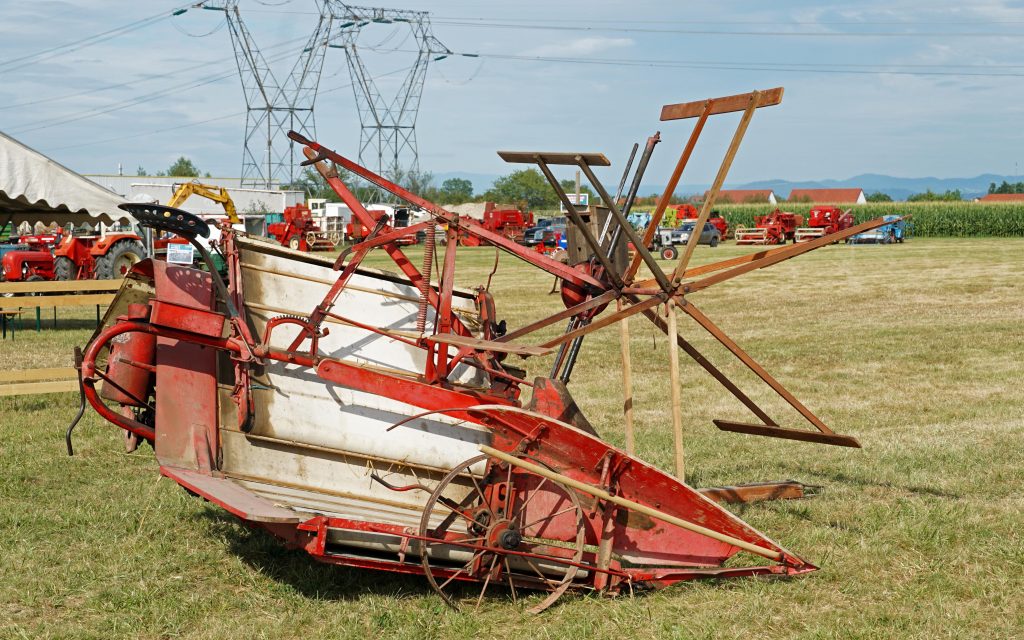
From the start of manufacture up until 1847, Hussey had sold 277 harvesters, McCormick 995.
At the end of the 1850s, those figures stood at 2,000 for Hussey and 23,000 for McCormick, whose bet that success lay in the west had handsomely paid off.
The success of the harvester was a mixed blessing for both Hussey and McCormick for once their patents had expired, harvester production became a free-for-all and many other companies rushed into the market.
This led to what became known as the Harvester Wars, as manufacturers competed to cash in on the bonanza.
Price-cutting became just one of the tactics - many of questionable morality - used to entice buyers.
McCormick Family business
Cyrus himself took his brothers on as partners in the business, allowing them to run the production and distribution side of the company while he concentrated on the sales and marketing.
It is here where his true genius shone through.
Cyrus pioneered such practices as training farmers to use the new machines, ensuring that there was an adequate parts and service backup and - perhaps most significantly of all - he championed hire-purchase as way for farmers to acquire new machinery.
McCormick passed away in 1884 and the business passed to his son, Cyrus McCormick Jnr.
By the turn of the century, the Harvester Wars were taking their toll on the machinery industry as a whole, so, in a bid to bring some sense to the situation, the McCormick Harvesting Machine Company merged with the Deering Harvester Company and three other smaller manufacturers to form the International Harvester Company, which is still with us today.
The Irish influence
Cyrus McCormick's role in bringing mechanisation to farming is probably underrated.
He wasn't just an inventor, his business acumen established the ground rules for machinery manufacture, distribution, and after-market service, which are the bedrock of the modern industry.
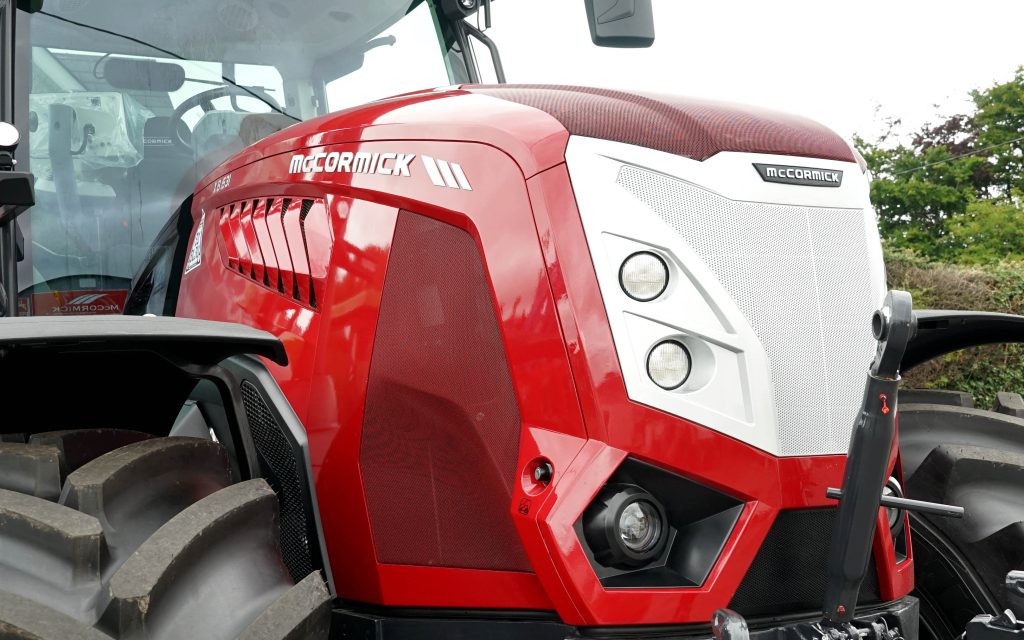
These are hugely important factors and were later built upon by the more widely appreciated Henry Ford and Harry Ferguson, who both share another link with Cyrus - an Irish connection.
Ford was the son of Irish immigrants, Ferguson was a proud Ulsterman, while McCormick's paternal great-grandparents, Thomas and Elisabeth McCormick, were also from the north of Ireland before they emigrated to Pennsylvania in 1735.