Tips for beef farmers setting up simple paddock-grazing systems

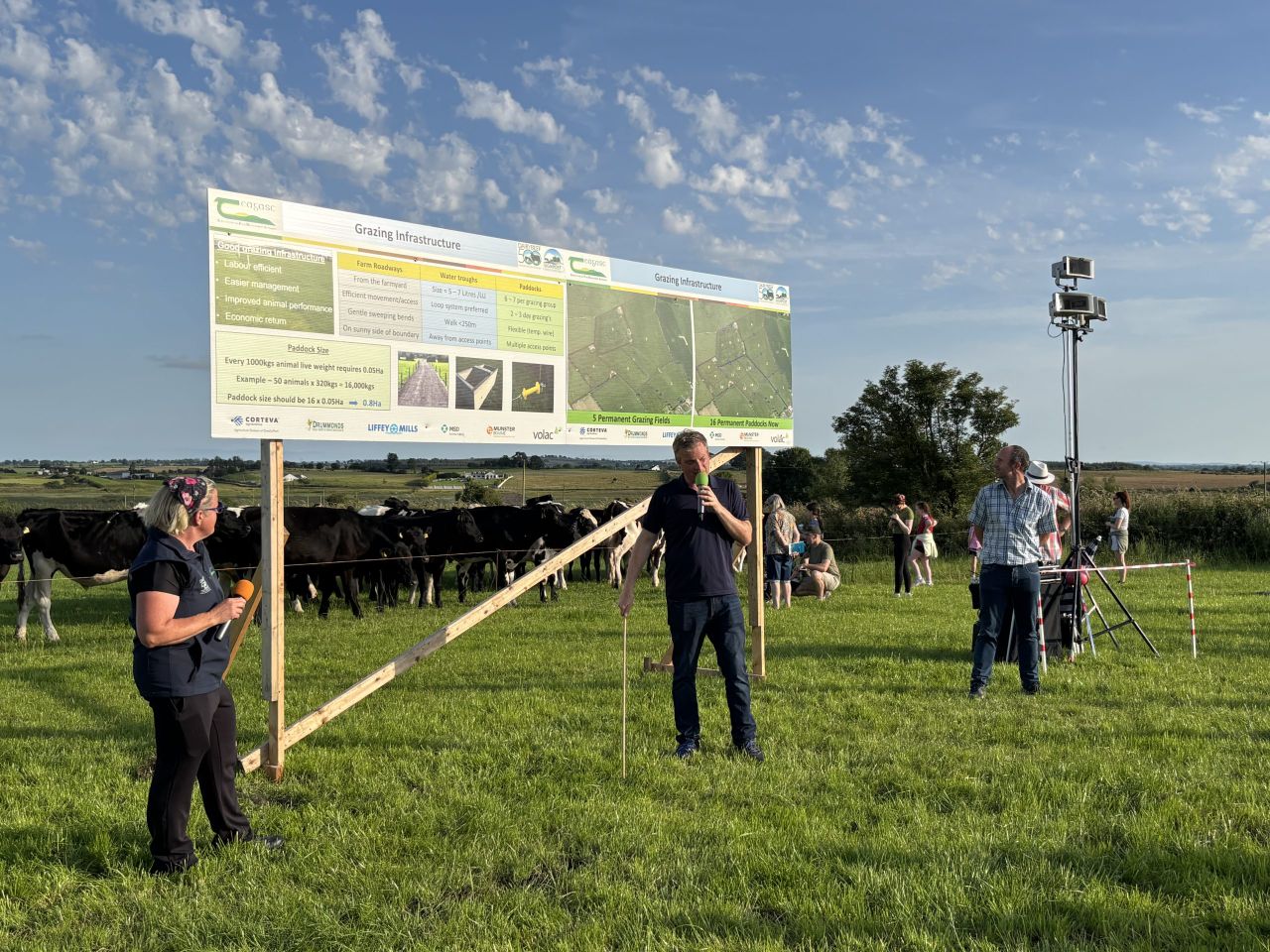
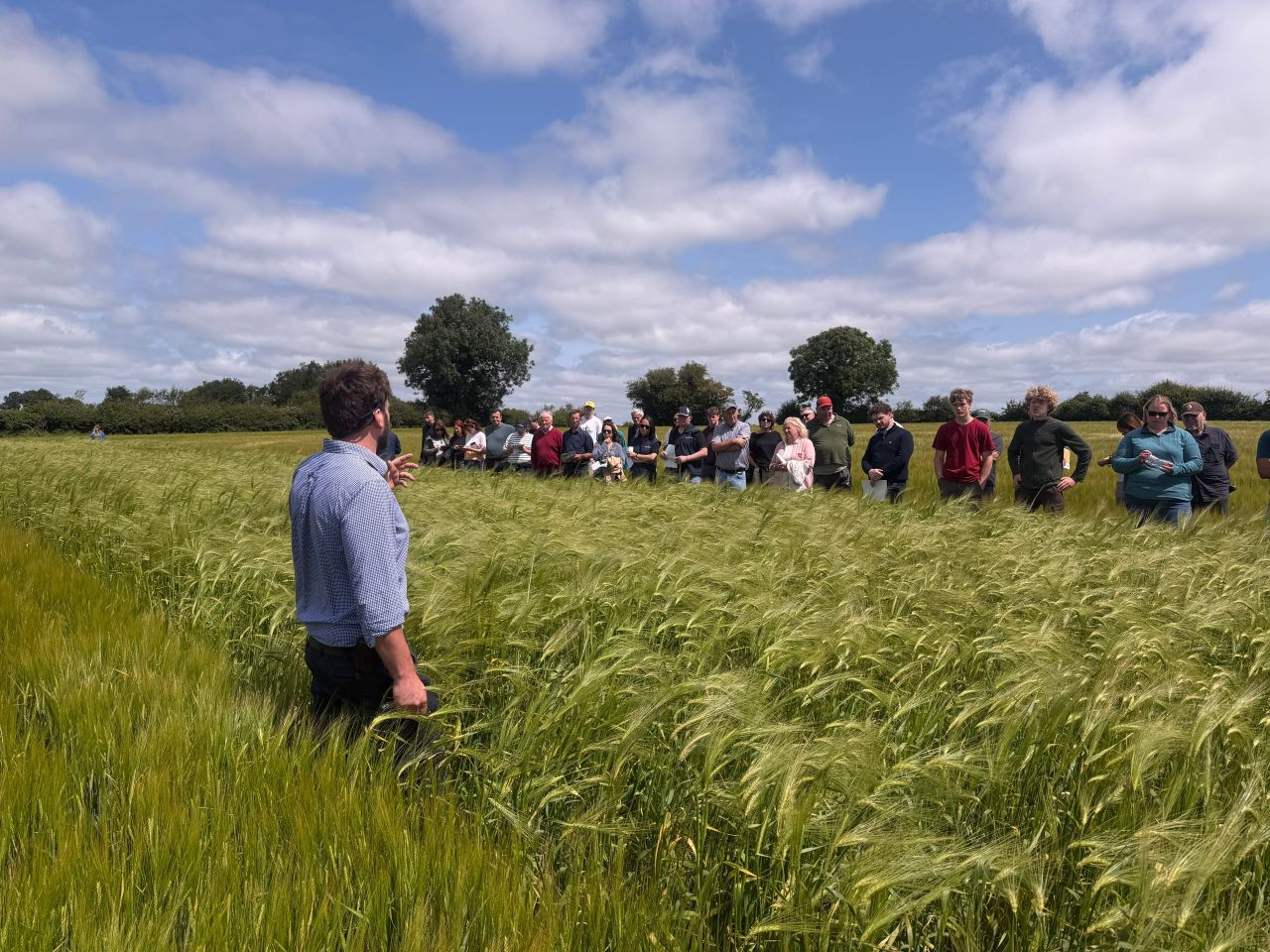
Tips for setting up effective and simple paddock-grazing systems were among the discussion points at a recent Teagasc beef farm walk.
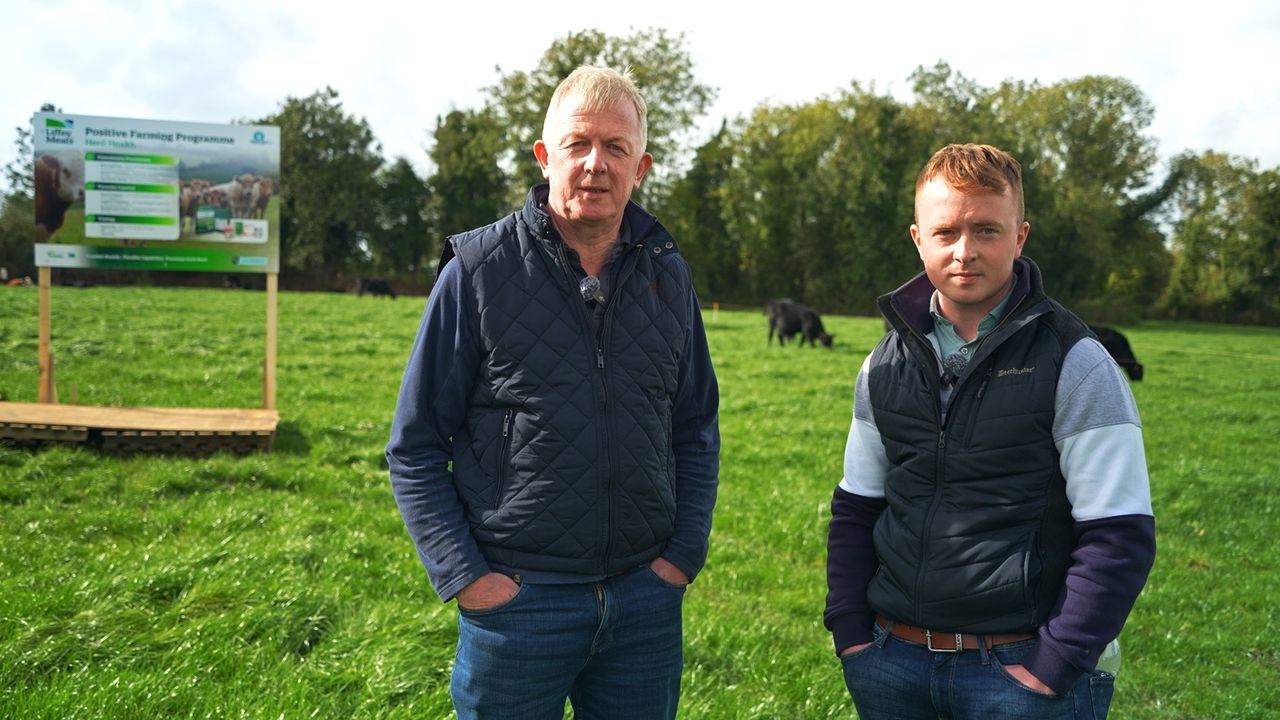
Speaking at the Teagasc DairyBeef500 farm walk on the farm of Keith and Olivia Lowry in Tuam, Co. Galway, Teagasc's Alan Dillon gave farmers some practical tips and advice for setting up a paddock-grazing system.
The Lowrys hosted the event on an out farm that as recently as three years ago was set stocked with five fields and one drinker on the land.
Dillon asked the Lowrys how they made the transition to paddock grazing and identified what worked best for them.
Olivia Lowry explained: "We started off with pigtail posts to get the outline of how we wanted the paddocks."
She said that once they had identified a paddock layout that worked best for the block of ground, permanent fencing was put in place and an earthen pass fenced off, allowing for direct access to each of the paddocks.
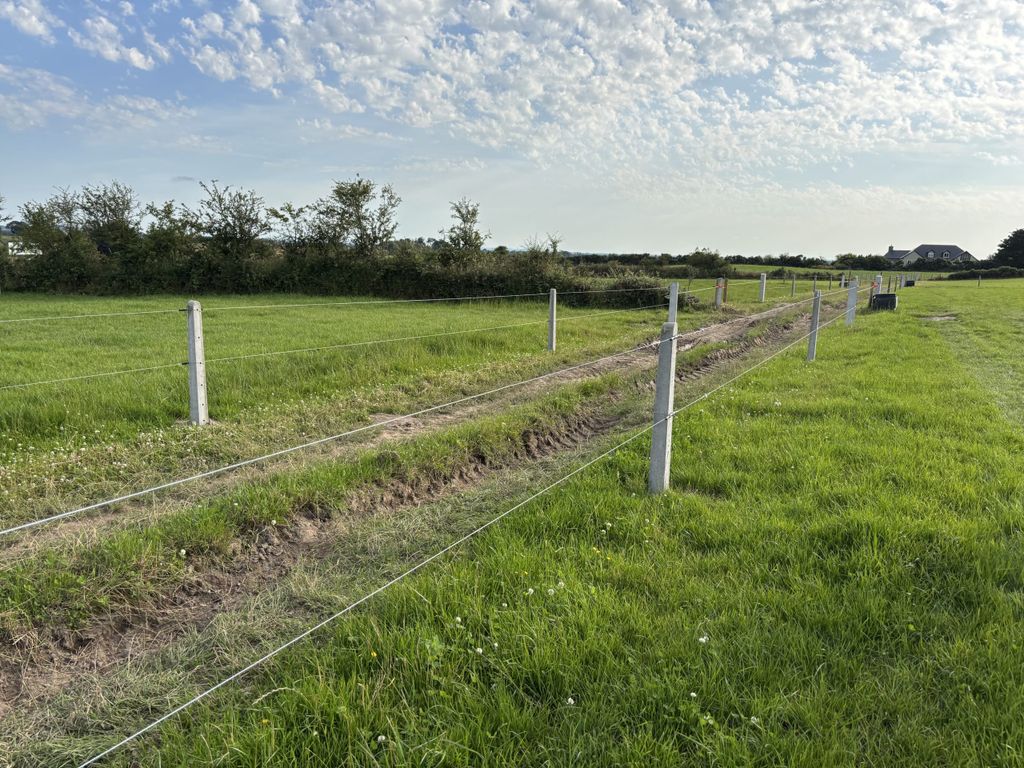
Teagasc's Alan Dillon then added a few pointers for beef farmers looking to sub-divide larger grazing blocks of land into smaller paddocks for grazing.
He said: "In terms of water troughs, for beef farms, it's different to a dairy scenario; you're never going to be under real pressure with water in a drystock scenario.
"Smaller water troughs will do; 150gal water troughs are fine, even one under a wire between two paddocks is fine.
"In terms of pipe, you can go as big as you want but I'd say how small can you get away with is 0.75" heavy gauge.
"If you loop the system, you double the [water] pressure. It's the cheapest way of doing it."
Water trough location
He said that placing water troughs in the right location is important.
He suggested placing water troughs under a wire, between two paddocks or in the middle of a paddock.
He advised farmers against putting water troughs in a corner of a field: "They're kind of getting a bit useless, stuck in a corner."
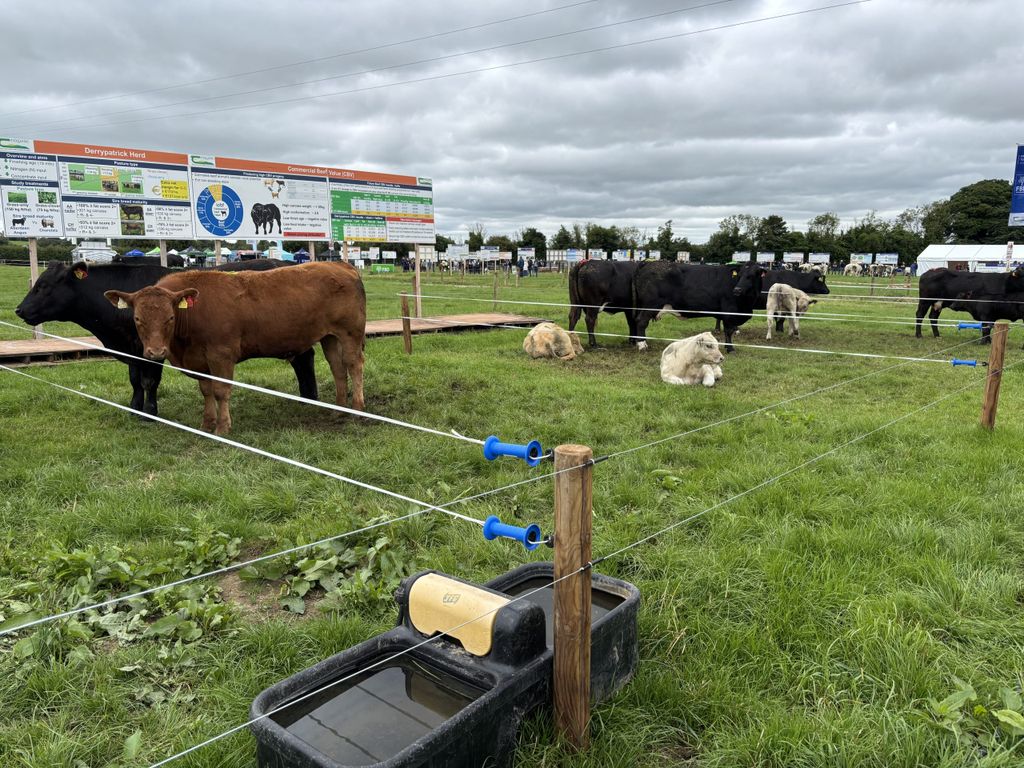
He added that when setting up water access points for each paddock "you don't have to do a proper mole plough system or dig it with a digger".
"You could just run a water pipe on top of the ground along by the fence.
"Just have enough water troughs so you can split paddocks up with very, very little effort, is the most important thing."
Paddocks access and paddock size
Dillon also suggested having plenty of access points to paddocks off roadways.
He said that it is advisable to have plenty of electric fence handles and gateways "wide enough for a tractor and a mower to go down".
He explained that the general rule of thumb for paddock grazing is to "grow in three weeks and graze in three days".
In determining the recommended paddock size, Dillon explained that for every 1,000kg liveweight of cattle grazing land, 0.05ha of paddock is required.
He explained that 50 cattle with an average weight of 320kg would have a combined weight of approximately 16,000kg, so 16 divided by 0.05ha equals 0.8ha or a 2ac paddock size.
"You want six or seven paddocks per grazing group. If you have numerous groups of cattle grazing, it does make it a little more complicated.
"If you have three groups of stock, that's 21 paddocks needed.
"If you can make groups bigger, it simplifies it a bit; bigger paddocks, bigger groups simplifies it [paddock management] a little bit."