Sustainability at core of grassland crop trials in Tipperary

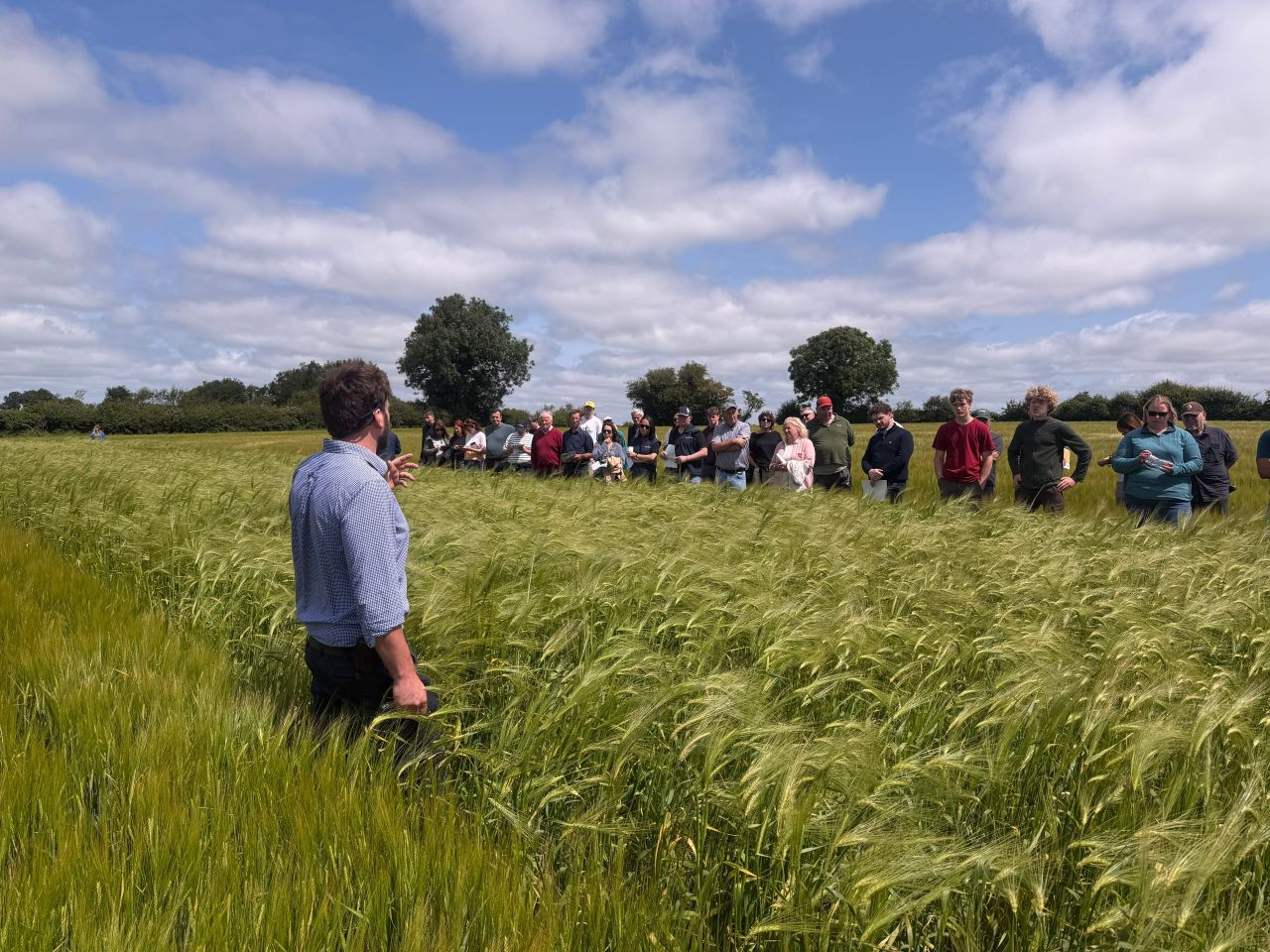
Farmers have been given a hands-on insight into how sustainability can be promoted in tillage and grass platforms with evidence supported by crop trials.
It was part of the recent Golden Vale Research open day in conjunction with TUS in Clerihan, Co. Tipperary.
Farmers who attended saw how crop trials involving applying gypsum and microbial stimulants, supplied by futurAg, in conjunction with Soilcrates - a project funded by HORIZON Europe Research focused on soil preservation and revitalisation - can benefit both pasture-based and tillage systems through improving soil health, resilience and crop yield.
The grassland trial consisted of four plots, with one acting as a control, one receiving gypsum, another receiving microbial bio-stimulants (MB) and one receiving both.
The grass used for the survey is a 10-year-old ryegrass pasture.
Farm owner, Dr. Nicholas Ryan outlined how important it was to have grass as representative of the majority of the grazing area in the country.
More trials will be conducted over the summer months but the grass crop trial results from the most recent analysis on May, 14, are outlined in the table below.
| Treatment | Dry matter % | Protein % | Carbon % |
|---|---|---|---|
| Control | 17 | 15.1 | 3.71 |
| Gypsum | 18.8 | 16.2 | 3.81 |
| MB | 19.2 | 13.9 | 4.08 |
| Gypsum + MB | 17.7 | 14.8 | 4.23 |
The same trial will be conducted on the farm's spring barley crop in October 2026.
To further evaluate the sustainability potential of these products, lysimeters will be left in place over the winter to record nitrate leaching levels through the soil for each of the crop trials.
Heritage crops
The farm also hosts unique crop trials involving the growing of heritage crops. These trials have been funded by DAFM under the Conservation of Genetic Resources Scheme.
Farmers who attended the open day event also heard from Dr. Maurice Deasy, CEO of Climaticus.
He detailed how heritage (traditional) crops typically see roots grow between 15% and 40% larger than modern tillage crops.
The advantage of this is the potential to absorb greater nutrients from the soil preventing leaching.
These crop trials are in the Suir catchment, one of the eight catchment areas where water quality is heavily monitored.
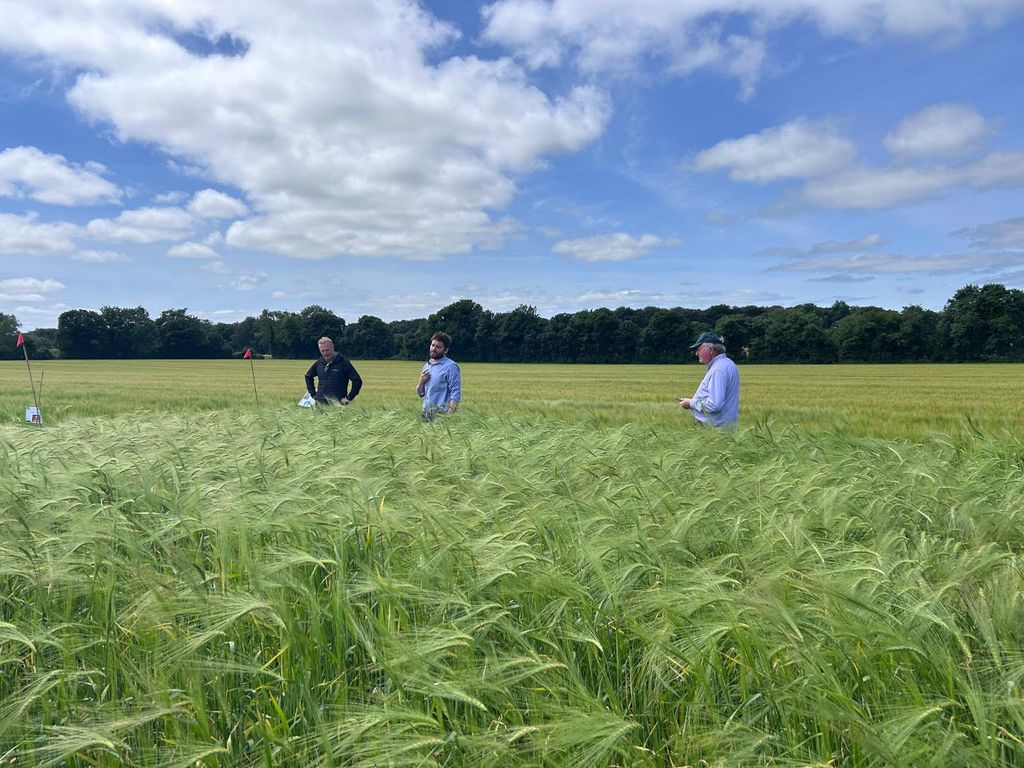
The Suir catchment includes large areas of intensive tillage production, so these trials have potential real-world benefits.
Dr. Deasy explained that heritage grains can shorten supply chains, as seen where the produce from the crop trials is sent to local mills, and also mentioned that it they can reduce volatility from global events in the market, outside farmers' control.
Attendees were also told that bakers prefer the heritage grains due to their more intense flavours and, in an on-site blind food tasting session where attendees tasted bread from heritage barley and modern barley grains, heritage grains had a clear majority favouring them.
Dr. Deasy pointed to the need for continued research and further crop trials into potential markets for heritage grains as well as the need for greater innovation in developing Irish adapted grain varieties.