The lynx effect: Lessons learnt from Switzerland and Spain

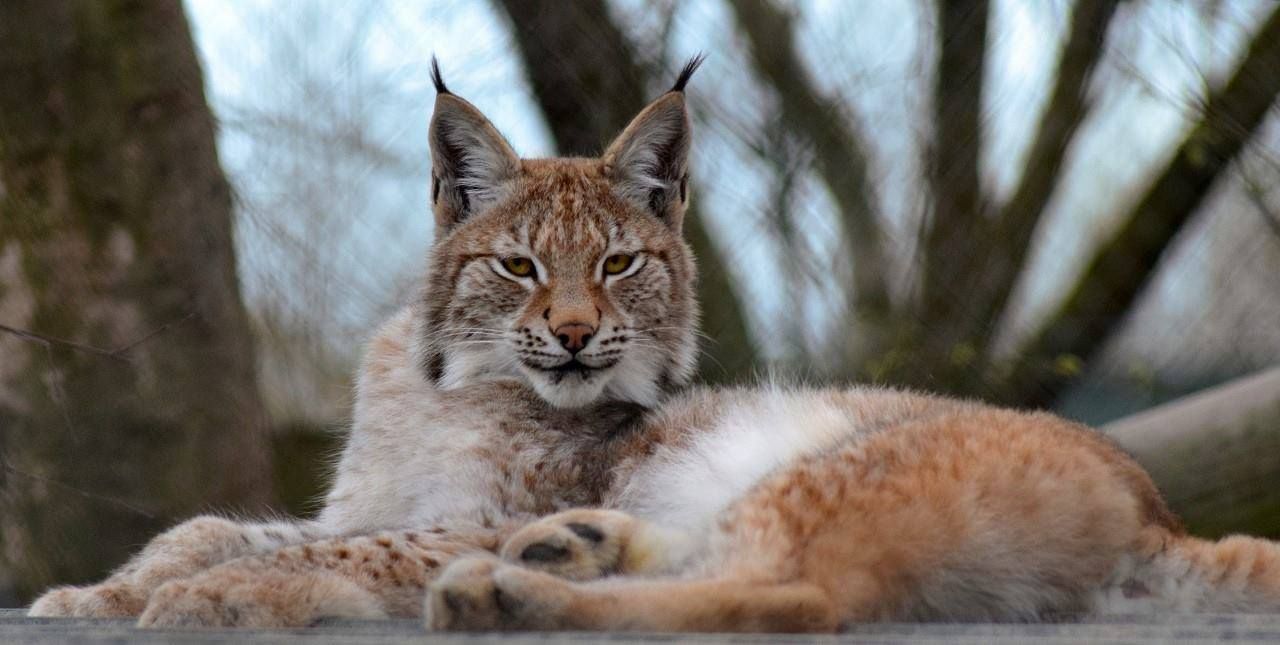
Is the lynx an elegant feline that could benefit the ecosystem, or an unwelcome predator that preys on livestock?
Several countries, including Ireland, have debated whether or not to re-introduce the lynx to their ecosystems.
In Ireland, there are various sides to the conversation around whether or not to re-introduce the lynx.
It is a natural predator of deer, which numbers have expanded significantly in Ireland due to a lack of predation, according to the Irish Deer Society.
This reportedly increases the risk of livestock diseases such as tuberculosis (TB).
However, in other countries where the lynx debate has reached government levels, farming unions have expressed concern.
Scotland
In Scotland, the National Farmers' Union Scotland (NFUS) has voiced its support of the Scottish government's opposition to the re-introduction of lynx or other large carnivores.
It stated that the proposals were "wholly unacceptable to farmers and crofters".
The NFUS said that there were still "major" unanswered questions around livestock predation, animal welfare impacts, and who would ultimately bear the responsibility and cost when problems arise after the reintroduction of such species.
Ultimately, the lynx re-introduction idea was ruled out in Scotland.
So what can we learn from countries where lynx have been re-introduced?
Environmental social scientist at Queen's University Belfast, Dr. Jonny Hanson, and author of Living with Lynx spoke to Agriland about the re-introduction of lynx in Switzerland and Spain.
According to Dr. Hanson, he studies “the relationships between people and nature in various areas including agriculture, climate change, and conservation”.
He added that his particular interest was “the coexistence between people and large carnivores in the context of livestock farming”.
Switzerland
The Eurasian lynx was re-introduced to Switzerland in the 1970s.
Dr. Hanson said that Switzerland “does have more forest cover than parts of Ireland” and that there was not much conflict in regard to livestock “probably because the lynx were quite small in number”.
However, in the 1990s, as the roe deer population started to decline, lynx, which had grown in numbers, started to attack sheep.
Compensation scheme
Dr. Hanson said: “At that point, a compensation scheme was introduced to help try and solve that [problem] by providing compensation for lost sheep".
“The lynx population in Switzerland is now well established - so in many ways the lynx re-introduction there is a success.”
Dr. Hanson chose to visit Switzerland and study the Swiss example because of parallels with Ireland - both countries are “relatively” small, farming-intensive, wealthy, and densely populated.
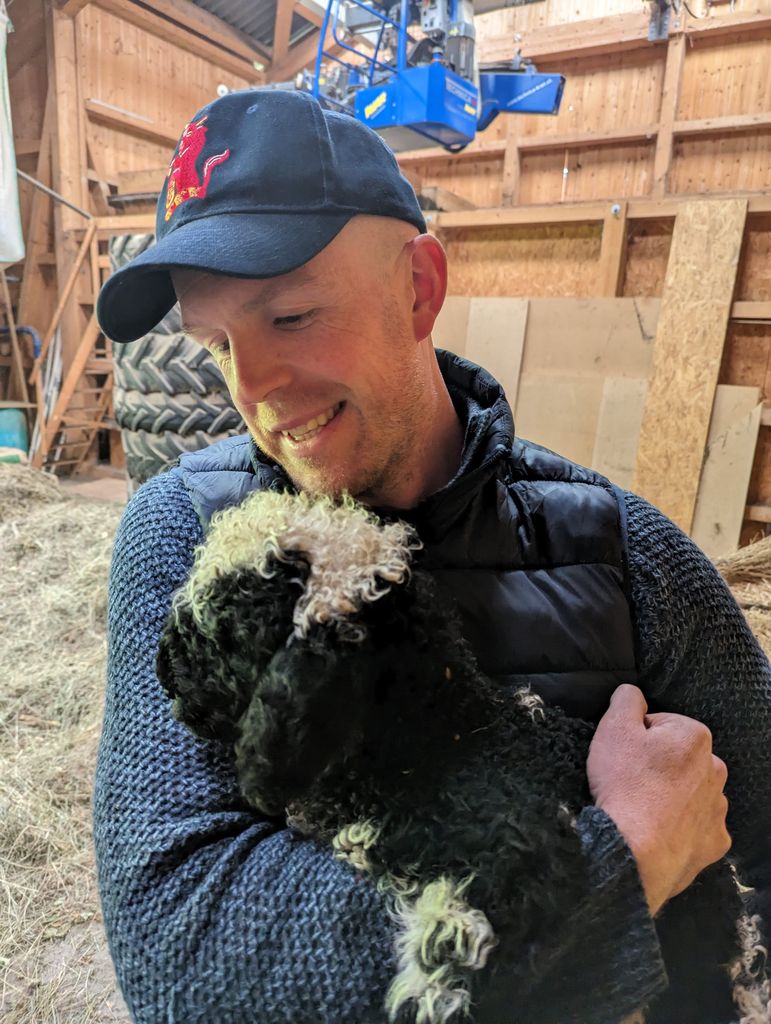
He added: “They would have similar farming patterns of putting sheep and goats out on hillsides or in forests.
The Swiss Association for the Development of Agriculture and Rural Areas provides technical advice to extension agents, who in turn advise farmers on mitigation methods for dealing with lynx, wolves, and bears.
Dr. Hanson said: “I think the lesson from Switzerland is that it can be done, but you have to be willing to be flexible whenever problems arise, and make sure that there are solutions such as making sure the money is available.
“In the case of Switzerland, they've built it up now over several decades; they have a lot of technical [experts] who know how to work with farmers to manage and govern this.”
Spain
The Spanish re-introduced a smaller breed of lynx – the Iberian lynx, that does not prey on deer (and thus, livestock).
Dr. Hanson said: “Rabbits cause ecological damage too, so there is a case for the benefits from Iberian lynx controlling the population of rabbits or being part of the control.
“So it's been very successful in conservation terms, and there was maybe less of a challenge with people because they don't tend to be a threat to sheep, usually.
“They do sometimes take sheep, but not routinely.”
However, one stumbling block has been the human element.
Dr. Hanson said that the politics around this issue is "really tricky" because in regions of Spain there is a "very well-ingrained scepticism of the central Spanish government".
He added that in the Basque or Catalan regions the reintroduction of the lynx is "being seen almost as an imposition by Madrid".
Ireland
Dr. Hanon said he “could see this happening probably in Ireland as well".
“These species cross borders: If you had lynx and re-introduced it to Donegal, they might not stay in Donegal, so the political aspect of this is really quite challenging.”
Referring to farmers, he added: “The imposition or the perceived imposition of re-introductions of species can be seen as a threat to [farmers'] way of life, and that it's being imposed by distant urban elites.
“And that's how it can quite quickly then become a polarised political issue.”
Dr. Hanson said he had also spoken to a number of Irish farming leaders, and “there isn't a great deal of enthusiasm”.
He added that although he "likes the idea in [theory]", he also had “a lot of concerns about its implementation”.
“We just don't have the forest cover necessary for a lynx population to sustain itself, but I think that may change in the future."
Money and expertise
Dr. Hanson explained that funding would also have to go beyond compensation for farmers.
“I'm not just talking about compensation for lost sheep at twice the market rate, which isn't a great deal of money compared to the GDP of Ireland.
“It's the relationships, it's the human expertise. It's people like me to work with farming extension agents, and those farming extension agents to work with farmers."
He added that it also included the provision of different farming mechanisms such as "special dogs that can guard flocks or electric fencing, which in turn make farming more labour-intensive”.
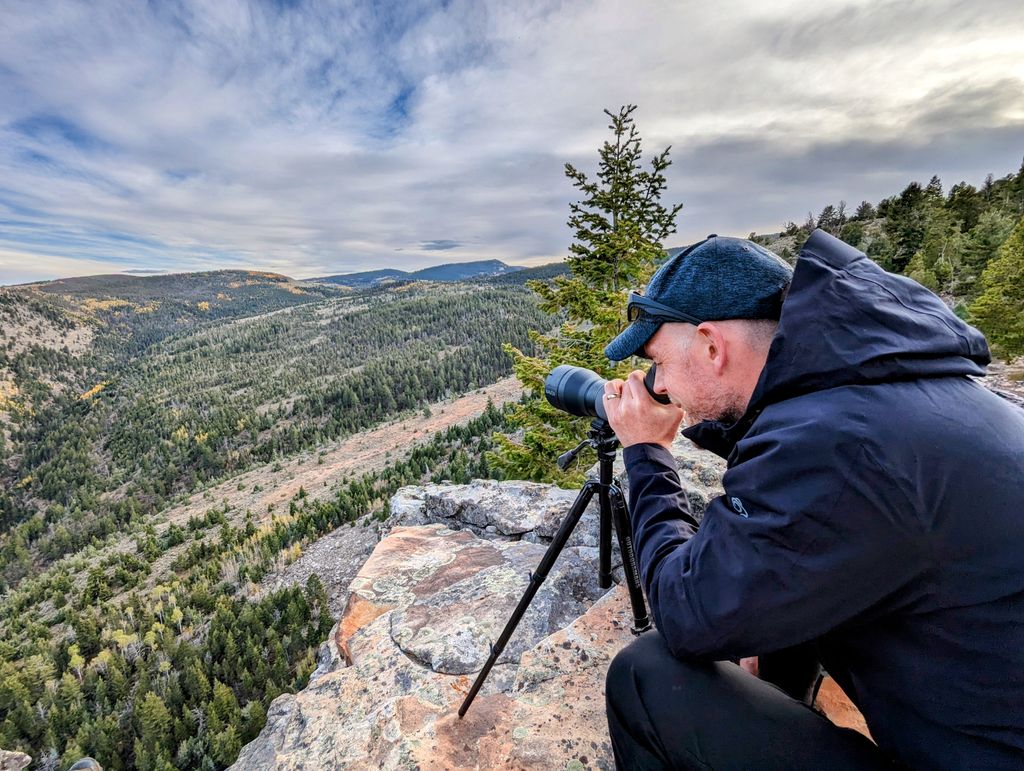
Dr. Hanson argued that the long-term cost should be a consideration when introducing such a long-term project.
He said: “Once you start paying for human labour and expertise, the bill just skyrockets.
"So, when lynx introductions are proposed, the ecology is usually studied and forecasts [made] on a hundred years.
"But the policies and the projects to finance that, are five, maybe 10, years.
“So, one of the things that I find from talking to British and Irish farming leaders about this, is the gap between the short-term policy cycle and funding cycle, and that long-term rhythm of the land that is a hundred years if you're a farmer.”
However, Dr. Hanson added that he did not anticipate the re-introduction of lynx to happen for years or even decades.
He said: “I think that the re-introduction of large carnivores at the moment could diminish or hold back the agricultural sustainability transition, which I think is more important".
The environmental social scientist added that in the long-term, the sustainability transition would create the conditions that would make such "re-introductions easier and more likely".