Shortfall in farm solar grants criticised as 3GW milestone passed

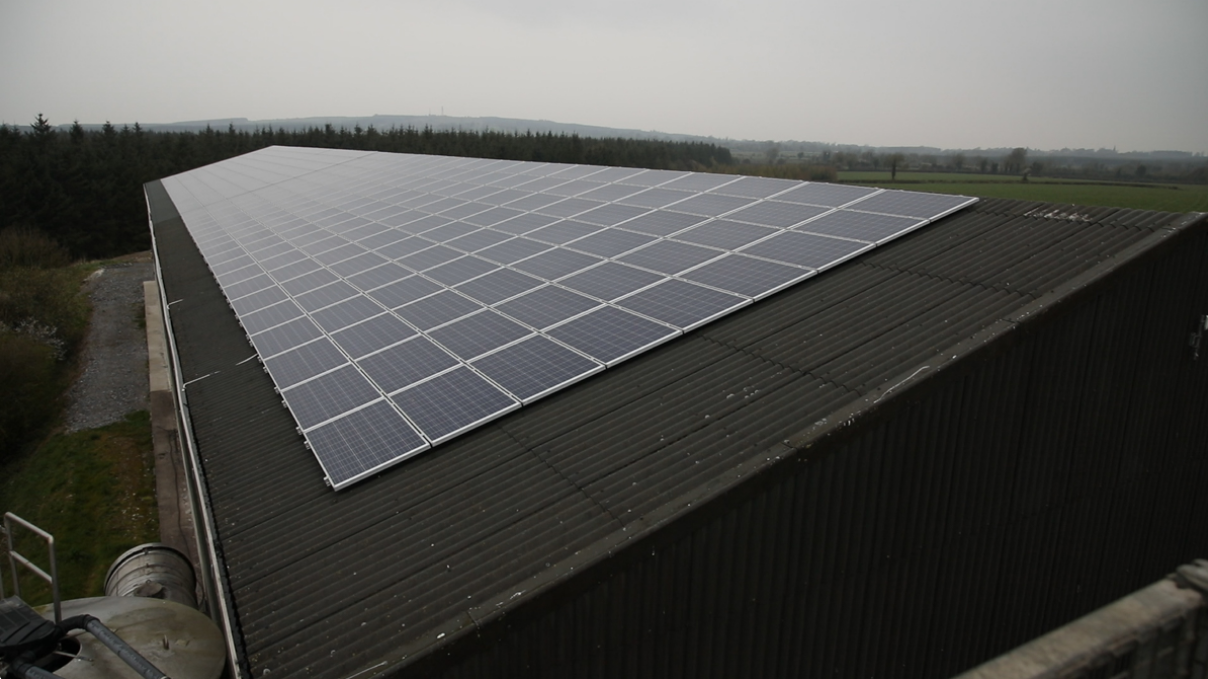
The government has been called upon to provide further support for farmers that wish to install solar panels on their holdings.
This comes as the nation's installed solar capacity today passed 3 gigawatts (GW) for the first time.
While investment in solar across the country grows, the availability of farm grants like Targeted Agricultural Modernisation Scheme (TAMS) has been reduced, generating criticism from some sectors.
Specifically, the government has been called on to address the solar grant shortfall that farmers have faced this year.
On the milestones reached this week, managing director of Local Power Ltd. and member of Micro-Renewable Energy Federation (MREF), Pat Smith recognised the achievement while calling for additional support for farmers.
He told Agriland: “I would say that it's great to see progress is being made, but the minister and government need to enhance the grant supports available for farmers after the fiasco of the TAMS grants being withdrawn.
“And they need to incentivise battery storage with grants as well.”
Earlier this summer, MREF called for “increased and sustained subsidies and supports” for solar PV and battery storage for farms, homes, and businesses in Budget 2027.
According to MREF chairperson, Ciaran Kells, farmers need support following the “slashing of Targeted Agricultural Modernisation Scheme (TAMS) solar grants, with 90% of applicants being rejected due to budgetary constraints in recent tranches of farmer applications”.
3GW
The 3GW milestone was announced today (August 27) by Minister for Climate, Energy, and the Environment, Darragh O’Brien.
The minister also pointed out that at one point on Monday (August 24), generation from utility-scale solar farms on the grid surpassed 1.3GW – supplying one third of the country’s total dispatchable electricity generation at that time.
“At times on Monday of this week, we saw utility-scale solar energy exceeding a third of the total electricity mix on the national grid.
“These milestones highlight just how rapidly solar energy, including the growing rooftop revolution, is becoming a major part of our energy system,
He added that with continued investment in solar – across homes, farms, businesses and large grid-scale projects, “Ireland is building a growing source of homegrown, clean electricity, and strengthening our energy security”.
Managing director of ESB Networks, Nicholas Tarrant added: “This milestone underlines the growing role solar energy is playing in Ireland’s journey to a low-carbon future.
“The contribution of both domestic solar panels and major renewable developers delivering large-scale projects has been instrumental in passing the 3GW threshold.
“ESB Networks is currently delivering a major programme of investment in the Irish electricity network under Price Review 6 to enable the further growth of renewables and support Ireland’s transition to a clean electric future.”
Solar PV and farms
Evidence is accumulating in support of the benefits of solar energy to farmers.
A recent study conducted at Maynooth University and Teagasc, funded by the Sustainable Energy Authority of Ireland, carried out a comprehensive assessment of grid-connected solar photovoltaic (PV) systems for two types of dairy farm operations: spring-calving and winter-calving.
Anne Kinsella, a senior research officer in Teagasc’s Rural Economy and Development programme, said that the results are promising.
She said: “The findings demonstrate that solar PV systems are both economically viable and environmentally beneficial for dairy farms.
"Spring-calving operations tend towards achieving slightly better results, owing to better seasonal alignment between solar generation and electricity demand.”