Roscrea-based vet the new president of Veterinary Ireland

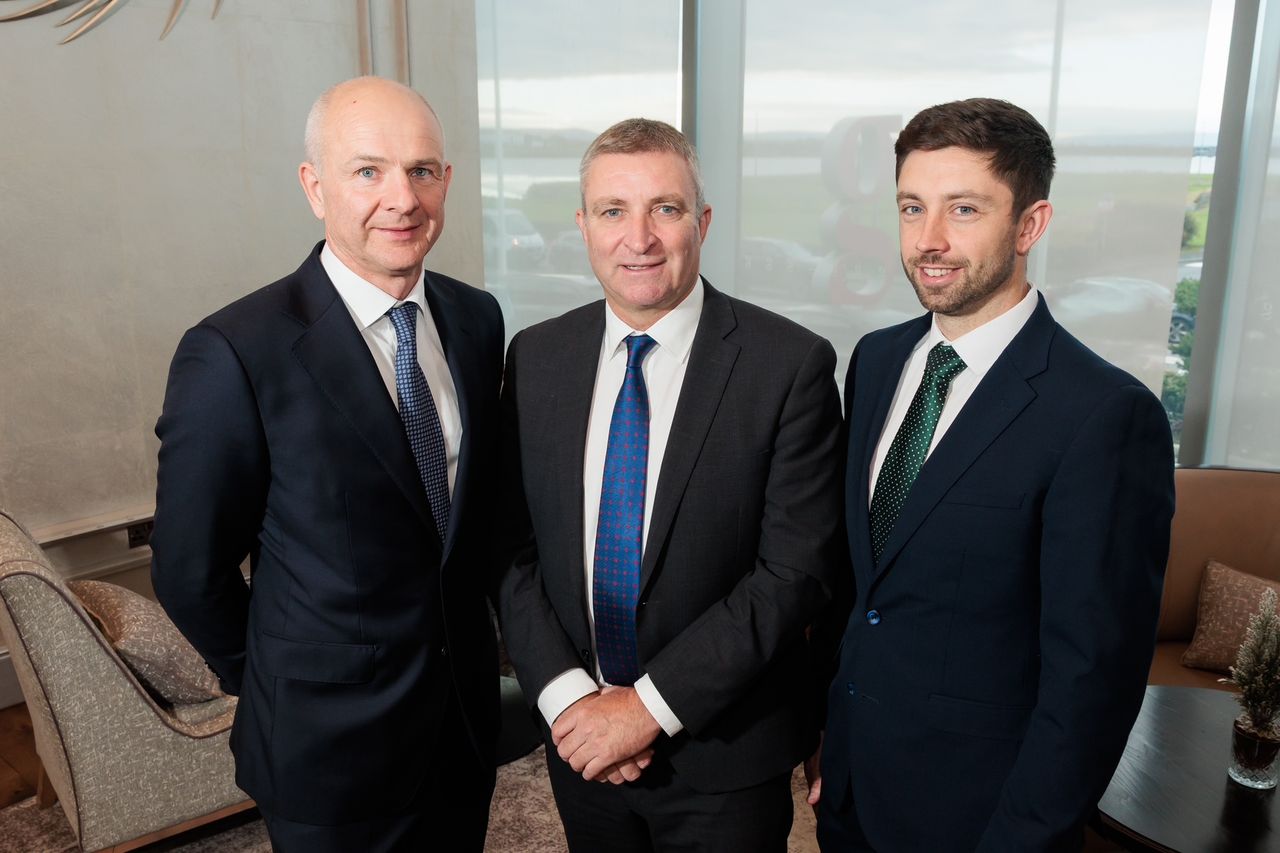
A vet based in Roscrea, Co. Tipperary, is the new president of Veterinary Ireland following the association's conference and AGM today (Friday, November 20).
Dr. Allen Dunne takes over from outgoing president Eoin Glynn.
Dunne has worked in mixed practice for 30 years and is a longstanding member of Veterinary Ireland. He has served on numerous Veterinary Ireland committees.
The conference and AGM was attended by Minister of State at the Department of Agriculture, Food and the Marine Niall Collins.
Veterinary Ireland said the conference highlighted a "European perspective" on veterinary practice, animal health and welfare.
Speakers at the conference included representatives of the Federation of Veterinarians of Europe (FVE), the European Commission, the European Parliament, the European Association of State Veterinary Officers (EASVO), and the Department of Agriculture.
The conference also featured representatives from the Veterinary Defence Society, which is a UK-based veterinary insurance service, and Veterinary Ireland Financial Services, which provides financial advice to vets.
At the presentation of the chain of office, outgoing president Eoin Glynn said that the recruitment and retention of veterinary professionals, particularly supporting newly qualified graduates as they transition into practice, has become a priority.
"This has included engagement with the two new veterinary colleges, involvement in the development of veterinary degree programmes, representation on the SETU Industry Board, and collaboration with the Recent Graduate Working Group," Glynn said.
The importance of supporting veterinarians at every stage of their careers through mentorship, mental health resources and continuing professional development was also an area of focus at the event.
The new president of Veterinary Ireland, Dr. Allen Dunne, said that veterinary practice sustainability continues to be an issue, particularly in rural areas.
"Veterinary Ireland’s work in securing funding for TASAHs [Targeted Advisory Service on Animal Health] will, we believe, contribute to long term sustainability," he said.
"Clients benefit from its strong focus on disease prevention and biosecurity with management strategies to reduce the risk and spread of animal diseases," he added.
One of the key messages from today's AGM, Veterinary Ireland said, was: "Prevention is better than cure, but only if there are vets to deliver it."
Jane Clark, the vice-president of the Federation of Veterinarians of Europe, told the meeting: "Animal diseases are putting growing pressure on Europe’s farms as climate, trade and disease patterns change.
"The EU Animal Health Law already requires regular veterinary 'animal health visits' to farms to strengthen biosecurity and identify disease early. Yet these visits are applied unevenly across Europe and some rural areas struggle to find and keep farm vets," Clark said.
Her organisation has called on governments to invest in prevention by making preventive animal health visits work everywhere; making rural veterinary careers sustainable; and using every preventive tool, including vaccination, so that culling becomes a last resort.
"We recognise that good practice in Ireland shows what is possible when prevention is properly supported," Clark said.
The AGM also heard from Dr. June Fanning, chief veterinary officer of Ireland, outlined Ireland's veterinary priorities during its presidency of the Council of the EU.
"Ireland participates at EU level in a number of animal health and welfare related meetings and working groups," Dr. Fanning said.
She said that the key themes at these working groups include risk communication; preparedness for biological threats; biosecurity at the livestock and wildlife 'interface'; and governance of the World Organisation for Animal Health.